Fitness enthusiasts spend billions annually on supplements, trusting labels promise what’s inside the bottle.
But shocking test results reveal many popular products contain little to none of their advertised ingredients.
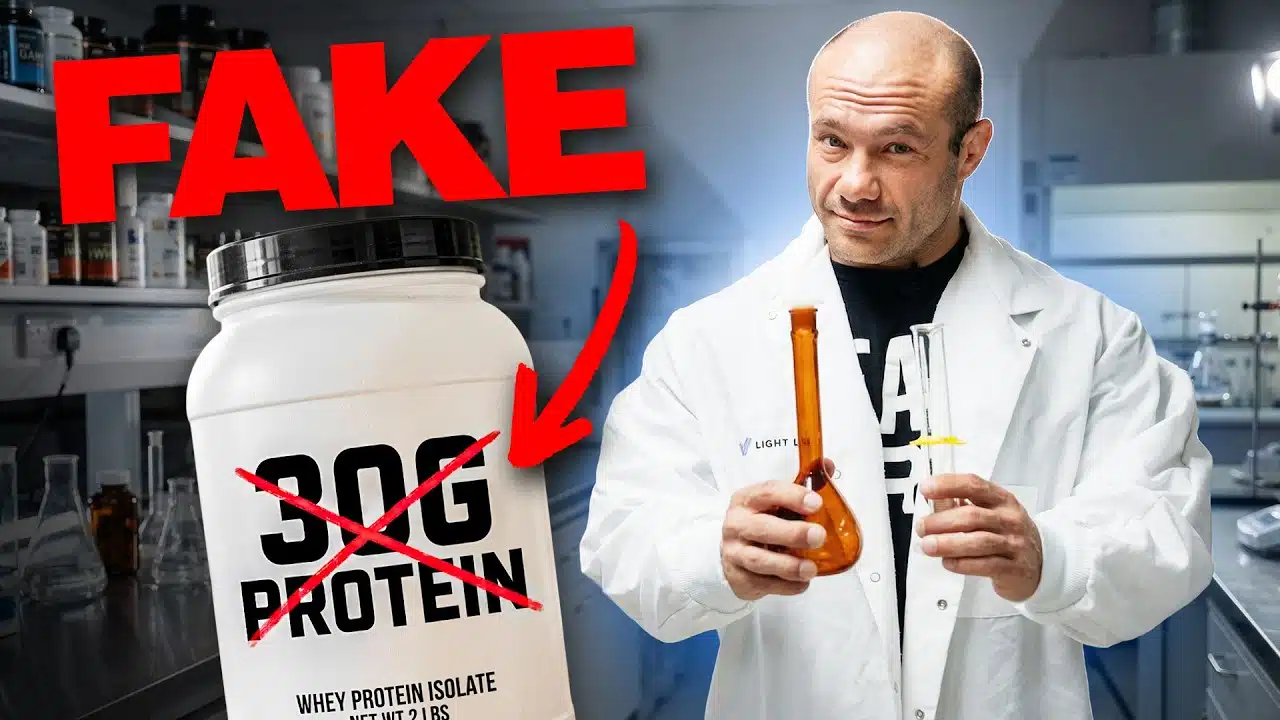
Dr. Mike Israetel recently visited Light Labs in Ann Arbor, Michigan, uncovering disturbing truths about supplement fraud that every consumer needs to know.
What he discovered might change where you buy supplements forever.
Jump to:
- The Creatine Gummy Scandal That Shocked Everyone
- Protein Powder With Almost No Protein
- Why Retailers and Platforms Are Changing
- How Consumers Can Protect Themselves
- Which Supplements Face the Biggest Problems
- The Vitamin D Mystery
- Brand Responsibility Throughout Supply Chains
- The Path Forward
- What This Means for Your Supplement Choices
The Creatine Gummy Scandal That Shocked Everyone
Light Labs specializes in testing consumer goods for transparency, analyzing whether products contain what manufacturers claim. Their findings in certain supplement categories proved genuinely alarming.
Creatine gummies represent one of the worst offenders in supplement fraud.
The number one seller on Amazon did not have any creatine in their gummy.
Not 97% of promised creatine. Not half. Absolutely zero creatine in a product marketed specifically as creatine supplementation.
These gummies sold for roughly $40 per container, with creatine being the most expensive ingredient. By eliminating it entirely, manufacturers maximized profit margins while customers received flavored candy.
Positive reviews flooded the product page, likely driven by placebo effect since creatine’s benefits aren’t immediately noticeable.
Protein Powder With Almost No Protein
Another devastating case involved protein powder sold through high-end retail stores, not sketchy online marketplaces.
Protein powder claiming 21 grams of protein, and they had something closer to 3 grams of protein.
Dr. Israetel’s response captured what most consumers would feel: To miss by that much, you have to intentionally be filling it with something else.
The missing 18 grams consisted of cheap carbohydrate fillers. Testing protocols should catch such massive discrepancies, leading Light Labs experts to conclude this represented deliberate fraud rather than manufacturing error.
Economic incentives drive supplement fraud. With protein being expensive and margins already substantial, replacing active ingredients with fillers dramatically increases profitability.
Why Retailers and Platforms Are Changing
Consumer awareness around supplement quality is growing rapidly, forcing major platforms to implement stricter standards.
Amazon now requires more rigorous testing to prove products contain advertised ingredients and remain free of contaminants. This shift came partly because scandals like the creatine gummy fiasco threatened platform credibility.
Where you purchase supplements matters tremendously. Retailers like Whole Foods typically require brands to provide testing proof before stocking products, creating accountability layers that reduce fraud likelihood.
How Consumers Can Protect Themselves
Beyond choosing reputable retailers, several strategies help ensure supplement quality.
Request Certificate of Analysis (COA)
Every legitimate supplement company maintains lab results for products, broken down by manufacturing lot. Simply ask brands for their certificate of analysis.
Companies should provide this documentation readily. Hesitation or refusal signals potential problems.
However, COAs represent point-in-time snapshots—testing results from when samples arrived at labs, not necessarily what sits in bottles months later.
Look for Stability Studies
Stability studies prove more valuable than certificates of analysis for long-term quality assurance.
These studies test products at different intervals throughout shelf life, confirming active ingredients remain potent until expiration dates. Manufacturing processes introduce heat and pressure that can degrade certain vitamins and compounds.
Some formulas are chemically incompatible, degrading almost immediately despite passing initial testing. Without stability studies, products may lose efficacy within 6-9 months.
Verify Good Manufacturing Practices (GMP)
GMP certification indicates facilities follow standardized testing and quality control protocols. Look for GMP marks on supplement labels.
Most reputable brands highlight manufacturing partnerships as selling points, signaling commitment to quality standards.
Which Supplements Face the Biggest Problems
Multivitamins represent particularly challenging formulations. Cramming 10+ different vitamins into tiny products while maintaining stability over 18-month shelf lives requires exceptional expertise.
Chemical incompatibility between vitamins varies across product matrices—gummies versus capsules versus powders. Without rigorous testing, individual vitamins may degrade at different rates.
Complex formulations increase fraud potential. Proprietary blends in advanced delivery systems (gummies, ready-to-drink beverages) present more opportunities for degradation and deception.
Simple products like plain creatine powder face fewer issues. Physical powder in bags offers less chance for error or intentional fraud.
The Vitamin D Mystery
Dr. Israetel shared an anonymous story illustrating how supplement degradation affects real people. One individual took vitamin D supplements regularly while monitoring blood levels with physicians.
Despite consistent supplementation, vitamin D levels remained low. Doubling the dose actually decreased blood levels further.
The likely culprit? Matrix degradation through oxidation. Vitamin D is fat-soluble and should accumulate in the body, but improper storage conditions—heat, light, humidity—can destroy active ingredients.
Those warnings about storing supplements in cool, dry, dark areas aren’t marketing fluff. Environmental exposure genuinely impacts potency.
Brand Responsibility Throughout Supply Chains
Legitimate brands can manufacture perfect products that degrade during distribution. Warehouses, delivery trucks, and store shelves expose supplements to temperature fluctuations and light.
Responsible companies conduct off-shelf testing, purchasing their own products from retailers to verify quality throughout supply chains.
Ultimate responsibility rests with brand owners to ensure efficacy up to expiration dates across all distribution points.
The Path Forward
Light Labs envisions supplement markets in five years resembling paint regulations today. Finding untested, fraudulent products should become as rare as discovering lead-based paint in modern stores.
Their mission focuses on allowing brands doing things correctly to win market categories. When fraudulent products become top sellers, companies investing in quality lose competitive advantages.
Transparent testing incentivizes brands with contamination issues or degradation problems to fix shortcomings, enabling competition with legitimate companies.
What This Means for Your Supplement Choices
The supplement industry faces serious integrity challenges, but solutions exist for informed consumers.
- Purchase from reputable retailers like Whole Foods or verified Amazon sellers requiring testing proof
- Request certificates of analysis and stability studies from manufacturers
- Verify GMP certification on product labels
- Choose simpler formulations when possible—plain powders over complex matrices
- Store supplements properly in cool, dry, dark locations
- Monitor actual results through blood work when applicable
Testing companies like Light Labs are pushing industry-wide transparency, but consumer vigilance remains essential. The brands investing in quality deserve market success, while fraudulent operators need exposure and accountability.
Your supplement choices impact both personal health outcomes and industry standards. Make them count.