Maximizing cardiorespiratory fitness isn’t about choosing between endurance or intensity—it’s about strategically combining both.
And according to longevity expert Dr. Peter Attia, most people are doing it completely wrong.
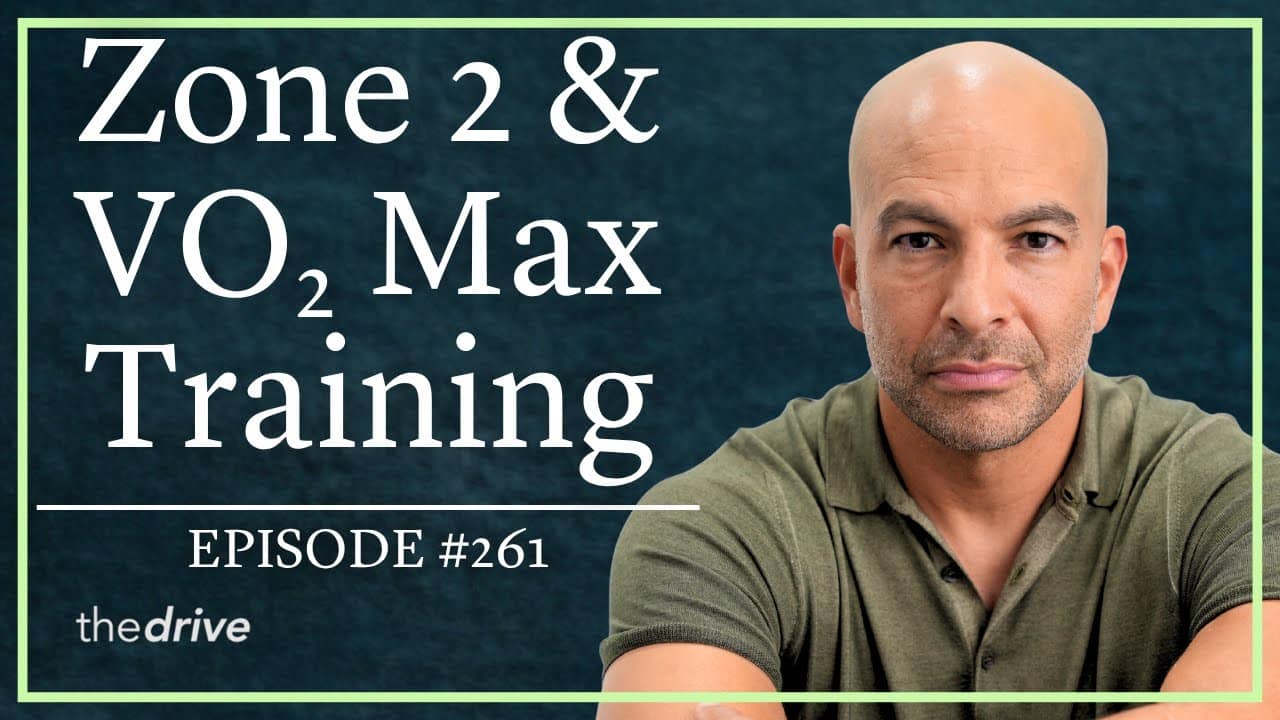
In a recent podcast conversation, Attia breaks down exactly how elite athletes and everyday fitness enthusiasts should structure their cardio training using the same proven framework.
The secret? It’s all about the triangle.
Jump to:
- The Triangle Theory of Cardio Fitness
- The 80/20 Rule That Champions Follow
- Calculating Your Personal Cardio Budget
- Dr. Attia’s Complete Weekly Training Schedule
- Zone 2 Training: Minimum Effective Doses
- Best Modalities for Zone 2 Training
- Why Heart Rate Monitors Miss the Mark
- VO2 Max Training: Flexible Modality Options
- Attia’s Preferred VO2 Max Protocols
- Pacing VO2 Max Intervals: The Art of Controlled Suffering
- Why Sequencing Matters: Zone 2 Before VO2 Max
- The Takeaway: Patience Builds Performance
The Triangle Theory of Cardio Fitness
Attia uses a simple geometric analogy to explain optimal cardio development. Think of your fitness capacity as a triangle—the base represents Zone 2 training (steady-state endurance), while the peak represents VO2 max (maximum aerobic capacity).
The goal isn’t maximizing base width or peak height alone. It’s maximizing total area.
You don’t want one that’s this wide and this tall. And you don’t want one that’s this tall and this wide. You want the max.
This means developing both aerobic foundations and high-intensity capacity simultaneously—but not equally.
The 80/20 Rule That Champions Follow
Whether you’re training for general health or competing at world-class levels, the training volume split remains remarkably consistent: approximately 80% Zone 2 work and 20% VO2 max efforts.
Attia points to Tadej Pogačar—two-time Tour de France winner and arguably cycling’s greatest current athlete—as proof this formula works at elite levels.
That guy is doing 80 to 90% of his training at zone 2. And I know that for a red fact because we know who his coach is.
Elite endurance athletes sometimes push this ratio even further, operating closer to 90/10. The message is clear: steady-state aerobic work forms the foundation, while high-intensity intervals provide the finishing touches.
Calculating Your Personal Cardio Budget
Before diving into specific workouts, Attia emphasizes starting with honest self-assessment about available training time.
I just start with how much time am I willing to put into this. I wish I could be putting 10 hours a week into cardio.
Despite previously training 14-20 hours weekly, Attia now dedicates 4-5 hours to structured cardio due to competing life demands—family, work, and other hobbies like archery and driving.
His approach? Determine maximum sustainable training volume, then apply the 80/20 split. For him, that means roughly 3.5-4 hours of Zone 2 and 45-60 minutes of VO2 max work weekly.
Dr. Attia’s Complete Weekly Training Schedule
Attia structures his week to balance cardiovascular training with strength and stability work:
- Monday: Lower body strength + stability (90-120 minutes)
- Tuesday: Zone 2 cardio + dedicated stability hour
- Wednesday: Upper body strength + stability (90-120 minutes)
- Thursday: Zone 2 cardio + stability
- Friday: Lower body strength + stability repeat
- Saturday: Zone 2 (morning) + upper body strength (afternoon)
- Sunday: Zone 2 followed by VO2 max intervals
Notice Zone 2 appears four times weekly, while VO2 max training occurs just once. This distribution maintains the critical 80/20 volume ratio.
Zone 2 Training: Minimum Effective Doses
Session duration matters significantly for Zone 2 effectiveness. Attia recommends minimum 30-minute continuous sessions.
For those with severe time constraints—say, only 15 minutes available four days weekly—he suggests compressing to two 30-minute sessions instead.
In your zone two sessions, you like to do at least 30 at a minimum.
Attia also incorporates a 10-minute progressive warm-up before hitting target Zone 2 intensity, allowing his body to gradually reach optimal working state.
Best Modalities for Zone 2 Training
Zone 2 requires sustained steady-state effort, which limits effective exercise options. Attia’s preferred choices include:
- Stationary cycling: His primary modality (using a Wahoo Kicker smart trainer)
- Treadmill walking/running: Easy to maintain consistent pace
- Swimming: Excellent for maintaining steady effort in pool settings
- Stair climber: Particularly effective for those with good movement patterns
- Brisk walking: Sufficient for beginners building base fitness
Outdoor cycling presents challenges due to traffic, terrain variations, and stoplights that interrupt steady-state efforts. Attia specifically mentions Fiesta Island in San Diego as one rare outdoor venue suitable for uninterrupted Zone 2 work.
Why Heart Rate Monitors Miss the Mark
Many fitness enthusiasts track Zone 2 using heart rate monitors, but Attia warns this creates significant inaccuracies.
True Zone 2 is best defined by blood lactate levels or, at minimum, rate of perceived exertion (RPE). Heart rate provides only rough approximation.
More importantly, intermittent Zone 2 exposure—passing in and out during varied-intensity rides—doesn’t deliver the same physiological adaptations as continuous steady-state work.
What you’re really kind of looking for is the harnessing of mitochondrial efficiency. And to do that, you just you have to be able to push oxidative phosphorilation right to its limit before you trip into glycolysis.
Sustained Zone 2 training forces mitochondria to maximize fat oxidation capacity before switching to glycolytic (sugar-burning) pathways. Intermittent exposure constantly shifts between metabolic states, reducing training specificity.
VO2 Max Training: Flexible Modality Options
Unlike Zone 2’s steady-state requirements, VO2 max training offers greater exercise variety. Essentially any activity that elevates heart rate to maximum capacity works.
Attia’s VO2 max toolkit includes:
- Stationary cycling
- Outdoor hill repeats
- Rowing machine intervals
- Stair climber sprints
- Treadmill running
- Air bike efforts
The key distinction: intervals should last 3-8 minutes minimum. Shorter burpee-style efforts become too intense to sustain adequate duration for true VO2 max stimulus.
Attia’s Preferred VO2 Max Protocols
After years of experimentation, Attia primarily uses 4-minutes-on, 4-minutes-off intervals on his stationary bike.
He also employs 3-on, 3-off rowing intervals and occasionally uses a compressed 1-minute-on, 2-minutes-off stair climber protocol when time-pressed.
That’s kind of like my poor man’s cheating V2 max workout.
While this abbreviated version isn’t ideal, it demonstrates practical flexibility when life circumstances demand compromise.
Pacing VO2 Max Intervals: The Art of Controlled Suffering
Proper interval pacing requires years of practice and acute body awareness. Attia emphasizes this isn’t all-out sprinting from the start.
During 4-minute efforts on his bike, he monitors power output (watts) and targets specific average wattage across the entire interval.
I might go out at 105% of that wattage and it feels pretty easy for the first minute. By 3 minutes I’m very uncomfortable and at four minutes I don’t have much left.
Starting too aggressively causes premature fatigue before reaching interval completion. Attia aims for slight positive splitting—doing roughly 10% more work in the first half than second—but maintains sustainable intensity throughout.
Going completely maximal in minute one guarantees failure before reaching the critical 3-4 minute mark where true VO2 max adaptations occur.
Why Sequencing Matters: Zone 2 Before VO2 Max
Attia consistently performs Zone 2 work before VO2 max intervals on Sunday training days.
This sequencing stems from cycling tradition and physiological preparation. During his competitive cycling years, he required at least 1,000 kilojoules of work (approximately 1,000 calories) before attempting high-intensity intervals.
I generally don’t just because I like to have a lot of reps before I go for broke.
This extensive warm-up primes aerobic systems, improves muscle blood flow, optimizes neuromuscular coordination, and reduces injury risk before maximal efforts.
The Takeaway: Patience Builds Performance
Perhaps the most counterintuitive aspect of elite cardio training is how little time athletes spend at maximum intensity.
Attia’s framework demonstrates that sustainable improvements in cardiorespiratory fitness come primarily from patient, consistent Zone 2 development—not punishing daily HIIT sessions.
By dedicating 80% of cardiovascular training volume to moderate steady-state work and reserving just 20% for high-intensity intervals, you’re following the same proven approach used by world champions.
Start with honest assessment of available training time, apply the 80/20 split, ensure Zone 2 sessions last at least 30 minutes, and structure VO2 max intervals between 3-8 minutes.
The result? Maximum area under your fitness triangle—and cardiorespiratory capacity that supports both longevity and performance.