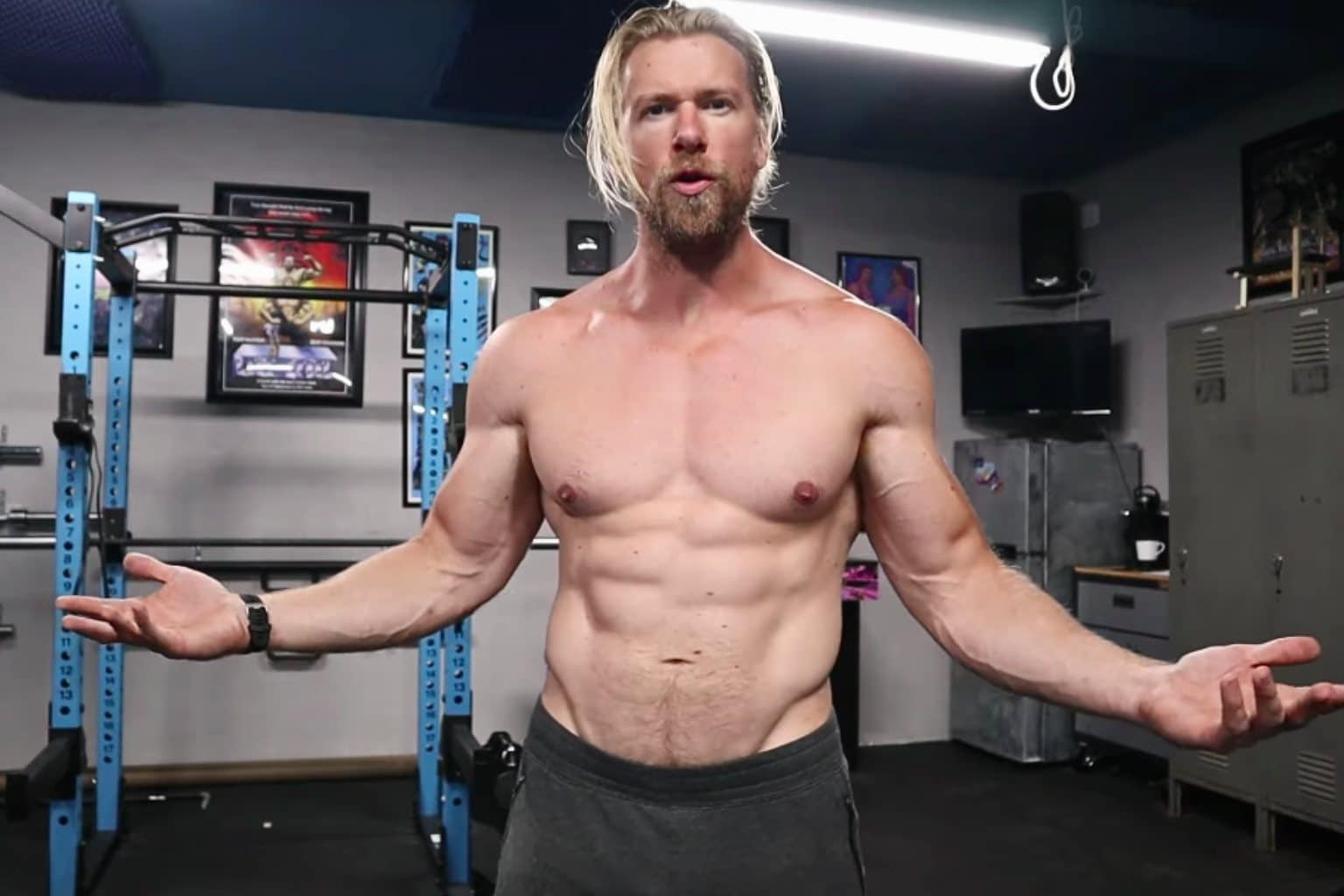
Hudson White, a 42-year-old natural athlete, just achieved an impressive 5% body fat physique after 4.5 months of consistent training and a calorie deficit. But what happens to your body under that kind of pressure—especially your hormones?
In his latest update, Hudson underwent a full battery of tests, including body composition analysis and blood work. The results revealed both the highlight and harsh reality of extreme natural conditioning.
If you’ve ever wondered how deep cuts and sharp muscle definition affect your health, especially testosterone, buckle up—this story dives into the trade-offs.
Jump to:
- Muscles for Days—But at a Hormonal Cost
- Testosterone Tumbles from 550 to 174
- Signs of Hormonal Deficiency: What Hudson Experienced
- Why Testosterone Drops with Prolonged Calorie Deficit
- Is It Worth It? Hudson’s Take on the Trade-Offs
- The Importance of Periodic Hormonal Monitoring
- The Plan Moving Forward: Recovery Matters
- Lessons for Other Athletes Over 40
- Final Thoughts
Muscles for Days—But at a Hormonal Cost
Hudson started his transformation at 222 pounds. Over the span of nearly five months, he cut down to 195 pounds—dropping 30 pounds through a slight but sustained caloric deficit and rigorous training.
His body fat? Measured underwater and confirmed through skinfold calipers, it came in at a jaw-dropping 4.7%. That’s a mark usually reserved for elite-level athletes and bodybuilders in peak competition shape.
“That’s a body fat percentage I didn’t think I could ever get to,” Hudson shared. “It kind of reminds me of that scene in Empire Strikes Back when Luke says, ‘I don’t believe it.’ And Yoda said, ‘That is why you fail.’”
Testosterone Tumbles from 550 to 174
While the mirror reflected shredded success, Hudson’s internal numbers told a different story. Before the cut, his total testosterone measured at 550 ng/dL—a solid figure for a natural 42-year-old.
Post-diet and just a week before stepping on stage? That same hormone had plummeted to 174 ng/dL.
For context, clinical guidelines from organizations like the American Urological Association consider levels below 300 ng/dL as low. Many men in Hudson’s position might consider testosterone replacement therapy (TRT) just to bring numbers back to normal—or simply to feel human again.
“Am I concerned? Not really, because I know what I’m doing and why I’m doing it,” Hudson noted. “But I’m also very happy that I’ve only got a week left, because I wouldn’t want to continue on this road.”
Signs of Hormonal Deficiency: What Hudson Experienced
Low testosterone during an extended calorie deficit doesn’t just show up on paper—it makes itself known in real life:
- Fatigue: “Some days I get this crazy fatigue. It’s almost like pre-flu symptoms where I literally just have to sit down.”
- Cognitive Fog: Decreased motivation and drive, especially in the afternoons and evenings.
- Aesthetic Changes: Hudson noted more wrinkles and a “gaunt” facial appearance—a sign of extreme leanness and low subcutaneous fat.
- Mood Swings: He described evenings as the toughest part of the day: “If I can just go to bed, that way I can have breakfast in the morning.”
These symptoms aren’t uncommon for competitors nearing show day. But in natural athletes, who can’t rely on hormonal assistance, the effects can be more dramatic.
Why Testosterone Drops with Prolonged Calorie Deficit
Hudson’s story reflects a well-documented phenomenon. When body fat and energy intake get too low, testosterone production suffers. Here’s why:
- Energy availability: Testosterone production, like many hormonal functions, requires adequate caloric intake. Diets under 1,800–2,000 calories for extended periods can suppress production.
- Body fat threshold: Essential fat for men is around 3–5%; Hudson was at 4.7%. Extremely low levels signal the body to enter “survival mode,” prioritizing function over fertility, muscle growth, and libido.
- Training stress: High workloads with low fuel contribute to systemic stress and fatigue, which further suppresses hormones like testosterone.
Scientific Support
Studies on male athletes undergoing similar cuts—such as competitive bodybuilders or endurance athletes—have shown a dramatic drop in testosterone during and immediately after competition prep. In some cases, recovery takes months after returning to maintenance calories and reduced training volumes.
Is It Worth It? Hudson’s Take on the Trade-Offs
Despite the hormonal hit, Hudson remains proud of what he’s accomplished—and he should be. Achieving 5% body fat naturally at 42 years old is a testament to discipline, strategy, and mental toughness.
“This whole process… I could stop right here because I’m so happy with being able to achieve that,” he said. “How much could I push my body physically and how strong could I stay mentally at 42 as a natural?”
However, he’s equally candid about the drawbacks. He recognizes the toll it’s taken and advocates for post-show recovery to recalibrate both physically and hormonally.
The Importance of Periodic Hormonal Monitoring
Hudson’s experience underlines the value of regular blood testing, especially for those undergoing serious body composition changes. Tracking metrics like testosterone, thyroid, and cortisol can provide essential feedback to help adjust training and diet.
Testing before, during, and after a cut gives measurable data—not just snapshots in the mirror. This is particularly important for natural athletes who don’t have exogenous hormone support.
The Plan Moving Forward: Recovery Matters
After the show, Hudson plans to gradually increase calories and reduce training intensity—a critical recovery phase often called a “reverse diet” in the fitness world.
This helps normalize hormones, restore energy levels, and prevent rebound fat gain. Within a few weeks to months, testosterone levels typically rebound in most natural lifters—provided recovery is prioritized.
“I feel the best when I’m about 215 pounds, probably between 12 to 15% body fat,” he admitted. “That’s what I was at when I had the 550 testosterone. So I’m looking forward to getting back to that.”
Lessons for Other Athletes Over 40
Hudson’s transformation proves that, even in your 40s, you can build an elite physique naturally—with the right tactics and consistency. But it also shows that chasing a lean, impressively aesthetic look comes with hormonal costs, even for the most disciplined lifters.
Key takeaways for similar-aged athletes include:
- Extreme leanness often sacrifices hormonal health and energy.
- Calorie deficits should be structured and temporary—not indefinite.
- Recovery is just as important as the grind. Periodize your training and nutrition.
- Blood work provides invaluable insight—test before, during, and after physique goals.
Final Thoughts
At the end of his reflection, Hudson shared one final takeaway:
“Looking the way I do is arguable—some find it good, some don’t. I just know I feel the best when I’m balanced: eating enough, lifting hard, and not pushing my body to the brink.”
And perhaps that perfectly sums up what health and fitness should be about—not just how you look, but how you feel and function. If you’re planning a body transformation of your own, let Hudson’s experience serve as both inspiration and a cautionary tale.
You can push the limits. Just remember what it might cost—and when it’s time to pull back.