After helping countless men shed stubborn body fat and rediscover their passion for training, one coach has cracked what he believes is the simplest formula for dropping 10 to 15% body fat.
And he’s not holding back.
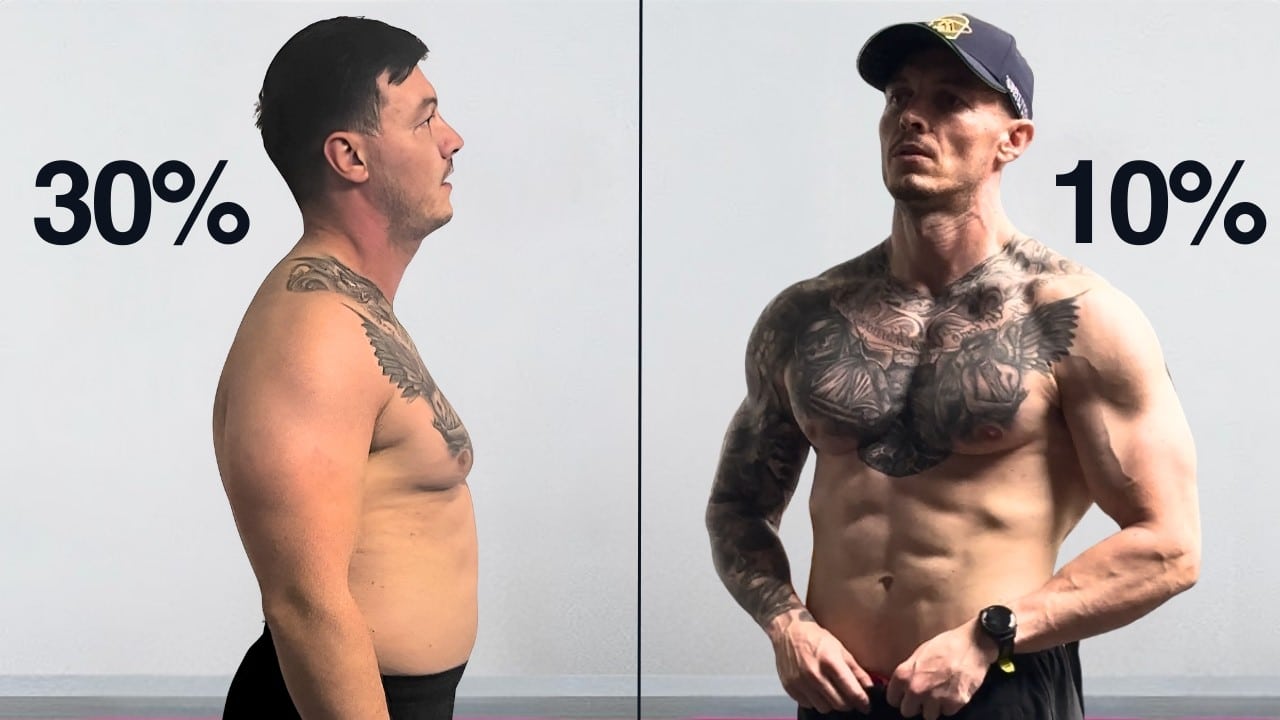
In a recent candid breakdown, the fitness coach shared his battle-tested approach that’s transformed both his physique and those of his clients—without the typical diet industry nonsense.
The timing couldn’t be better, as spring approaches and the hoodie season comes to an end.
Jump to:
The Reality Check: Setting Honest Goals
The first step isn’t about motivation or inspiration—it’s about brutal honesty.
Don’t just be a [ __ ] and go, I want to be shredded like him, but at the same time, you love a few beers in the Chinese or most of your diet is just shite food because it’s not happening unless you can flip a switch right now.
The coach emphasizes that reaching 15% body fat puts you ahead of 90% of the UK population. That’s a massive achievement worth celebrating.
He acknowledges the personal struggle many men face with fat distribution, particularly around the chest and lower back. It’s not vanity—it’s a legitimate concern that affects confidence.
Choosing Your Road Map: Two Distinct Approaches
This is where personality meets strategy.
The Progressive Approach (Recommended for Most)
The sensible route involves progressively increasing difficulty every four weeks. This gives your body time to adapt without burning out.
Within 8 to 16 weeks, noticeable transformations occur. The structure prevents the all-too-common diet crash that derails most people.
The Deep End Approach (For Experienced Dieters Only)
Then there’s the aggressive method—jumping straight into maximum deficit.
I’ve gone from an atrocious step count to it in 12 to 15k and I’ve gone from 2,800 calories to 1,800. No [ __ ] about. But I’ve got ripped five times now.
The coach warns this approach requires experience. He’s naturally slim and finds cutting easier than bulking, which isn’t true for everyone.
If you’ve never dieted seriously before, this method will likely end in burnout within 3 to 4 weeks—not nearly enough time for meaningful transformation.
Training Structure: Less is Actually More
Here’s where conventional wisdom gets flipped on its head.
The coach found that three lifting days per week proved optimal during aggressive fat loss phases. Not four. Definitely not five.
The Optimal Weekly Split
- Three lifting sessions: Upper, Lower, Upper OR Upper, Lower, Full Body
- One dedicated conditioning session: Running, circuit training, or steady-state cardio
- Two to three zone 2-3 cardio sessions: Walking, light jogging, or biking
- Daily step target: 12,000-15,000 steps
Why only three lifting days? Your legs feel depleted from the high step count and additional cardio required to create a significant deficit.
I couldn’t keep it up for more than eight weeks without getting sick or injured. And that’s because there was too much in general, but specifically too much high-intensity conditioning.
The Cardio Zone Sweet Spot
Most people demolish themselves with excessive high-intensity work. Zone 4 and 5 training feels productive but leads to burnout.
Zone 2 and 3 cardio dominates successful fat loss for three critical reasons:
- Builds aerobic fitness without destroying recovery
- Allows higher volume, burning more total calories
- Prevents the immune suppression that derails consistency
Nutrition: Managing Hunger and Maximizing Results
The diet component makes or breaks everything.
Losing upwards of one pound weekly means feeling hungry regularly. But the coach reframes this completely—hunger makes food taste incredible and sparks culinary creativity.
Calculating Your Calorie Target
The formula is refreshingly simple: multiply your body weight in pounds by 10 to 12.
- Multiplying by 10: Aggressive deficit (experienced dieters only)
- Multiplying by 12: Moderate deficit (recommended for most)
For an 80kg (176-pound) individual, that’s either 1,760 calories (aggressive) or 2,100 calories (moderate).
Personality-Based Approach Selection
This often-ignored factor determines success more than any meal plan.
If you genuinely thrive on challenge and difficulty, the aggressive approach may suit your psychology. If you use food for stress management and comfort, the gradual reduction prevents triggering compensatory behaviors.
This isn’t a bad thing, by the way. We all have something. I was addicted to weed for over 15 years. That was my comfort.
Macronutrient Distribution That Actually Works
The coach once consumed 250 grams of protein daily—an approach he now considers counterproductive.
His current recommendation: 2 grams of protein per kilogram of body weight. For him at 80kg, that’s 160 grams—easily achievable without force-feeding chicken breast.
Sample macros at 1,760 calories:
- 170g protein
- 150g carbohydrates
- 50g fats
- 30 remaining calories for flexibility
Carbohydrates aren’t the enemy. They fuel training intensity, allowing you to lift heavy and maintain muscle—the exact stimulus needed to look sharp and athletic, not just skinny.
Strategic Carbohydrate Timing
The coach emphasizes fitting some simple sugars from fruit around training sessions. These fast-digesting carbs support performance without excessive calorie investment.
Training with intensity and reaching failure preserves that muscular, athletic look. Without adequate carbs, strength plummets and physique suffers.
The Whole Foods Foundation
Calorie counting means nothing if food choices are terrible.
The diet should consist predominantly of whole foods that maximize satiety per calorie. Processed foods burn through calorie budgets instantly while leaving you hungry.
This isn’t about perfection or restriction—it’s about making calories work efficiently toward your goal.
The 8-16 Week Transformation Timeline
Following this framework consistently delivers dramatic results within 2 to 4 months.
The coach’s personal transformation and those of his clients prove the approach works—but only with proper execution and consistency.
Three lifting sessions weekly. Zone 2-3 cardio dominance. Adequate protein without obsession. Carbohydrates for performance. Realistic calorie targets matched to personality.
Nothing revolutionary, but the combination and implementation separate this from typical diet advice that sounds good but fails in practice.
For someone starting at 30% body fat aiming to reach 15%, this exact framework provides the roadmap. But there’s one critical element that determines whether results last or evaporate within months.
Maintaining the transformation requires different strategies than creating it—a distinction most people discover too late, after undoing months of hard work.