UFC interim heavyweight champion Tom Aspinall is in full swing preparing for what could be the biggest fight of his career.
With a potential clash against Jon Jones looming, the 32-year-old Brit is combining intense fight-specific training, explosive strength work, and meticulous recovery strategies to ensure he’s in peak condition — whether the call comes in weeks or months.

From heavy weightlifting sessions to pool-based recovery, Aspinall’s fight camp offers a blueprint for building raw power, functional strength, and fight endurance while avoiding burnout.
Jump to:
Building Fight-Ready Strength
While mornings are dedicated to MMA skills — sparring, jiu-jitsu, and game plan drills — evenings see Aspinall hitting the gym for full-body strength and conditioning. His approach isn’t about chasing bodybuilding aesthetics but maximizing speed, explosiveness, and functional power for the octagon.
A recent session he shared included seven key movements:
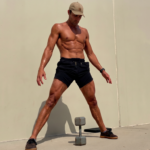
- Single-arm kettlebell farmer’s walk – Core stability and grip strength under load.
- Jump squat – Plyometric power for explosive takedowns and striking.
- Alternating single-leg box jumps – Unilateral leg strength and balance.
- Banded pull-through – Glute and hamstring activation for posterior chain dominance.
- Barbell floor press in glute bridge – Chest and triceps pressing power while reinforcing hip extension.
- Foam roller wall slide – Shoulder mobility and upper-back activation.
- Barbell high row – Upper back and trap strength for clinch control.
In one clip, Aspinall effortlessly pressed an 80kg barbell from a glute bridge and rowed 100kg in a high shrug position — moves that blend raw strength with fight-specific mechanics.
Tom Aspinall’s Fight Camp Workout — Adapted for All Levels
Goal: Build explosive power, functional strength, and fight-ready endurance.
Format: Full-body circuit. Perform each exercise for the set reps or distance, rest 30–60 seconds between moves, then repeat the circuit 2–4 times depending on fitness level.
1. Single-Arm Kettlebell Farmer’s Walk
Muscles: Core, grip, traps, forearms, stabilizers.
- Beginner: 10–15 meters per side with a weight you can carry without leaning.
- Intermediate: 20 meters per side with a heavy kettlebell or dumbbell.
- Advanced (Aspinall-style): 20 meters per side with a kettlebell that forces you to brace hard — no wobbling allowed.
Tip: Keep your chest tall and avoid letting the weight swing.
2. Jump Squat
Muscles: Quads, glutes, hamstrings, calves, core.
- Beginner: Bodyweight squats with a small jump or simply stand up quickly.
- Intermediate: Full jump squats for 8–12 reps.
- Advanced: Hold a light medicine ball (3–5kg) for added resistance, 8–12 reps.
Tip: Land softly to protect your knees and keep your chest lifted.
3. Alternating Single-Leg Box Jumps
Muscles: Quads, glutes, calves, balance and coordination.
- Beginner: Step-ups onto a low box or sturdy bench.
- Intermediate: Jump onto the box landing on one leg, then step down — 5 reps each leg.
- Advanced: Use a higher box and jump explosively, 6–8 reps per leg.
Tip: Focus on control on the landing — this is as much about balance as power.
4. Banded Pull-Through
Muscles: Glutes, hamstrings, lower back, core.
- Beginner: Use a light band and focus on the hip hinge movement, 10–12 reps.
- Intermediate: Medium band resistance, 12–15 reps.
- Advanced: Heavy band, 15–20 reps, holding the squeeze for a second at the top.
Tip: Keep your spine neutral — the movement comes from the hips, not the back.
5. Barbell Floor Press in Glute Bridge
Muscles: Chest, triceps, glutes, hamstrings, core.
- Beginner: Dumbbell floor press in glute bridge, 8–10 reps.
- Intermediate: Barbell with moderate weight, 8–12 reps.
- Advanced: Barbell with heavy weight (as Aspinall does, 80kg+), 8–12 reps with full control.
Tip: Keep hips high and core braced throughout.
6. Foam Roller Wall Slide
Muscles: Shoulders, traps, mid-back.
- Beginner: Light pressure, focus on smooth range of motion, 8–10 reps.
- Intermediate: Slightly more pressure, 10–12 reps.
- Advanced: Use this as a burnout — slow reps, 12–15, maintaining even pressure on the roller.
Tip: Don’t let your lower back arch; keep ribs down.
7. Barbell High Row
Muscles: Upper back, traps, rhomboids, lats.
- Beginner: Dumbbell rows or lighter barbell, 8–10 reps.
- Intermediate: Moderate-weight barbell, 8–12 reps.
- Advanced: Heavy barbell (Aspinall uses ~100kg), 8–12 reps with strict form.
Tip: Pull in an arc toward your hips, not straight up.
Suggested Circuit Plan
- Beginner: 2 rounds, light weights, 45–60 seconds rest between moves.
- Intermediate: 3 rounds, moderate weights, 30–45 seconds rest.
- Advanced: 4 rounds, heavy weights where possible, minimal rest (20–30 seconds).
Finisher (Optional, Aspinall-style): Short, brutal conditioning block — 20 seconds work / 10 seconds rest, rotating between medicine ball slams, battle ropes, and burpees for 4–6 minutes.
Explosive Over Grind
Aspinall’s strength and conditioning philosophy is clear: train like a fighter, not a bodybuilder.
“Everything I do is fast and explosive and geared towards MMA,” he says. “There’s bits of accessory work for injuries and keeping your body strong, but most of it is speed, reactive work — not your standard bodybuilding stuff.”
Short rest periods and compound lifts dominate his sessions, simulating the pace and pressure of a fight.
Nutrition: Fueling for Performance
Behind the power is a disciplined eating plan. Aspinall eats six to seven meals a day, timing carbs for energy and protein for recovery.
- Pre-session: Carbs about two hours before training.
- During session: Additional carbs for sustained energy.
- Immediately post-session: Protein to kickstart muscle repair.
- 1–2 hours later: A balanced meal to replenish fully.
Breakfast is a training staple: three scrambled eggs, 85g of porridge with peanut butter, and a scoop of protein powder. “I’m quite strict in my diet… I’m trying to look and feel as good as possible,” he says.
Recovery: The Silent Weapon
Aspinall treats recovery as seriously as sparring. His toolkit includes:
- Sleep: “Sleep’s a big part… that’s all you need.”
- Massage: To keep muscles loose and aid circulation.
- Pool sessions: Combining light resistance work with joint-friendly recovery.
- Active rest days: Swimming, stretching, or light drills to keep the body moving without overloading it.
Mentality: Always Ready
Despite the uncertainty of his next bout’s date, Aspinall’s mindset is simple — train as if the fight could be tomorrow.
“You never really know when your next one is… I’m just preparing now to fight,” he says. Even with long layoffs, he dismisses talk of “ring rust.” In his words: “Fighting’s fighting. Ring rust is in the mind.”
Beyond the Gym
Outside training, Aspinall spends time with his family and his protection dog, Olympus — a gentle giant at home but fully trained for security. Walks with Olympus double as light recovery and mental downtime, giving Aspinall space to recharge before the next grind.
Takeaway for Fighters and Fitness Enthusiasts
Tom Aspinall’s camp is a masterclass in balancing skill work, functional strength, recovery, and nutrition. His approach proves that elite performance isn’t about endless hours in the weight room but about specific, explosive, and purposeful training supported by disciplined recovery and fueling.
For anyone chasing peak performance — in or out of the cage — Aspinall’s blueprint offers a clear lesson: train smart, recover hard, and stay ready.