
Most people drift into their final decade of life battling frailty, immobility, or declining independence.
But according to physician and longevity expert Dr. Peter Attia, that future isn’t inevitable — it’s preventable.
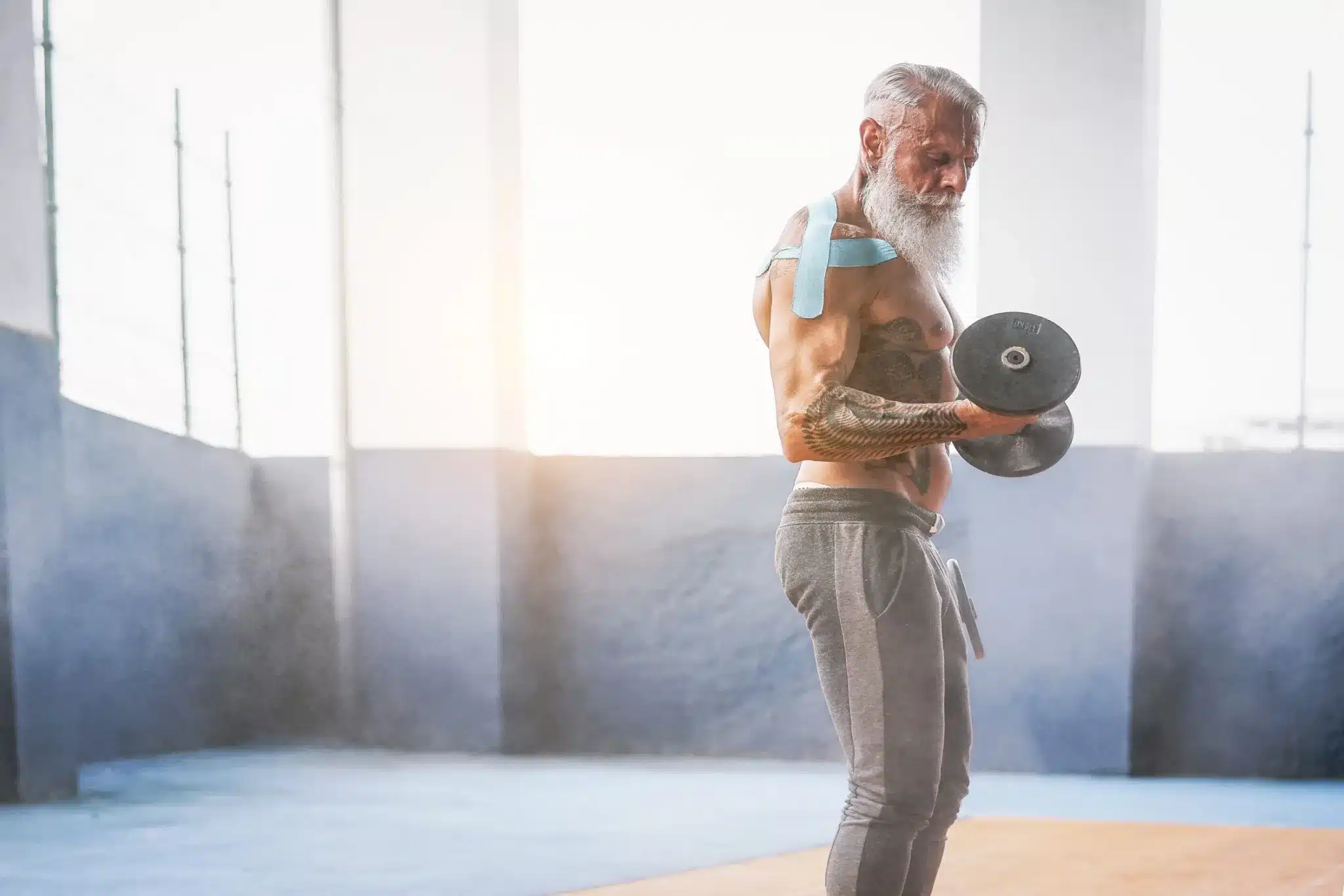
In a recent appearance at The New York Times Well Festival, Dr. Attia shared a provocative framework for aging well that he’s been advocating in his clinical work and books: train for your later years now, as deliberately as an athlete prepares for a competition.
The prize? A physically capable, fulfilling, and independent life — even into your 90s.
So how do you actually train for the last decade of your life? Here’s what Dr. Attia recommends.
Jump to:
Create Your “Centenarian Decathlon”
Dr. Attia urges his patients to envision the physical challenges they want to be able to perform well into old age — and then reverse-engineer the training to make it possible.
“Make a list of the 10 most important and difficult physical activities you want to do in your 80s and 90s,” he advised.
For Attia himself, that includes:
- Walking long distances with ease
- Sitting down and standing up from the floor unassisted
- Driving a racecar (he’s a motorsports enthusiast)
- Playing with grandkids on the ground
For others, the list may include:
- Dancing with a partner
- Having sex
- Living alone without assistance
These tasks might seem simple now, but they require a surprising amount of physical and cognitive capability later in life. For example, dancing demands balance, lower-body strength, coordination, and mental agility — all of which typically decline with age unless specifically trained.
Train Now, Not Later
The crux of Attia’s message is urgency. Waiting until old age to develop these abilities won’t work. Instead, the groundwork needs to be laid decades earlier — ideally in your 40s and 50s.
“If you want to dance in your 80s, you might need to start jumping and balance training in your 40s,” he said.
The principle is simple: build the physical capacity now to prevent the steep declines later.
Jumping, Balance, and Strength
Some of the types of training Attia recommends include:
- Jumping exercises: Preserve fast-twitch muscle fibers needed for quick reactions and falls prevention.
- Balance drills: Reduce the risk of falls, the leading cause of injury-related death in older adults.
- Heavy resistance training: Maintains muscle mass, supports bone density, and promotes mobility.
Strength Training Is Non-Negotiable — Especially for Women
Dr. Attia is particularly vocal about the role of resistance training — not as a bonus, but as a foundation for longevity.
“Strength training with heavy weights is just as important as cardio,” he said.
This is especially critical for women. As estrogen declines with age, women become more susceptible to osteoporosis and fractures. Building and maintaining muscle mass can be a powerful tool against these risks.
Research supports this: a 2022 study in JAMA Network Open found that resistance training was linked to a 10–17% lower risk of all-cause mortality, independent of aerobic activity.
The key is progressive overload — slowly increasing the amount of weight you lift over time. Attia recommends compound lifts like squats, deadlifts, and presses as staples of any longevity-focused fitness plan.
Maximize Your Health ROI
Knowing where to focus your efforts matters — especially if you’re short on time.
“You need to take stock of how you’re doing in each area of your health,” said Attia.
Here’s how he suggests prioritizing based on current habits:
- Sleep: Going from 5 to 7 hours per night can have huge health benefits.
- Exercise: Starting from zero and building to 90 minutes per week slashes mortality risk.
- Diet: Focus on nutrient-dense, whole foods that support long-term energy and health.
- Emotional health: Manage stress, anxiety, and loneliness — they impact lifespan too.
Once you hit a baseline in any area, further improvements yield smaller returns. “If you’re already exercising seven hours a week, going to nine doesn’t help much,” he noted. But if you’re doing nothing, adding even a little movement goes a long way.
Train for Quality, Not Just Quantity
Attia’s philosophy isn’t about simply living longer — it’s about living better.
Quality of life matters. The ability to move freely, maintain autonomy, enjoy relationships, and continue hobbies is what makes the last decade worth living.
“I mean, have you ever met a person at the end of their life that said, ‘God, I wish I had less muscle, I just wish I wasn’t so strong’?” he joked.
Strength, independence, and vitality don’t just happen with age. They’re built — one rep, one walk, one night of good sleep at a time.
Final Thoughts
Dr. Peter Attia’s approach to aging flips the traditional mindset on its head. Instead of resigning ourselves to decline, he challenges us to treat longevity like a sport — and train for it with purpose.
Whether you’re 35 or 55, the sooner you start building your “decathlon” capacity, the greater your odds of enjoying a vibrant, capable old age.
Because aging is inevitable. Frailty isn’t.