What if you could step back from a heated argument or stressful moment and respond with clarity instead of raw emotion?
One amino acid might help you do exactly that.
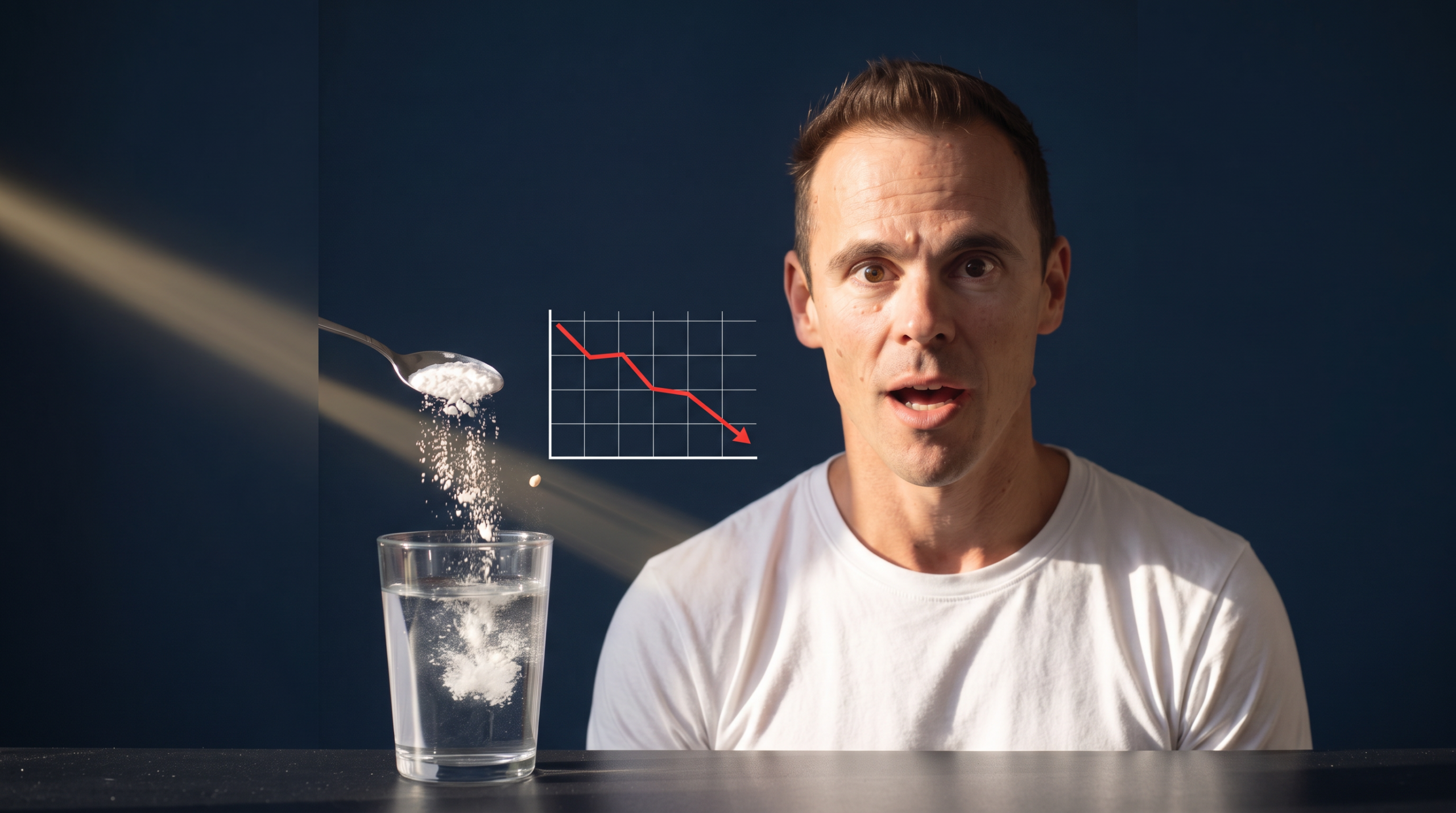
In a recent video, fitness expert Thomas DeLauer explored how glycine—typically known for improving sleep—may also help people detach from stress during waking hours.
The idea: emotional blunting without becoming numb.
Jump to:
- The Amino Acid That Does More Than Build Protein
- How Glycine Lowers Cortisol and Blunts Emotional Response
- The Sleep Connection: Strong Evidence for Evening Use
- Could Glycine Work During the Day?
- Practical Dosing: Morning vs. Evening
- Metabolic Benefits of Staying Calm
- The Gazelle Effect: Stress Resilience in Action
- Who Might Benefit Most
- Safety and Considerations
- The Bottom Line
- Sources
The Amino Acid That Does More Than Build Protein
Glycine often gets lumped in with other amino acids, dismissed as just another building block for protein synthesis.
But glycine is different. It functions as a neurotransmitter in the brainstem and spinal cord, influencing how the nervous system processes stress and emotion. It also serves as a precursor to creatine, which plays a role in brain energy metabolism.
Glycine is very interesting because glycine does two things that are particularly unique that people don’t realize. It acts as a neurotransmitter and it operates in the brain stem.
This dual role—calming the nervous system while supporting brain function—sets glycine apart from typical supplements.
How Glycine Lowers Cortisol and Blunts Emotional Response
DeLauer highlights emerging research suggesting glycine may reduce cortisol, the body’s primary stress hormone.
One 2022 study in aquaculture found that glycine dramatically lowered plasma cortisol levels in fish within minutes. While fish aren’t humans, the mechanism hints at broader biological effects.
In humans, glycine appears to work through two key pathways: it modulates NMDA receptors in the brain and influences the suprachiasmatic nucleus (SCN), the brain’s master clock.
Together, these actions create what researchers describe as a mild disassociative effect—not detachment from reality, but a buffer between stressful stimuli and emotional reaction.
The Sleep Connection: Strong Evidence for Evening Use
Glycine’s benefits for sleep are well documented.
Multiple studies show that three grams of glycine before bed improves subjective sleep quality, reduces time to fall asleep, and enhances next-day cognitive performance.
A 2024 study published in Sleep Medicine Reviews clarified something important: negative emotions themselves don’t necessarily ruin sleep. It’s the relationship to those emotions that matters most.
You could have something negative happen, but if you knew how to frame it and disassociate from it and even detach from it, you could sleep.
People who can mentally separate from stressful events sleep better than those who ruminate. Glycine may facilitate that separation by calming the fight-or-flight response.
Could Glycine Work During the Day?
DeLauer’s hypothesis extends beyond bedtime.
If glycine helps people disengage from emotional stress at night, could smaller daytime doses offer similar benefits during waking hours?
The evidence here is more speculative. While glycine’s sleep benefits are backed by randomized controlled trials, direct research on daytime emotional regulation in humans remains limited. DeLauer’s suggestion to extrapolate sleep research to waking stress management is intriguing but not yet validated by dedicated studies.
Still, the underlying mechanisms—NMDA receptor modulation, cortisol reduction, parasympathetic activation—suggest potential value.
I started trying it and I noticed that my workouts I was calmer. Would you want to be calm during a workout? You want to be able to have what’s called autonomic flexibility.
Autonomic flexibility—the ability to toggle between stressed and calm states—is a hallmark of resilience. Elite operators and athletes train for it. Could glycine offer a biochemical shortcut?
Practical Dosing: Morning vs. Evening
For sleep, the standard recommendation is clear: three grams about 30–60 minutes before bed.
For daytime use, DeLauer suggests experimenting with one gram in the morning. The goal isn’t sedation but rather a subtle shift toward calm focus.
- Evening: 3 grams to support sleep quality and emotional detachment before rest
- Morning: 1 gram for potential stress buffering and improved emotional regulation
- Pairing with creatine: DeLauer recommends combining glycine with creatine to support brain energy and reduce micro-arousals that can trigger stress responses
Creatine helps maintain stable ATP in the brain, preventing metabolic dips that can activate fight-or-flight mode. The combination may offer synergistic benefits, though more research is needed.
Metabolic Benefits of Staying Calm
Chronic stress doesn’t just feel bad—it has measurable metabolic consequences.
Elevated cortisol promotes visceral fat accumulation, particularly around the abdomen. The gut has four times more glucocorticoid receptors than other tissues, making it especially vulnerable to stress-induced fat storage.
By lowering cortisol and promoting parasympathetic dominance, glycine may indirectly support:
- Reduced belly fat: Less cortisol means less abdominal fat deposition
- Improved fat burning: Parasympathetic states favor fat oxidation over storage
- Better appetite regulation: Stress drives hunger; calm supports satiety
- Clearer thinking: Lower cortisol improves executive function and decision-making
These benefits compound over time, especially for people dealing with chronic low-grade stress.
The Gazelle Effect: Stress Resilience in Action
DeLauer uses a vivid analogy to describe ideal stress management.
If you’re a gazelle and you’re getting chased by a lion, that gazelle can get chased, get back into its field, shake it off, and be back to being calm again. Do you know many humans that can do that?
Most people can’t. Stress lingers—sometimes for hours or days. The ability to turn off the fight-or-flight response is rare but trainable.
Glycine won’t replace mental training or therapy. But it might provide a neurochemical assist, helping the body return to baseline faster after acute stress.
Who Might Benefit Most
Glycine appears most useful for individuals who:
- Struggle to fall asleep or stay asleep due to racing thoughts
- Experience rumination after stressful events
- Want to improve autonomic flexibility and stress recovery
- Need support for emotional regulation without sedation
- Are looking for natural alternatives to sleep medications
It’s not a cure-all. People with severe anxiety disorders or chronic insomnia should work with healthcare providers.
But for everyday stress—arguments, work pressure, training intensity—glycine offers a low-risk, evidence-backed option.
Safety and Considerations
Glycine is generally considered safe, even at higher doses.
Most studies use three to five grams daily without adverse effects. It’s a naturally occurring amino acid found in collagen-rich foods like bone broth, gelatin, and skin-on poultry.
Side effects are rare but may include mild gastrointestinal discomfort at very high doses. Starting with lower amounts and titrating up allows individual tolerance assessment.
Pregnant or breastfeeding women and those on medications affecting neurotransmitters should consult a doctor before supplementing.
The Bottom Line
Glycine’s sleep benefits are well established. Its potential for daytime emotional regulation is more speculative but mechanistically plausible.
By lowering cortisol, modulating NMDA receptors, and supporting parasympathetic tone, glycine may help people respond to stress with clarity instead of reactivity.
Whether it’s three grams before bed or one gram in the morning, this amino acid deserves attention—not as a miracle cure, but as a practical tool for modern stress management.
For those constantly toggling between fight-or-flight and exhaustion, a little biochemical support might be exactly what’s needed.
Sources
- Sleep Medicine Reviews (2024) – Negative emotions and sleep quality
- Aquaculture (2022) – Glycine effects on cortisol in fish models
- General glycine sleep research literature (multiple RCTs and mechanistic studies)