Getting to 10% body fat isn’t a pipe dream reserved for professional athletes and fitness models.
It’s a achievable goal for most men willing to put in focused effort over 12 weeks—or longer if needed.
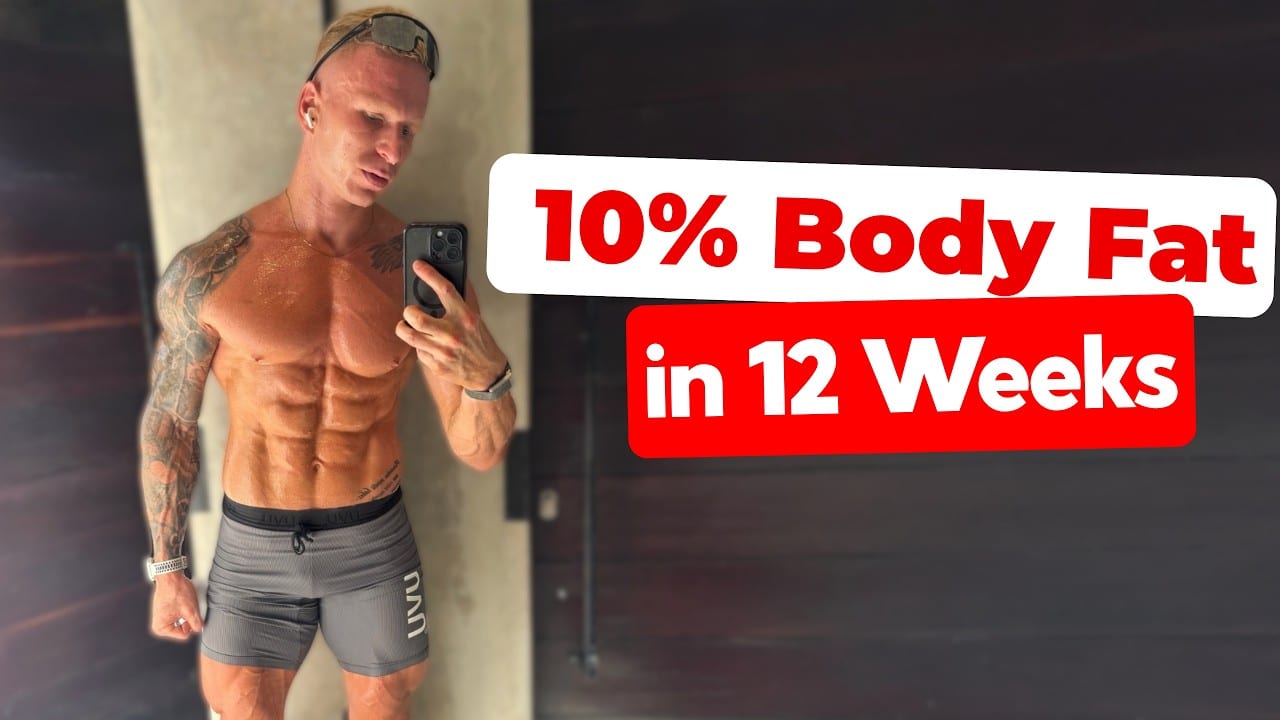
Fitness coach and content creator breaks down the exact protocol used with hundreds of clients to achieve dramatic transformations without living in the gym or eating chicken and rice six times daily.
These are busy professionals with families, demanding jobs, and travel schedules who still managed to get incredibly lean by following a structured, evidence-based approach.
Jump to:
- Setting Realistic Expectations
- Nutrition: The Foundation of Fat Loss
- Training: Building and Preserving Muscle
- Daily Movement: The Underrated Fat Loss Tool
- Cardio: Support Tool, Not Priority
- Sleep and Recovery: The Foundation Everything Rests Upon
- Alcohol: The Inconvenient Truth
- Consistency: The Make-or-Break Factor
- The Exit Strategy: Keeping What You Earned
- Final Thoughts: Simple But Not Easy
Setting Realistic Expectations
Before diving into tactics, understanding what lies ahead matters tremendously.
This is going to be hard. Like, I’m not going to try and sugar coat this in any way, right? There are not very many guys that are 10 to 12% body fat.
Not every man will reach 10% body fat in exactly 12 weeks. Starting point matters significantly. Most guys can realistically hit 10-12% body fat within that timeframe, though some may need 16 or 20 weeks.
The protocol remains identical regardless—just potentially stretched over more weeks with unwavering consistency.
Expect periods of increased hunger. Energy levels may dip temporarily. Discipline becomes non-negotiable, and half-hearted efforts won’t cut it.
Nutrition: The Foundation of Fat Loss
Training matters, but nutrition drives results when pursuing single-digit body fat percentages.
Many men mistakenly prioritize hiring personal trainers and increasing gym sessions while neglecting what goes into their mouths. That approach fails consistently.
Dialing In Your Calorie Deficit
Creating and maintaining a calorie deficit isn’t optional—it’s mandatory for fat loss.
If we’re not in a calorie deficit, we are just simply not going to lose body fat. And this does require tracking.
Tracking calories isn’t obsessive behavior. It’s taking control of health and fitness outcomes. What gets tracked gets managed, leading to predictable fat loss progress rather than guessing and hoping.
For a quick starting point, multiply current body weight in pounds by 10 for aggressive fat loss (especially if sedentary) or by 12 for moderate deficits with higher activity levels.
A 200-pound man would consume approximately 2,000-2,400 calories daily. This simple formula generally creates an appropriate calorie deficit.
Weekend Consistency Makes or Breaks Progress
This is a seven-days-per-week protocol. Weekends absolutely count.
Most men execute well Monday through Friday, then completely derail Saturday and Sunday. Two to three days of uncontrolled eating erases five days of diligent work.
Strategic approaches exist for weekends. Slightly higher calorie days on Saturday and Sunday create flexibility for social situations. However, tracking still remains essential—just with adjusted targets.
You are only as good as your weekends.
Protein: The Satiety and Muscle Preservation Secret
High protein intake serves multiple critical functions during fat loss phases.
Protein preserves muscle tissue when calories drop. It keeps you feeling full and satiated, preventing the hunger and fatigue that triggers binges and dietary abandonment.
Target approximately one gram of protein per pound of body weight daily. Heavier individuals should use goal weight instead—a 220-pound man targeting 180 pounds would consume 180 grams of protein daily.
Prioritize whole food protein sources:
- Chicken breast
- Fish
- Eggs
- Greek yogurt
- Lean beef
Protein powders, bars, and protein ice cream aren’t forbidden, but whole foods should comprise the majority of protein intake for optimal results and satiety.
Carbs and Fats: Finding Your Balance
Carbohydrate and fat distribution matters less than most people assume.
Getting lean works with higher fat/lower carb approaches or higher carb/moderate fat strategies. Neither holds magical fat-burning properties.
Recommended baseline: Keep dietary fat around 25% of total calorie intake, typically 50-70 grams daily for most men. This amount supports hormone production, vitamin absorption, and overall health.
Low fat intake risks crashing testosterone levels—something to avoid during an already demanding fat loss phase.
Carbohydrates don’t cause fat gain. Training intensity requires adequate carbohydrate intake. Most men perform well around 200 grams of carbs daily, though individual tolerance varies.
Eating under 100 grams daily seems unnecessarily restrictive for most. True ketosis requires under 50 grams daily—a different approach not covered here that works for some but not most men.
Training: Building and Preserving Muscle
Resistance training isn’t optional when pursuing 10% body fat with an impressive physique.
Why Lifting Weights Is Non-Negotiable
If you are not lifting weights, if you just do cardio, you might not even ever get to 10% body fat because what will happen is, yeah, you might lose weight, but there’s no reason for your body to hold on to muscle mass.
Cardio alone creates weight loss but not necessarily impressive body composition. Without resistance training, the body has zero reason to maintain muscle tissue during calorie restriction.
Lower body weight without muscle retention doesn’t improve body fat percentage to desired levels. The physique remains flat and undefined.
Men must resistance train. No exceptions. Don’t like gyms? Acquire home equipment. Preserving and building muscle tissue comes exclusively from progressive resistance training, not cardio, classes, F45, or CrossFit.
Progressive Overload: The Only Training Philosophy You Need
Follow structured programs focused on one simple concept: progressive overload.
Getting stronger and lifting more weight each gym session drives muscle development. That’s it.
Training three days weekly with progressive overload focus on big compound movements hitting full body produces better results than six days weekly of random exercises with no progression tracking.
Everyone knows that guy—constantly at the gym but never changing physically. Lack of structured progression explains why.
Most men maintain consistency with 3-4 training sessions weekly. Very few sustain five-plus days long-term. Build sustainable routines, not unsustainable sprint protocols that collapse after several weeks.
Daily Movement: The Underrated Fat Loss Tool
Nutrition creates calorie deficits, but daily movement makes fat loss dramatically easier.
Extremely low activity levels allow initial fat loss, especially at aggressive calorie targets. However, progress stalls quickly, forcing food intake lower and lower—a miserable experience.
Higher activity levels permit more food intake while maintaining deficits. Target 10,000-12,000 steps daily as a non-negotiable baseline.
A 90-kilogram man walking 10,000 steps daily burns approximately 500 additional calories—substantial over weeks and months.
Most men don’t have time problems. They have structural problems. No set routine means wasted pockets of time throughout days.
Implementing structure makes 10,000 steps the easiest daily task, not the hardest. Wake earlier. Walk during lunch breaks. Track via activity watches, fitness trackers, or smartphones.
Cardio: Support Tool, Not Priority
Cardio is optional but useful, especially when pursuing very lean physiques.
Losing a few pounds? Probably skip cardio. Getting to 10-12% body fat with visible abs? Cardio becomes increasingly valuable as diets progress.
I’ve never got truly lean like lean lean lean without doing any cardio. I just find that it’s made things easier. I like my food. I prefer to keep my calories higher than suffer on low food.
Two to three weekly sessions suffice. Morning cardio sets positive daily momentum. Alternatively, add 20-30 minutes post-workout on steppers or incline treadmills.
Don’t go all-in immediately. Initial pounds drop without much cardio. Gradually increase volume over weeks as needed.
Low-Intensity Steady State Reigns Supreme
Low-intensity steady-state cardio (LISS) works best for most men.
High-intensity intervals spike hunger and fatigue while leaving you drenched in sweat. LISS allows conversation maintenance while burning substantial calories.
Recommended options:
- Stair stepper: Maintain steady pace for 20-30 minutes
- Incline walking: Set incline to 12, speed to 5.0, walk 20-30 minutes
Multiply sessions across weeks for significant calorie expenditure without replacing proper nutrition protocols.
Sleep and Recovery: The Foundation Everything Rests Upon
Target minimum seven hours nightly, preferably more.
Sleep quality matters tremendously. Poor sleep intensifies hunger, crashes energy levels, and makes getting lean exponentially harder.
Examine sleep routines honestly. Earlier bedtimes? Slightly later wake times? Establish consistent sleep and wake schedules to regulate circadian rhythms.
Consistency creates effortless sleep patterns rather than nightly struggles.
Alcohol: The Inconvenient Truth
Serious leanness and high alcohol consumption don’t coexist peacefully.
If alcohol is a big part of your life and you really really want to have it, I just don’t think getting lean is for you.
Alcohol sabotages fat loss through multiple mechanisms:
- Slows fat oxidation significantly
- Impairs recovery quality
- Negatively impacts heart rate variability (body stress tolerance)
- Adds empty, nutritionally worthless calories
Pursuing sub-10% body fat in 12 weeks? Complete abstinence makes sense. Reach goals first, then reintroduce moderate amounts if desired.
Occasional vodka sodas or gin and tonics weekly won’t derail progress. Heavy, frequent drinking absolutely will.
Consistency: The Make-or-Break Factor
Most men never approach 10-12% body fat because consistency eludes them.
Following protocols for several weeks, then stopping, then restarting creates zero progress. Minimum 12-week commitment required.
Whatever approach you choose must remain sustainable across that entire timeframe. Most people need external accountability—someone providing motivation and course corrections.
Without accountability, the pattern repeats: brief adherence, abandonment, restart, abandonment. That cycle never reaches destination.
Making Adjustments When Progress Stalls
Target 0.5-1% body weight loss weekly. When hitting genuine plateaus (not just normal weekly fluctuations), several adjustment options exist:
- Reduce calories slightly: Drop 100-150 calories, primarily from carbohydrates, and assess next week
- Increase daily steps: Bump from 10,000 to 12,000 or 12,000 to 15,000
- Add or increase cardio: Start with three 20-minute sessions, progress to 30 minutes, increase frequency
Each adjustment increases body’s energy demands, restoring calorie deficits and resuming fat loss.
Monitor progress honestly. Assess whether effort has slipped in certain areas before making protocol changes.
The Exit Strategy: Keeping What You Earned
Reaching 10% body fat isn’t the finish line—it’s a milestone requiring careful navigation afterward.
I would argue that there is literally no point in doing this entire thing if you don’t have a strategy once you’re lean. Like it’s pointless because you will get lean and then you will just gain all the fat back.
Post-diet bodies are extremely receptive to fat gain. Extended calorie restriction triggers protective mechanisms—bodies interpret weight loss as potential starvation and aggressively restore fat stores.
Proper reverse dieting allows eating more food while maintaining leanness. Execute incorrectly, and rapid, discouraging fat regain occurs.
Reverse Dieting Protocol
After reaching goal body fat:
- Increase calories gradually—weekly or bi-weekly small increments
- Slowly reduce cardio volume
- Bring daily steps to sustainable baseline
- Find maintainable equilibrium with higher food intake and reasonable activity levels
True lifestyle leanness doesn’t require extreme daily effort. Solid habits allow maintaining impressive physiques without constant cardio sessions or restrictive eating.
Exit strategy planning matters as much as the fat loss phase itself.
Final Thoughts: Simple But Not Easy
Reaching 10% body fat isn’t for everyone, and that’s perfectly acceptable.
Most men won’t achieve this goal. However, the process isn’t complicated—it just demands structure, discipline, serious consistency, and potentially 12-20 weeks of focused effort with necessary sacrifices.
The reward? Knowing what your body looks like at its absolute peak potential.
Follow these evidence-based steps systematically. Track progress honestly. Adjust when needed. Stay consistent through weekends and challenging periods.
The path is clear. Walking it separates those who achieve exceptional physiques from those who merely wish for them.