Building an aesthetic physique goes far beyond simply lifting weights and eating clean.
Even with consistent training and proper nutrition, many gym-goers still fall short of achieving that coveted Greek god look.
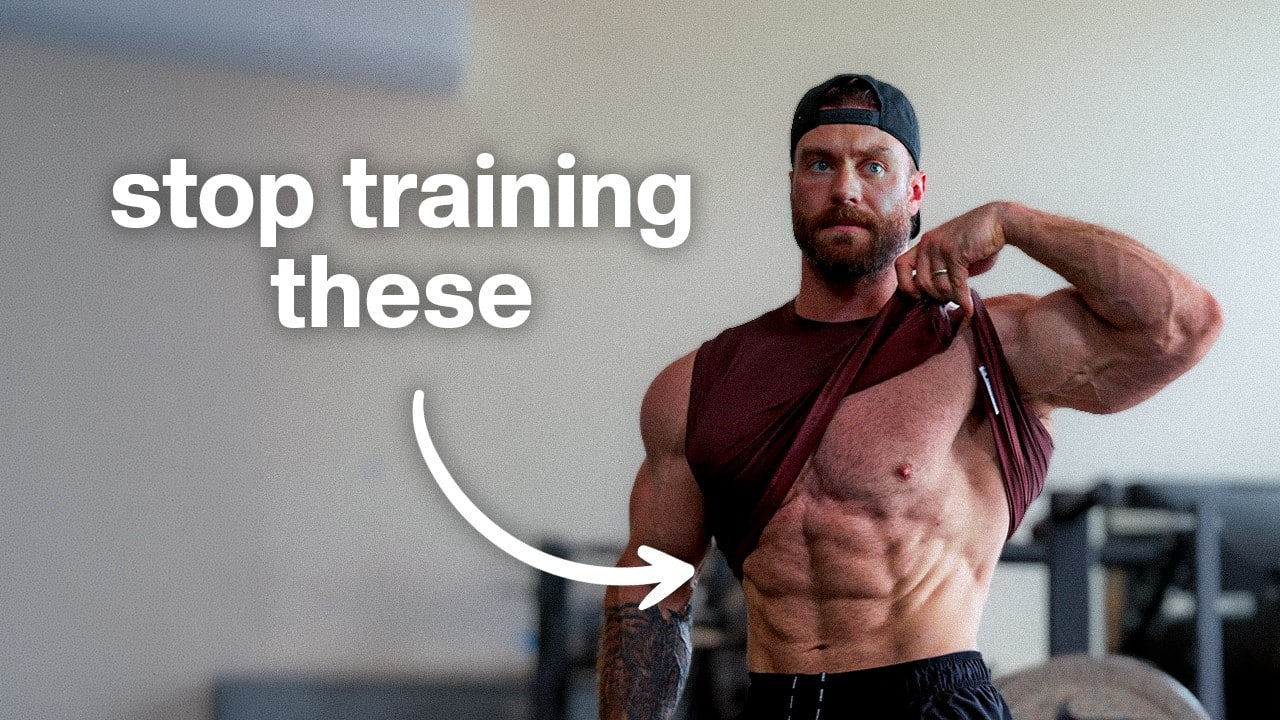
The difference lies in understanding specific principles that separate average physiques from truly aesthetic ones.
In a recent video, three-time Men’s Physique Olympia champion Brandon Hendrickson breaks down exactly what it takes to build a genuinely aesthetic physique, sharing insights from his championship-winning career.
Jump to:
- Define Your Aesthetic Blueprint First
- Shape Trumps Size Every Single Time
- The V-Taper Formula Nobody Talks About
- High-Value Aesthetic Muscles Worth Prioritizing
- Train For Muscle Connection, Not Just Weight
- Strategic Muscle Selection For Arm Development
- Common Mistakes Killing Your Aesthetic Potential
- Evolution From Amateur To Professional
- The Two Visual Essentials
- How Lean Should You Actually Get?
- Training Evolution Across Experience Levels
- Don’t Major In The Minors Too Early
Define Your Aesthetic Blueprint First
Before touching a single weight, defining what “aesthetic” actually means personally becomes critical. The term itself carries zero objective meaning—it’s entirely subjective based on individual goals.
Some aspire toward classic physique proportions, others prefer the bodybuilders from earlier decades, while some chase calisthenics-style builds. Without clarity on that vision, achieving any meaningful goal becomes impossible.

If you want something simple that actually works, this is one of the most effective tools I’ve used to build strength, conditioning, and endurance without needing a full gym setup.
- Full-body training with one weight using swings, squats, and presses
- Solid cast iron build that feels stable and lasts for years
- Comfortable grip that makes high-rep workouts easier to handle
See, I didn’t overthink it when I was young. I just wanted to be really strong. So, I would focus on compound movements. I would squat bench dead every single week no matter what.
Hendrickson emphasizes building foundational strength through compound movements during youth, focusing on perfect form alongside progressive overload. That combination creates what he calls “just a cheat code” for long-term development.
Shape Trumps Size Every Single Time
Here’s where most lifters miss the mark entirely: eyes perceive shape before size.
A larger individual wearing oversized clothing might look big, but someone weighing 175 pounds in properly fitted attire with well-developed proportions can appear significantly more muscular. Shape creates optical illusions that raw mass simply cannot.
This principle demands honest self-assessment. Analyzing personal weak points becomes non-negotiable for aesthetic development.
Hendrickson discovered after five to seven years that while his legs responded exceptionally well to heavy training, his arms and back thickness lagged behind. Recognition of those imbalances forced complete restructuring of his training approach.
The V-Taper Formula Nobody Talks About
Creating that coveted V-taper or X-frame depends heavily on waist management—not just shoulder and lat development.
If you want something simple that actually works, this is one of the most effective tools I’ve used to build strength, conditioning, and endurance without needing a full gym setup.
- Full-body training with one weight using swings, squats, and presses
- Solid cast iron build that feels stable and lasts for years
- Comfortable grip that makes high-rep workouts easier to handle
Digestion plays a surprisingly crucial role here. Consuming foods that cause persistent bloating creates chronic abdominal stress, leading to stomach distension that accumulates over extended periods.
If you’re constantly eating foods that don’t sit well with you, you’re constantly bloated, that constant stress on your stomach will cause it to distend and stay there over a long period of time and you will get a bigger waist from it.
Maintaining core stability during training, avoiding excessive oblique work, and prioritizing easily digestible foods keeps waists tight. The tighter the waist feels consistently, the tighter it stays visually.
High-Value Aesthetic Muscles Worth Prioritizing
Certain muscle groups deliver disproportionate aesthetic returns depending on individual structure.
Shoulders (Deltoids)
Wide clavicles provide genetic advantages for shoulder width, but developing massive delts creates similar illusions for those without naturally broad bones. Wider shoulders make waists appear smaller through contrast—essential for anyone carrying extra midsection size.
Lats
From posterior views, lat width performs the same optical trick. Broader lats shrink waist appearance, completing that X-frame when combined with developed shoulders.
Quadriceps
Quad sweep—lateral development creating outward flow—produces reverse taper effects. Wide-sweeping quads make waists look proportionally smaller while creating dramatic frontal aesthetics.
If you want something simple that actually works, this is one of the most effective tools I’ve used to build strength, conditioning, and endurance without needing a full gym setup.
- Full-body training with one weight using swings, squats, and presses
- Solid cast iron build that feels stable and lasts for years
- Comfortable grip that makes high-rep workouts easier to handle
Hamstrings
While less critical for overall silhouette, hamstring fullness matters tremendously seated. Targeting different hamstring regions requires specific exercise selection:
- Knee flexion movements (leg curls): Target distal hamstring ends for lower hang
- Hip extension movements (RDLs, deadlifts): Develop proximal portions higher up
Calves
Despite common beliefs about genetic limitations, calves shouldn’t be neglected. While genetics certainly influence development, consistent training produces noticeable improvements.
Erectors
Often overlooked, especially among bodybuilders, thick spinal erectors lift back musculature outward. This separation enhances lat definition and creates impressive posterior poses.
Train For Muscle Connection, Not Just Weight
Once weakness identification occurs, how those muscles get trained determines actual results.
Training for muscle development differs fundamentally from training purely for strength. Young lifters should prioritize getting strong without sacrificing execution quality, then progress execution and load simultaneously while maintaining pristine form.
Mind-muscle connection isn’t pseudoscience mythology. Elite athletes with exceptional quad development can often flex individual portions—vastus medialis, lateralis, even the teardrop—independently because neural connection runs so deep.
If you want something simple that actually works, this is one of the most effective tools I’ve used to build strength, conditioning, and endurance without needing a full gym setup.
- Full-body training with one weight using swings, squats, and presses
- Solid cast iron build that feels stable and lasts for years
- Comfortable grip that makes high-rep workouts easier to handle
That superior connection translates directly into faster growth, better definition, and superior aesthetics during training.
Injury Prevention Protects Aesthetics Forever
Injuries, stiffness, and chronic tightness devastate aesthetic potential permanently.
I tore my hamstring when I was really young. Never looked aesthetic again. I have a hole in my hamstring now because of that. If you tear a bicep and it goes up, it’ll never look aesthetic again.
Beyond catastrophic injuries, training with restricted ranges and poor positioning creates fascial restrictions. Tight fascia limits muscle growth potential, preventing muscles from achieving full, relaxed positioning necessary for aesthetic appearance.
Relaxed muscle tone—actual neurological tone frequency—allows fullness, youthful appearance, and optimal growth conditions.
Strategic Muscle Selection For Arm Development
Hendrickson shares specific arm-building strategies often overlooked in conventional training wisdom.
For individuals with short bicep insertions creating gaps between muscle belly and elbow, developing brachialis becomes game-changing. Larger forearm muscles fill that aesthetic gap, making arms appear substantially bigger.
If you want something simple that actually works, this is one of the most effective tools I’ve used to build strength, conditioning, and endurance without needing a full gym setup.
- Full-body training with one weight using swings, squats, and presses
- Solid cast iron build that feels stable and lasts for years
- Comfortable grip that makes high-rep workouts easier to handle
Similarly, targeting long tricep heads creates arm hang that enhances frontal appearance, while brachialis development improves side profiles dramatically.
Common Mistakes Killing Your Aesthetic Potential
Several training pitfalls sabotage aesthetic development despite good intentions:
- Ego lifting: Prioritizing weight over execution quality
- Momentum abuse: Using body English instead of muscular tension
- Partial range: Half-reps limiting muscle development
- Number chasing: Focusing on PRs rather than muscle stimulation
While these tools have appropriate applications, making them training priorities derails aesthetic goals completely.
Someone benching 225 pounds for 20 half-reps with momentum demonstrates strength, but switching to full lockouts, controlled negatives, bottom pauses, and deliberate mind-muscle connection builds chest development far more effectively long-term.
Tempo Training Changes Everything
Implementing tempo variations revolutionized Hendrickson’s training approach. Different tempo prescriptions stimulate muscles uniquely:
- 10-second negatives with 1-second concentrics
- 4-second negatives paired with 4-second concentrics
- 3-second stretch pauses before contraction
These variations load muscles across complete ranges, ensuring full-length development while providing novel growth stimuli.
If you want something simple that actually works, this is one of the most effective tools I’ve used to build strength, conditioning, and endurance without needing a full gym setup.
- Full-body training with one weight using swings, squats, and presses
- Solid cast iron build that feels stable and lasts for years
- Comfortable grip that makes high-rep workouts easier to handle
Evolution From Amateur To Professional
Hendrickson won his first Olympia at 220 pounds before weight limits increased dramatically between 2019 and 2020. During COVID lockdowns at age 24, he trained extraordinarily heavy with training partner Axel—pushing past failure consistently.
My mistake that I made was that I pushed the intensity and chasing the weight for too long. And it led to my body having some injuries and having some restrictions that I was honestly battling for the rest of my career.
Those injuries never fully healed during competitive seasons, creating limitations throughout his professional career. His advice: develop training intelligence earlier, prioritize form relentlessly, and understand progress happens without scale changes.
The Two Visual Essentials
Aesthetic physiques require exactly two components: sufficient muscle mass and adequate leanness to reveal definition.
Building phases demand caloric surpluses allowing muscle accumulation. Stubborn hardgainers may need tolerating slight body fat increases, but digestive-friendly foods should remain prioritized throughout.
Cutting phases require gradual calorie reductions, elevated protein intake, and moderate cardio additions. Running excessively shrinks leg development, so cardiovascular work needs strategic implementation.
Maintenance becomes progressively easier with training longevity. Hendrickson maintains 240 pounds at stage-lean condition far easier now than maintaining smaller physiques during his twenties.
If you want something simple that actually works, this is one of the most effective tools I’ve used to build strength, conditioning, and endurance without needing a full gym setup.
- Full-body training with one weight using swings, squats, and presses
- Solid cast iron build that feels stable and lasts for years
- Comfortable grip that makes high-rep workouts easier to handle
Cardio: Minimum Effective Dose
Cardiovascular training follows minimum effective dose principles—enough for leanness and health benefits without compromising recovery or muscle mass.
Incline walking provides excellent starting points, elevating heart rates without excessive fatigue. Hendrickson reached 3-4% body fat for Olympia competitions using exclusively incline treadmill walking.
How Lean Should You Actually Get?
Massive differences separate stage-ready conditioning from everyday leanness that looks impressive.
Social media distorts perceptions dramatically. Influencers often peak temporarily for photo shoots using water, sodium, and carbohydrate manipulation—not sustainable year-round leanness.
Stage conditioning (3-5% body fat) damages health, compromises muscle retention, and proves unsustainable. Maintaining 8-10% body fat allows excellent aesthetics—visible upper and lower abs—while preserving muscle fullness, recovery capacity, and training performance.
Training Evolution Across Experience Levels
Optimal training approaches shift dramatically with experience progression.
If you want something simple that actually works, this is one of the most effective tools I’ve used to build strength, conditioning, and endurance without needing a full gym setup.
- Full-body training with one weight using swings, squats, and presses
- Solid cast iron build that feels stable and lasts for years
- Comfortable grip that makes high-rep workouts easier to handle
Beginners: Build foundational strength with perfect form, creating structural base for future development.
Intermediates: Identify weak points, balance bulking and cutting phases strategically, refine proportional development.
Advanced: Scale movements slow dramatically, but refinement opportunities explode. Digestion optimization, range perfection, injury prevention, and variable manipulation (tempo, rest periods, exercise selection, volume cycling) orchestrate together systematically.
Late-career priorities for Hendrickson centered on injury management rather than intensity maximization. Post-Olympia recovery periods, dedicated rehab phases, strategic strength building, and careful hypertrophy progression became essential while monitoring weak points continuously.
Don’t Major In The Minors Too Early
The single biggest mistake beginners make: obsessing over final 5% details prematurely.
Beginners should focus exclusively on foundational work—perfect form, progressive overload, consistency. Detailed optimization gets earned through years of disciplined effort, not studied during month one.
If you want something simple that actually works, this is one of the most effective tools I’ve used to build strength, conditioning, and endurance without needing a full gym setup.
- Full-body training with one weight using swings, squats, and presses
- Solid cast iron build that feels stable and lasts for years
- Comfortable grip that makes high-rep workouts easier to handle
Advanced variables deserve attention only after reaching levels where 0.1% improvements actually matter—typically requiring years of dedicated training first.
Building truly aesthetic physiques demands patience, strategic thinking, and evolutionary approaches matching experience levels. Master fundamentals relentlessly before chasing advanced optimizations.