Popular fitness YouTuber Will Tennyson recently shared his latest training approach—one that’s producing what he calls “the most I’ve grown in a short period of time.”
It’s not your typical bro split, and it’s definitely not for the faint of heart.
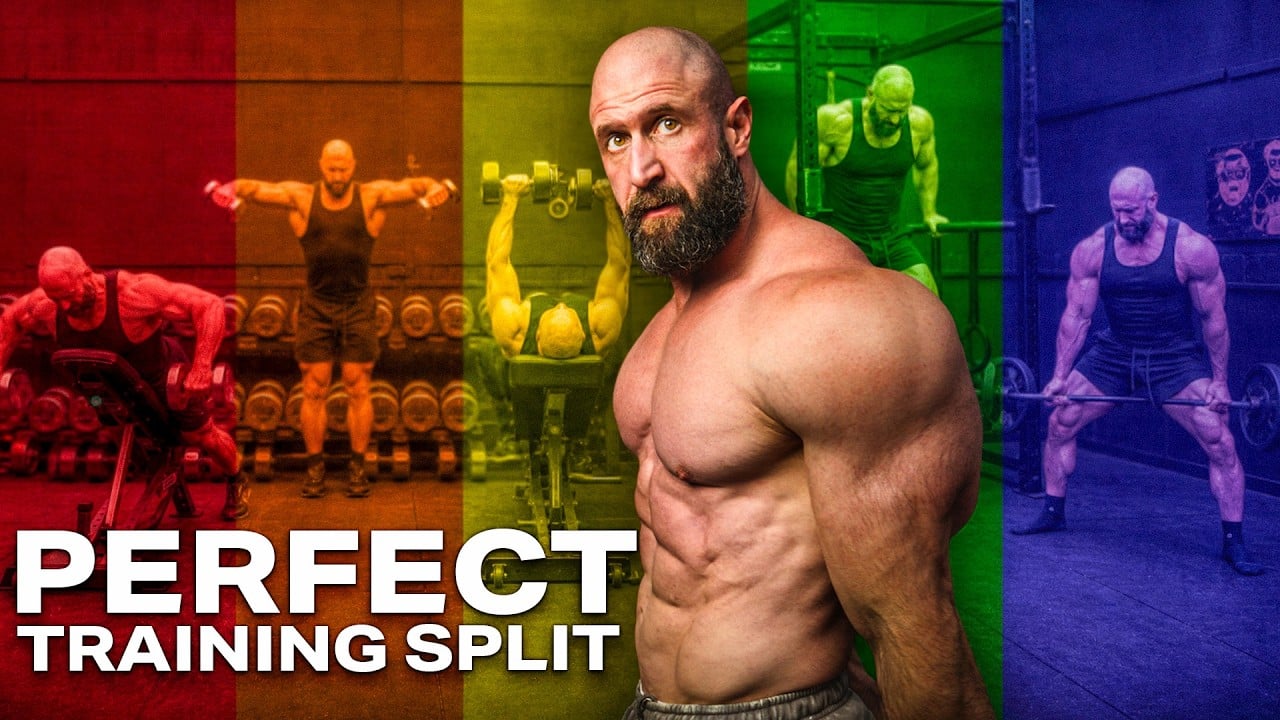
After experimenting with every conceivable training split and intensity technique imaginable, Tennyson has landed on a hybrid approach that prioritizes recovery, frequency, and brutal intensity.
Here’s what makes his current method so effective—and why you might want to consider giving it a shot.
Jump to:
- Why Research Alone Won’t Build Your Best Physique
- The Hybrid Bro Split That’s Driving Growth
- Advanced Sets: The Non-Negotiable Intensity Requirement
- High Volume, High Reps, High Soreness
- Balancing Volume and Frequency Without Halfassing
- Programming Like You Hate Yourself
- Is This Approach Right for Everyone?
Why Research Alone Won’t Build Your Best Physique
Before diving into his training split, Tennyson makes an important point about relying too heavily on scientific studies to guide programming decisions.
Never make a change in your training just because you got excited about some new research. That’s dumb.
He references three studies that support his approach but emphasizes that he didn’t design his program around research findings. Instead, he made adjustments based on what produced results, then looked into why it worked.

If you want something simple that actually works, this is one of the most effective tools I’ve used to build strength, conditioning, and endurance without needing a full gym setup.
- Full-body training with one weight using swings, squats, and presses
- Solid cast iron build that feels stable and lasts for years
- Comfortable grip that makes high-rep workouts easier to handle
His example? That viral study comparing standing versus seated calf raises that concluded seated variations were inferior.
The problem was the study had major flaws: only 14 untrained participants, standardized range of motion that didn’t account for biomechanical differences, and participants clearly using momentum.
Here’s one of the participants. Look at that bastard. You tell me he’s not using his hands with every single seated rep.
The Hybrid Bro Split That’s Driving Growth
Tennyson’s current approach maintains the essence of a traditional bro split—dedicating full workouts to specific muscle groups—but with strategic modifications that maximize frequency and recovery.
Small Muscle Group Rotation
Every workout begins with training one of two smaller muscle groups that can recover quickly. He rotates between them each session.
Recently, that’s been forearms and calves, but he’s experimented with neck flexors and extensors, internal and external hip rotation, abs, and even anterior tibialis by itself.
Everybody has a lot that could use a little extra work. And because you’re hitting them so frequently with so much intensity, it doesn’t take that long to do. Literally two disgusting drop or rest pause sets and you’re good.
Priority Muscle Group Training
One major muscle group gets absolute priority over everything else. For Tennyson, that’s been chest—his former weak point that’s now developed enough that there’s “actually something to hold on to.”
If you want something simple that actually works, this is one of the most effective tools I’ve used to build strength, conditioning, and endurance without needing a full gym setup.
- Full-body training with one weight using swings, squats, and presses
- Solid cast iron build that feels stable and lasts for years
- Comfortable grip that makes high-rep workouts easier to handle
The key distinction: he trains this priority muscle whenever it’s recovered, regardless of where it falls in a traditional weekly schedule. This means hitting it every four to five days based purely on readiness rather than calendar dates.
Everything else gets pushed back to accommodate priority muscle recovery.
Advanced Sets: The Non-Negotiable Intensity Requirement
Perhaps the most distinctive feature of Tennyson’s approach is that every single working set must be an advanced set—drop sets, rest-pause, clusters, or similar techniques.
One thing that gets confusing is when you look at a meta analysis on advanced training sets. At first glance, they’re better. But then you dig a little deeper and realize not all the studies were volume matched.
While research shows these techniques are at minimum effective for saving time, Tennyson uses them for a different reason: ensuring genuine intensity rather than just accumulating volume to hit arbitrary weekly set targets.
Muscle-Specific Advanced Set Applications
Arms: Cable drop sets provide exceptional efficiency and pain induction. Ascending sets until reaching embarrassing quarter reps, then dropping back down, offer variation.
Back: Rest-pause sets where you hold the stretch during brief rest periods rather than setting weight down completely.
If you want something simple that actually works, this is one of the most effective tools I’ve used to build strength, conditioning, and endurance without needing a full gym setup.
- Full-body training with one weight using swings, squats, and presses
- Solid cast iron build that feels stable and lasts for years
- Comfortable grip that makes high-rep workouts easier to handle
Shoulders: Mechanical drop sets for rear delts (switching exercise variations as fatigue accumulates), standard drop sets for lateral delts, and cluster sets for anterior delts where cheating additional reps extends sets brutally.
Chest: Rest-pause techniques that maintain scapular positioning throughout the extended set.
Legs: Creative brutality like walking weighted barbell lunges with drops incorporated.
High Volume, High Reps, High Soreness
Tennyson has recently shifted toward higher volume and rep ranges, resulting in significant soreness following every workout.
He acknowledges the common refrain that soreness doesn’t equal growth, but frames it differently for his purposes.
For me, it’s the best indicator that I trained with enough volume and intensity to elicit growth. And even more important than that, I actually hit the muscle that I was trying to target.
The location of soreness serves as feedback. If anterior delts are sore after chest day, or traps dominate after shoulder work, something went wrong with exercise execution or selection.
If you want something simple that actually works, this is one of the most effective tools I’ve used to build strength, conditioning, and endurance without needing a full gym setup.
- Full-body training with one weight using swings, squats, and presses
- Solid cast iron build that feels stable and lasts for years
- Comfortable grip that makes high-rep workouts easier to handle
Balancing Volume and Frequency Without Halfassing
Research supports that more volume generally produces more growth, even with diminishing returns. But there’s a critical threshold where adding sets within a single workout leads to decreased effort quality.
This presents a particular challenge for bro split enthusiasts who pack enormous volume into single-muscle-group sessions.
There’s just something about destroying a muscle to the point that it no longer is fun and now you’re just harming yourself. I don’t know. I like it.
The hybrid approach addresses this by increasing frequency for smaller muscles (hitting them every other workout) while maintaining flexibility for major muscle group training based on recovery status rather than rigid scheduling.
Programming Like You Hate Yourself
Tennyson’s philosophy extends to creative sadism in exercise selection and implementation.
You can always do what I do, which was pretend like you’re making a program for somebody you hate and then force yourself to do it because you hate yourself.
His recent leg workout exemplified this: walking weighted barbell lunges with drop sets incorporated—a combination that sounds nightmarish on paper and apparently delivers accordingly in practice.
Is This Approach Right for Everyone?
Tennyson makes no claims about universal application.
If you want something simple that actually works, this is one of the most effective tools I’ve used to build strength, conditioning, and endurance without needing a full gym setup.
- Full-body training with one weight using swings, squats, and presses
- Solid cast iron build that feels stable and lasts for years
- Comfortable grip that makes high-rep workouts easier to handle
Now, is this the best way for everybody to train? I have no idea. I’m not trying to sell you on it. I’m just saying for me, it’s been the most I’ve grown in a short period of time.
He acknowledges experimenting with peptides, though mostly cognitive enhancement varieties rather than muscle-building compounds, suggesting they’re likely not the primary driver of his recent progress.
Key Principles Worth Considering
- Individualization matters: Trial and error trumps blindly following research or popular programs
- Intensity over volume accumulation: Advanced sets ensure genuine effort rather than just hitting set targets
- Strategic frequency: Smaller muscles can handle more frequent stimulation; major muscles train based on recovery
- Priority training: Identifying weak points and giving them scheduling preference drives proportional development
- Soreness as feedback: Not for growth validation, but for confirming target muscle activation
- Flexible structure: Recovery-based training frequency rather than rigid weekly splits
The approach requires significant tolerance for discomfort and probably isn’t ideal for beginners still mastering movement patterns and work capacity. But for experienced lifters hitting plateaus with conventional programming, Tennyson’s hybrid intensity-focused bro split offers an intriguing alternative worth experimenting with.
Just be prepared for workouts that transition from fun to self-harm rather quickly.