Dragging sleds isn’t just for powerlifters anymore.
What started as an unconventional warm-up at Westside Barbell in the 1990s has evolved into a cornerstone training method that’s transforming how athletes approach strength, mobility, and injury prevention.
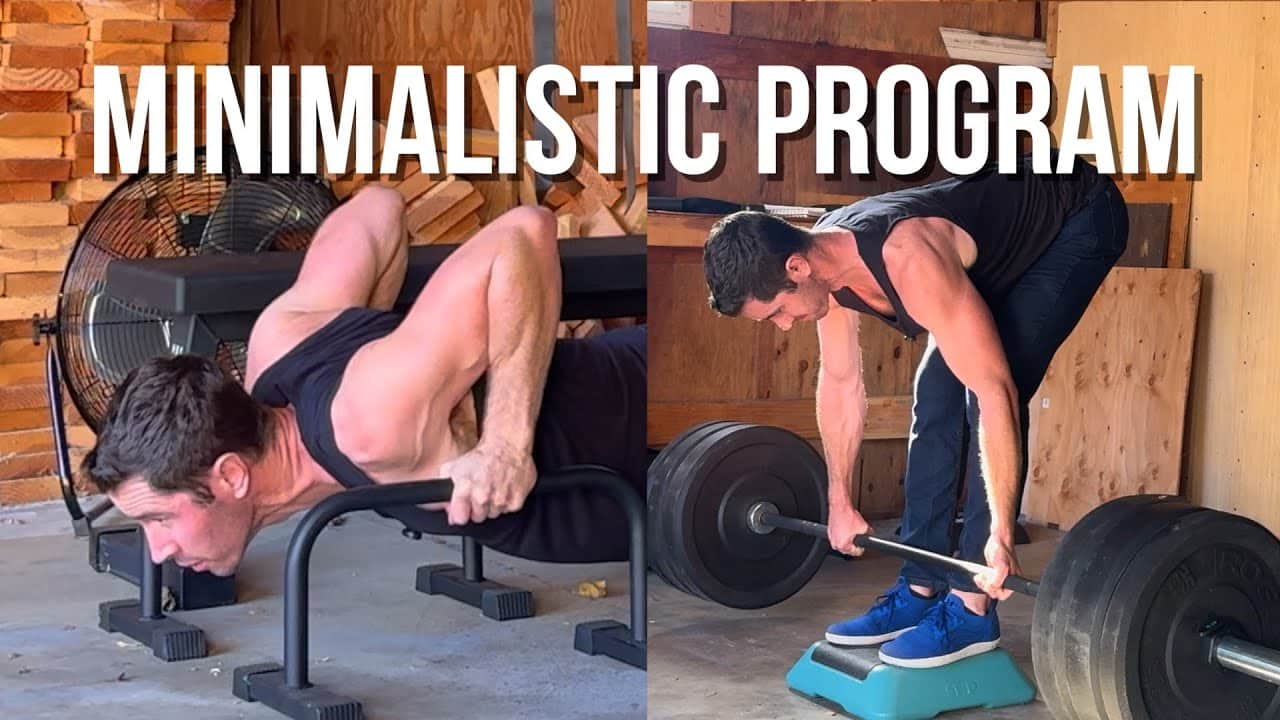
Ben Patrick, better known as “Knees Over Toes Guy,” has built an entire training philosophy around principles that legendary strength coach Louie Simmons pioneered decades ago—and the results speak for themselves.
In a recent discussion of his training methods, Patrick revealed how forward and backward sled work became the foundation that helped him overcome chronic knee pain, ditch painkillers, and maintain elite athleticism well into his training career.
Jump to:
The Westside Barbell Connection
At Westside Barbell during the 1990s, sled dragging wasn’t called a warm-up. It was simply what you did before training.
Hey, before you train, go drag the sled. We didn’t have called warm-ups. It was called the you do before you train.
Dave Tate’s recollection of training under Louie Simmons reveals a no-nonsense approach: drag forward, drag backward, then get to work. This methodology helped create some of the strongest powerlifters in the world.
Patrick discovered the same principles independently through Charles Poliquin, who had learned directly from Simmons and applied these methods with Olympic athletes. What the strongest powerlifters used for raw strength, Olympic athletes utilized for explosive power.
From Skinny Basketball Player to Movement Pioneer
Ten to fifteen years ago, Patrick was just a basketball player struggling with chronic knee issues. His journey led him to build an entire gym around sled-based training.
Group classes would start the same way every time: walk in, start sledding forward and backward on turf. No elaborate explanations, no complex progressions—just consistent, fundamental movement.
Patrick didn’t stop there. Recognizing accessibility barriers, he developed the first resisted treadmill costing hundreds rather than thousands of dollars. He even created a “buddy sled” system using fabric that allows students to serve as resistance for each other.
It’s not realistic to make a school get a bunch of these or a bunch of sleds with the right stuff. Students could buddy up. You could have 10 of them.
This democratization of training tools means the method works for everyone from his 70-year-old mother—who maintains great mobility and can still sprint—to school-age athletes just beginning their fitness journeys.
The Simplicity of Sled Training
At 1990s Westside Barbell, they didn’t measure sled work by distance. They measured it by trips.
How long was a trip? As far as the parking lot stretched. This beautifully simple approach removes overthinking and focuses on work capacity.
Patrick recommends just three trips to burnout, with breaks as needed. You can vary the pace—slower for endurance, sprint-pace for power development. Mix it up based on how you feel.
The benefits come fast:
- Burning legs signal strength development
- Elevated heart rate delivers cardiovascular conditioning
- Lungs working hard improve respiratory capacity
- Reduced injury risk compared to traditional running
- Increased training intensity without joint stress
Patrick believes he could maintain above-average athleticism for life with just a few minutes of this concept daily. It’s like having a personal hill that travels with you.
Backward Sled Work: The Knee Saver
While forward sled dragging builds posterior chain strength and conditioning, backward sled work became Patrick’s ticket off knee painkillers.
For me, it was the backward sled that helped me get my knees off painkillers that got me on this whole knee over toes journey.
Backward dragging specifically targets the quadriceps and VMO (vastus medialis oblique) in a way that builds strength through a full range of motion without the impact stress of running or jumping.
This single intervention sparked what would become the entire “Knees Over Toes” philosophy—a complete reimagining of how to build resilient, pain-free knees.
Training From the Ground Up
After gassing himself with forward and backward sled work, Patrick moves to what he admits might seem boring and tedious: tibialis and calf work.
But consider what’s actually tedious: doctor visits for foot pain, expensive orthotics that don’t work, pre-wrapping and taping shins before every basketball game, the embarrassment of wearing high socks to hide athletic tape.
Patrick spent years dealing with shin splints and foot problems. He tried numerous treatments, some painful, all costly. For over 10 years now, he’s had zero foot or shin problems.
The difference? Understanding the concept of demand versus ability.
Demand Versus Ability
This simple framework explains most chronic pain issues. The demand you’re placing on your body exceeds the ability you’ve developed in specific areas.
Look, the demand you’re putting is too much for the ability you’ve got from the ground up.
As a college basketball player, Patrick couldn’t control the practice and game demands. But by his freshman or sophomore year, after starting ground-up training, his shin splints disappeared. He went on to lead his team in minutes played.
The average person doesn’t have to accept chronic lower leg pain as inevitable. Once you understand demand versus ability, you simply adjust training to close the gap.
The Knee Training Protocol
Patrick’s approach to knee training focuses on controlling difficulty through angles, range of motion, load, and assistance.
He trains both the front and back of the knee joint, adding ability rather than just strengthening in isolation. Slant board step-downs have multiple studies supporting their effectiveness for knee health.
Patrick discovered these methods before knowing the research existed. He simply recognized that increasing his knee ability without pain made basketball feel easier.
His knee training includes:
- Slant board step-downs for anterior knee strength
- Hamstring roller work for posterior knee capacity
- Nordic eccentrics progressing to high difficulty levels
- Controlled eccentric loading front and back of the joint
Working at a level you can recover from produces consistent, sustainable results. That’s why simple works so well.
Strength Through Mobility
Patrick credits one factor above all others for 12 years without a knee or back injury: strength through mobility.
His training blurs the line between strength and flexibility work. Is he doing strength training or flexibility training during loaded stretching? Both, simultaneously, at his pain-free level.
Deadlift-style movements with deliberate stretching intention build strength and flexibility together. Start lighter, work at your pain-free level, and adapt over time.
For exercises requiring both strength and flexibility—like deep squats—Patrick uses elevation and assistance. He started with front foot elevated, assisted variations, never expecting to achieve pain-free deep squats or dunking ability.
I don’t think there’s any way someone who plays basketball has spent as much time trying to train their strength in harmony with mobility as I have.
Twelve years of focused work radically increased his ability to handle basketball’s demands. It’s still about demand versus ability—but now his ability far exceeds what came naturally.
The Complete Training Session
Patrick’s typical workout demonstrates his philosophy in action. After sled work and lower body fundamentals, he includes:
Hip flexor training by picking up legs to burnout. After knee surgery, his legs atrophied significantly. Years passed before he made breakthroughs growing leg muscle without knee pain. His hip flexors became incredibly weak from lost sprinting and training time.
Training abs through leg-leveraged movements provides genuine core strengthening. One set to complete failure gets the job done.
Lateral movements build knee confidence. The coax squat scales tremendously through front foot elevation, assistance, and counterbalance options. You can start simply getting comfortable while working the quadratus lumborum muscles on either side of the lower spine.
For sport performance, lower back health, and knee resilience, no single exercise is mandatory. These movements provide extra confidence and ability to train hard with reduced injury risk.
Upper Body Balance
Patrick keeps upper body training simple: one set of pulling (pull-ups or rows) balanced with one set of pushing (push-ups or overhead press).
His benchmark? Maintaining the ability to perform 10 full pull-ups keeps him in overall shape he’s happy with for his goals.
Over the last 15 years, he’s been more likely to skip upper body work entirely. Why? Because his priorities are clear: no drugs, no more surgeries, enjoying basketball, playing with his kids.
What matters to me the most is not being on drugs, no more surgeries, enjoying basketball, enjoying playing with my kids.
The 10 pull-up standard keeps him honest without overcomplicating things. It works for his goals. Your goals are your goals.
Accessibility and Adaptation
Patrick’s genius lies not just in his methods but in making them accessible. The buddy sled system allows 10 students to train simultaneously without expensive equipment. His mother in her 70s uses the same principles.
He works with schools implementing these methods on grass and court surfaces without traditional weight room equipment. Students become the resistance for each other, building community while building strength.
Exercise is a beautiful freedom. However you get into your workouts is great. Patrick’s way—forward and backward sled work as the foundation—represents one proven path.
From Westside Barbell’s parking lot in the 1990s to basketball courts and school gyms today, these simple principles continue proving their worth. A few minutes of focused work, training from the ground up, respecting demand versus ability.
That’s how you build a body that moves well, feels good, and lasts.