Stopping GLP-1 weight loss medications could mean your hard-earned results vanish faster than you think.
New research from the University of Oxford reveals a sobering reality about these wildly popular drugs.
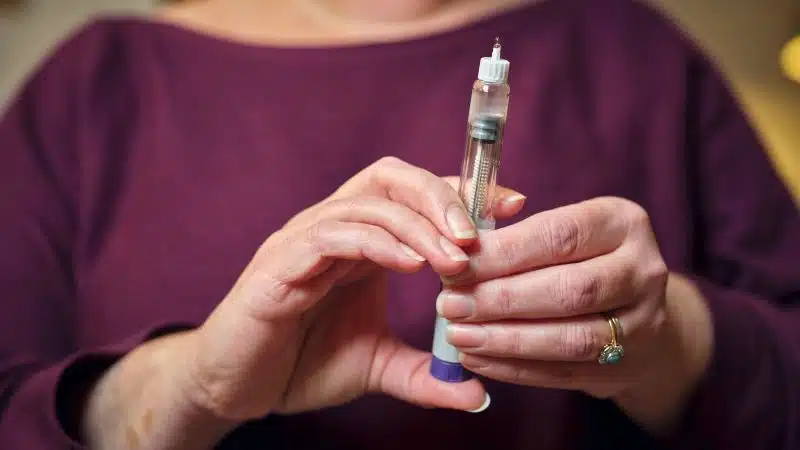
Most people who discontinue GLP-1 medications will regain their lost weight within just two years—significantly faster than those who shed pounds through diet and exercise alone.
Published in The BMJ journal, this comprehensive review analyzed 37 studies involving over 9,300 adults, painting a clear picture of what happens when the medication stops but the underlying condition remains.
Jump to:
- Understanding GLP-1 Medications and How They Work
- The Weight Regain Timeline: What the Research Shows
- Why Weight Returns So Quickly After Stopping GLP-1 Drugs
- Important Limitations in Current Research
- The Muscle Loss Problem Nobody Talks About
- Beyond Weight Loss: Unexpected Benefits and Risks
- What This Means for Weight Management Strategy
- Creating a Sustainable Path Forward
Understanding GLP-1 Medications and How They Work
GLP-1 stands for glucagon-like peptide-1, a naturally occurring hormone that signals fullness to your brain and gut. These medications—including household names like Ozempic, Wegovy, Mounjaro, and Zepbound—mimic this hormone’s action with remarkable precision.
The drugs work through multiple mechanisms. They increase insulin secretion to lower blood sugar levels. They slow food movement through your digestive tract, creating prolonged feelings of satiety. Perhaps most importantly, they act directly on brain centers that control appetite.
This multi-pronged approach has made GLP-1 medications incredibly effective for weight loss, with more than 15 million Americans currently using them.
The Weight Regain Timeline: What the Research Shows
University of Oxford researchers discovered a troubling pattern when analyzing existing studies.
Weight regain after stopping drugs was faster than after ending behavioural weight loss programmes such as diet and exercise support by approximately 0.3 kg (0.7 pounds) per month.
That might not sound dramatic at first glance. But extrapolated over time, this accelerated regain means most individuals return to their pre-medication weight within 24 months of stopping treatment.
Study lead author Sam West offered crucial context for understanding these findings.
This isn’t a failing of the medicines — it reflects the nature of obesity as a chronic, relapsing condition. It sounds a cautionary note for short-term use without a more comprehensive approach to weight management.
Why Weight Returns So Quickly After Stopping GLP-1 Drugs
Adam Collins, associate professor of nutrition at the University of Surrey, provided insight into the biological mechanisms driving rapid weight regain.
Artificially providing GLP-1 levels several times higher than normal over a long period may cause you to produce less of your own natural GLP-1, and may also make you less sensitive to its effects.
This creates a perfect storm when medication stops. Your body produces less natural GLP-1 than before. You’ve become less responsive to whatever GLP-1 remains in your system. Suddenly removing this pharmaceutical support makes overeating “far more likely,” according to Collins.
He drew a provocative comparison to addiction.
Like any addict, going cold turkey is a real challenge. This is further exacerbated if the individual in question has relied solely on GLP-1 to do the heavy lifting during weight loss.
Without behavioral changes—modifications to eating patterns, exercise habits, or lifestyle choices—the medication essentially masks obesity rather than treating its root causes.
Important Limitations in Current Research
Marie Spreckley, obesity researcher at the University of Cambridge, urged caution when interpreting the study’s long-term projections.
Follow-up data for newer GLP-1 medications only extends about 12 months after discontinuation. Predictions about weight regain at the two-year mark rely on mathematical modeling rather than actual observed outcomes.
As a result, longer-term statements, including full weight regain within two years, rely on extrapolation beyond the available data.
This doesn’t invalidate the findings, but suggests they should be viewed as indicative rather than definitive. Real-world weight trajectories might differ from modeled predictions.
The Muscle Loss Problem Nobody Talks About
GLP-1 medications don’t just reduce fat—they also dramatically decrease muscle mass. Studies indicate anywhere from 15% to 60% of weight lost on these drugs comes from lean muscle tissue.
This presents serious concerns, particularly for older adults already facing age-related muscle decline. Loss of muscle mass affects:
- Metabolic rate: Less muscle means fewer calories burned at rest
- Physical function: Reduced strength impacts daily activities
- Bone health: Muscle loss often accompanies bone density reduction
- Long-term weight maintenance: Lower muscle mass makes regain more likely
Experts strongly recommend incorporating weekly strength training routines while taking GLP-1 medications. This helps preserve muscle tissue and maintain metabolic health even during rapid weight loss.
Adults 65 and older face particularly high risks and should prioritize resistance exercise to counteract medication-related muscle loss.
Beyond Weight Loss: Unexpected Benefits and Risks
Research published in January 2025 revealed that GLP-1 medications may offer benefits extending far beyond their approved uses. These drugs showed potential for reducing risks of:
- Substance abuse disorders
- Certain psychotic conditions
- Various infections
- Some cancer types
- Certain forms of dementia
These findings suggest GLP-1 medications might have broader therapeutic applications than currently understood. However, more research is needed before these potential benefits can be confirmed or leveraged clinically.
What This Means for Weight Management Strategy
Spreckley emphasized that these findings reinforce obesity’s nature as a chronic condition requiring sustained management.
In real-world terms, the findings reinforce that obesity management typically requires long-term planning. If people stop medication, many are likely to need ongoing nutritional and behavioural support, and health services should anticipate that cardiometabolic benefits may lessen as weight is regained.
This suggests several practical approaches:
- View GLP-1 medications as long-term treatments rather than short-term fixes
- Implement lifestyle changes while taking medication, not after stopping
- Establish support systems including nutritional counseling and behavioral therapy
- Develop sustainable exercise habits that continue after medication ends
- Work with healthcare providers to create comprehensive maintenance plans
The research doesn’t suggest GLP-1 medications are ineffective or problematic. Rather, it highlights that stopping them without proper support often leads to weight regain.
Creating a Sustainable Path Forward
For those currently taking or considering GLP-1 medications, West’s insights offer valuable guidance. Success isn’t just about losing weight—it’s about maintaining that loss through comprehensive lifestyle changes.
The Oxford research underscores that pharmacotherapy works best when combined with behavioral modifications. Medication creates opportunity. What you do with that opportunity determines long-term outcomes.
Healthcare systems need to prepare for this reality by offering scalable, effective support strategies. Patients need realistic expectations about what happens when medication stops.
And everyone involved in obesity treatment must recognize weight management as an ongoing journey rather than a destination reached through temporary pharmaceutical intervention.