New research challenges assumptions about protein sources and muscle building in women.
A recent study comparing vegetarian and omnivorous diets in resistance-trained women found no differences in muscle growth, despite different protein intakes and quality.
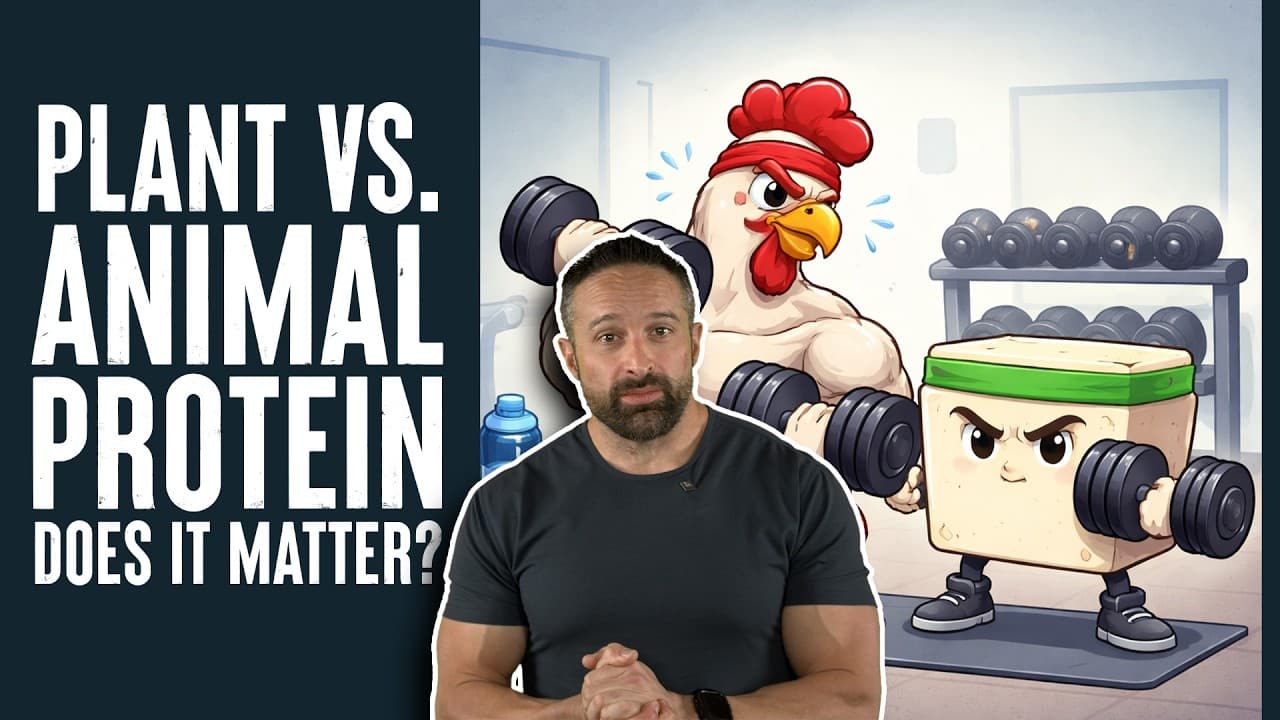
But before vegetarians claim victory or meat-eaters dismiss the findings, there’s crucial context that explains these results—and it changes everything depending on who you are.
Biolayne founder Dr. Layne Norton recently broke down this study, explaining why seemingly contradictory research on plant versus animal protein actually makes perfect sense when you understand what’s happening beneath the surface.
Jump to:
What the Study Actually Found
Researchers had untrained women resistance train twice weekly for 16 weeks. One group followed strict vegetarian diets while another consumed omnivorous diets.
Scientists measured muscle thickness in quadriceps and calves, analyzed body composition via DEXA scans, and tested one-rep max strength across various exercises.
The results? Zero differences in body composition, muscle thickness, or strength gains between groups.
Here’s where it gets interesting: the non-vegetarian group consumed about 1.3 grams per kilogram of protein while vegetarians consumed approximately 1 gram per kilogram body weight. The omnivores got more protein and likely higher quality protein regarding digestibility, bioavailability, and amino acid profile.
So how could there be no difference?
Why One Study Says This, Another Says That
This people go, ‘Well, this study says one thing and this study says another thing, and that’s why I don’t believe science.’ You actually understand research and you take the time to actually read the studies, you can understand.
Norton identifies two critical factors that explain these results.
First, the participants were relatively young. Younger individuals demonstrate much greater sensitivity to anabolic stimuli—meaning their bodies respond more robustly to muscle-building signals.
Second, they were untrained. This matters enormously.
Untrained people have such a robust response to resistance training. The magnitude of that response will probably wash out differences between the groups because the anabolic stimuli is great enough that you’re just not going to see that much difference, especially in 16 weeks.
Norton emphasizes he wasn’t surprised by these findings. When examining untrained subjects, differences often disappear because the anabolic effect from simply starting resistance training is so powerful.
When Protein Source Actually Matters
Norton’s key takeaway flips conventional wisdom on its head.
If you are young and you are relatively untrained, your nutrition probably matters a lot less than if you are of greater training age where your anabolic stimuli has decreased or you’re older where anabolic stimuli has decreased.
Translation: beginners can get away with less-than-optimal nutrition. Advanced lifters and older individuals? Not so much.
Some studies do show animal proteins provide slightly more anabolism over time compared to plant sources. But there’s another crucial caveat most people miss.
The Magic Number That Changes Everything
If total protein intake reaches above 1.6 grams per kilogram of body weight, differences between plant and animal sources for muscle building essentially vanish.
At this protein threshold, you’re maximizing anabolic signaling regardless of source.
Norton offers an honest assessment about theoretical differences in ideal conditions:
If you inject me with truth serum and ask me if we could do an ideal randomized control trial where we isocalorically put people into different groups that consume the exact same amount of protein either mostly from plant or mostly from animal right at 1.6 g per kilogram over the course of years in resistance train people. Do I think there could be a difference? I think there could be a really small difference.
But he’s quick to add context: shorter studies won’t detect these minor differences, and for most people, such small variations don’t matter.
Who Should Actually Care About Protein Source
Norton identifies specific populations where protein source might make meaningful differences:
- Elite bodybuilders stepping on Olympia stages
- Strength and power athletes seeking every performance advantage
- Older individuals with reduced anabolic sensitivity
- Advanced lifters with years of training experience
For everyone else—people simply wanting to build muscle and improve body composition—overall protein intake trumps protein source by massive margins.
What Actually Matters for Muscle Building
Norton emphasizes two factors dwarf protein source considerations:
Total protein intake. Getting enough protein overall remains the biggest determinant of muscle growth related to protein consumption.
Adequate caloric intake. Avoiding chronic underfueling and extremely low-calorie diets supports muscle building far more than obsessing over chicken versus tofu.
The Bottom Line on Plant vs. Animal Protein
You can build equivalent muscle with plant protein as with animal protein—if you consume high total protein.
Small differences might emerge at lower protein intakes, in older populations, or among highly trained individuals with dampened anabolic responses. But these differences remain minor for most people.
Studies that appear contradictory often aren’t when examining participant characteristics, protein quantities, and study duration. Understanding research design reveals why young, untrained women showed no differences between protein sources while other studies detected small variations.
For beginners and younger lifters, the powerful anabolic stimulus from resistance training itself overwhelms subtle nutritional differences. As training age increases and anabolic sensitivity decreases, nutrition precision matters more.
Rather than getting lost in plant versus animal debates, focus on hitting adequate total protein—preferably above 1.6 grams per kilogram body weight—and maintaining sufficient caloric intake to support muscle growth.