Getting visible abs is one of the most common goals in the fitness world—but also one of the most misunderstood.
Many chase after that elusive six-pack without fully grasping the realistic expectations, strategy, and consistency it actually takes to make it happen—and keep it year-round.
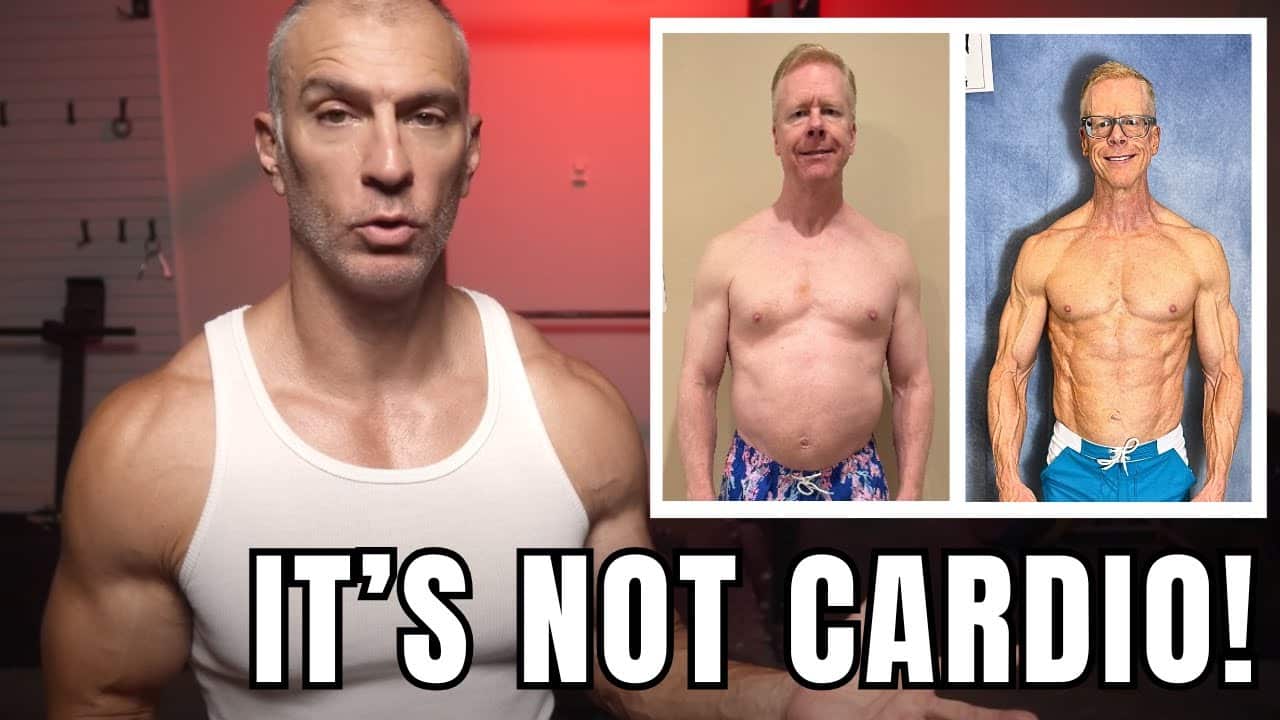
In a recent video, coach Paul from ProPhysique.com broke down the truth about what it really takes to reveal your abs, using himself and transformation challenge winner Dan Divine as real-life examples.
Here’s what you actually need to know if you’re trying to go from “lean” to shredded—and stay there without killing yourself in the process.
Jump to:
The truth: Visible abs aren’t just about low body fat
Most people believe the key to seeing your abs lies entirely in dropping body fat.
While fat loss is part of the equation, it’s not the full story.
“The abdominals are muscles,” Paul says. “If you’re not developing them, you’ll have to get even leaner to see any definition.”
In other words, just like your arms or shoulders—your abs need training to grow and “pop” under the skin. Someone with developed abdominal muscles may see their abs at 13% body fat, while someone without might need to drop below 10% just to see lines.
Practical takeaway:
- Start training your abs like you would any other body part.
- If you have no ab training experience, start with 2 sessions per week, 2-3 exercises per session, 2-3 sets per exercise.
- If you already lift regularly, try adding one set to failure every workout, focusing on different exercises each day (e.g., decline sit-ups, hanging leg raises, cable crunches).
You don’t need extreme cardio—just more movement
A common fat loss mistake? Thinking you have to do intense cardio daily to burn fat.
According to Paul, low-intensity steady state (LISS) like walking is both more effective and sustainable for fat loss.
“I don’t do any intentional cardio anymore,” he says. “All I do is walk. That’s how I maintain my physique.”
Walking burns calories, uses fat as fuel, decreases hunger, and doesn’t stress your system like HIIT or fasted sprints can. And because it’s easy to recover from, it won’t interfere with your lifting performance or hormones.
Tips to add more daily movement:
- Set a step goal (10,000–12,000 per day is a good starting point).
- Use a treadmill at home during calls, podcasts, or TV time.
- Opt for post-meal walks—they help manage blood sugar and digestion too.
The right diet is one you’ll stick to
Nutrition is non-negotiable for fat loss—but restrictive “clean eating” isn’t necessary.
“There are no bad foods,” Paul emphasizes. “The only thing that matters is hitting your macronutrient goals consistently.”
Some swear by intermittent fasting. Others love eating every few hours. Both can work—as long as you’re eating fewer calories than you’re burning.
Ultimately, the best diet is the one that fits your preferences and lifestyle, and that you can follow long-term.
Easy nutrition strategies that work:
- Use a macro/calorie tracking app to understand your intake.
- Create a meal plan based on foods you enjoy and can prep easily.
- Avoid dipping below 10x your body weight in calories (e.g., 180 lbs = ~1,800 calories/day minimum).
- Cycle your plan over time—if you get lean, you can increase calories slightly and cut cardio to maintain results.
A deadline creates discipline
Paul attributes a big part of Dan Divine’s success to one key factor: a defined goal with a deadline.
“We gave him 90 days. He knew the start, he knew the finish, and he had a plan,” Paul says.
Without a timeline or structure, it’s easy to lose focus. A formal challenge or goal—like a photo shoot, vacation, or competition—forces consistency and clarity.
Consider these motivational tools:
- Join a transformation challenge (like the ProPhysique 90-day competition).
- Pick a specific event on your calendar as your milestone.
- Enlist a coach or accountability partner.
The hardest part is getting lean—the easiest part is staying lean
A common fear among those who successfully lean out? Gaining all the weight back.
But it doesn’t have to happen.
“Getting lean is a 9 out of 10 on the difficulty scale,” Paul says. “Maintaining it is like a 4 out of 10.”
Once you’re at your goal, you can slightly increase calories and reduce cardio, then hold steady. The key is not falling back into old habits—massive calorie surpluses, zero movement, uncontrolled eating.
To maintain your physique:
- Keep tracking your food at maintenance levels.
- Stay consistent with your training and daily movement.
- Gradually reintroduce flexibility into your diet without blowing your progress.
- Set new goals to keep your motivation up.
Final words: Build the foundation, then cruise
Having visible abs isn’t about suffering endlessly or living in a calorie deficit forever. It’s about building a foundation of habits—ab training, macro awareness, daily movement—with enough intensity and consistency to get results.
Then once the hard part is over, you can chill—just a little.
“Once I got lean and figured out how to manage my food and cardio, now it’s easy,” Paul says. “I keep my abs year-round while eating more and doing less than I used to.”
So if you’re frustrated that your abs aren’t showing yet at 11% body fat? You’re likely just a few tweaks away:
- Train your abs consistently with resistance.
- Walk more (and stop killing yourself with cardio).
- Dial in your eating—but don’t obsess over “clean foods.”
- Create a plan with a deadline—and stick to it.
Apply this advice, and showing off your abs won’t just be a temporary flex for a progress photo—it’ll be your new normal.
Ready to make it happen? Coach Paul’s latest 90-day transformation challenge is now open, complete with meal plans, workouts, private groups, coaching, and cash prizes. There’s never been a better time to turn your “maybe” into “definitely.”