Insulin sensitivity supplements have flooded the market, leaving many wondering if they actually work or if they’re just expensive placebos.
From magnesium to berberine, apple cider vinegar to alpha lipoic acid—the options seem endless.
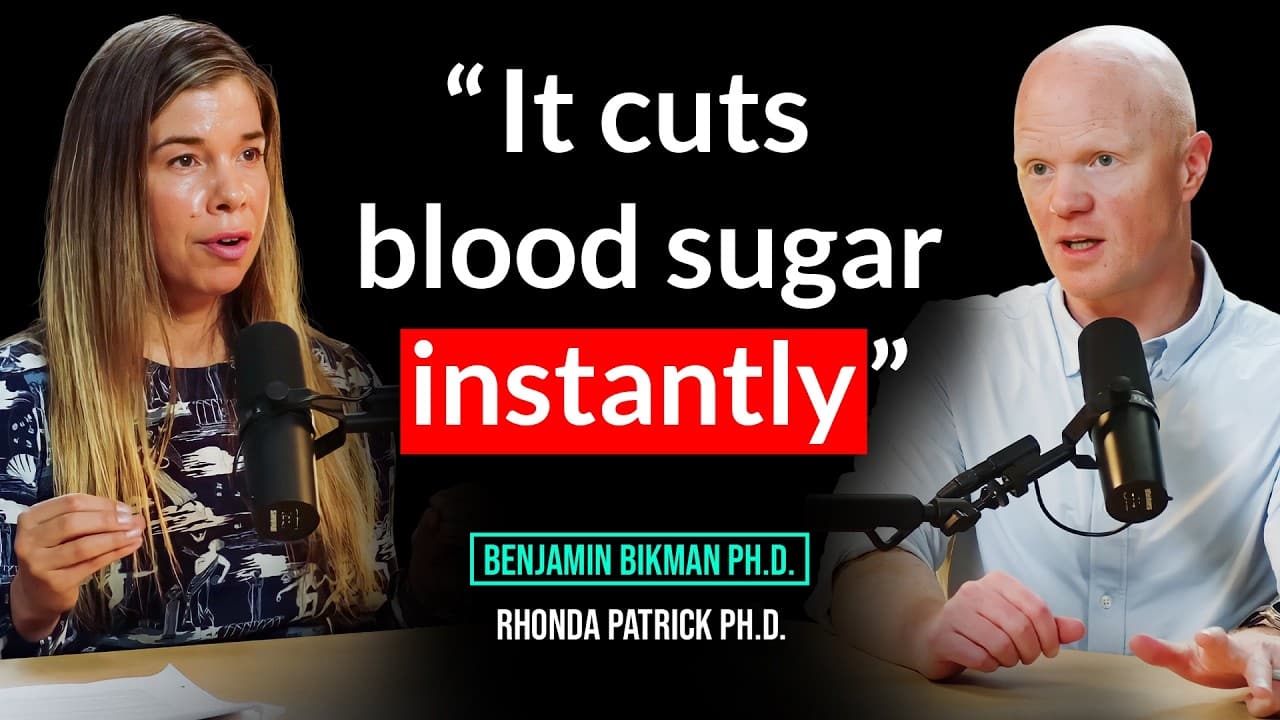
But according to metabolic health expert Ben Bikman, several of these supplements aren’t just hype—they’re backed by compelling science.
In a recent discussion, Bikman revealed which supplements actually move the needle on blood sugar control and how they work at the cellular level.
Jump to:
The Supplements That Actually Work
When asked about popular insulin sensitivity supplements, Bikman didn’t mince words.
Well, in fact, every one you just mentioned works.
That’s right—magnesium, alpha lipoic acid, berberine, and apple cider vinegar all have legitimate effects on metabolic health. But some stand out more than others.

If you want something simple that actually works, this is one of the most effective tools I’ve used to build strength, conditioning, and endurance without needing a full gym setup.
- Full-body training with one weight using swings, squats, and presses
- Solid cast iron build that feels stable and lasts for years
- Comfortable grip that makes high-rep workouts easier to handle
Berberine earns special recognition for its evidence base. According to Bikman, “Berberine is undoubtedly effective. No doubt it works. Berberine absolutely works.”
Research has shown berberine can rival metformin in improving insulin sensitivity, making it a powerful tool for blood sugar management.
Apple Cider Vinegar: The Unexpected Powerhouse
While berberine gets top marks for evidence, apple cider vinegar holds a special place in Bikman’s recommendations.
I love apple cider vinegar as a personal favorite. Maybe it’s because of my old man palette where I like really tart things the older I’m getting.
Beyond personal preference, there’s serious science behind this pantry staple.
Why Short-Chain Fatty Acids Matter
Apple cider vinegar contains acetic acid—the shortest of all short-chain fatty acids in human nutrition.
Modern diets have created a fat imbalance. While people consume plenty of fats from seed oils and soybean oil, they’re missing medium-chain and short-chain fats because fermented foods have largely disappeared from Western diets.
If you want something simple that actually works, this is one of the most effective tools I’ve used to build strength, conditioning, and endurance without needing a full gym setup.
- Full-body training with one weight using swings, squats, and presses
- Solid cast iron build that feels stable and lasts for years
- Comfortable grip that makes high-rep workouts easier to handle
This tiny molecule “punches well above its weight” through multiple mechanisms:
- Reduces hepatic gluconeogenesis: Inhibits liver glucose production, especially important for Type 2 diabetics who have excessive glucagon signaling
- Stimulates AMPK: Activates the same cellular pathway that exercise uses to increase glucose uptake
- Promotes mitochondrial biogenesis: Supports creation of new cellular energy factories
- Creates mild uncoupling: Helps burn through glucose more efficiently
The Exercise Connection
One of acetic acid’s most fascinating properties relates to how muscles absorb glucose during exercise.
During physical activity, insulin levels decrease while glucose uptake by muscles increases—seemingly contradictory effects. This happens because exercise activates AMPK, which opens glucose transporters (GLUT4) through a “backdoor” mechanism independent of insulin.
Apple cider vinegar will do the same thing. In the absence of exercise, albeit to a more modest degree.
How To Use Apple Cider Vinegar Effectively
Bikman recommends taking a couple tablespoons diluted in water or sparkling water before your most carbohydrate-heavy meal.
The results are measurable and significant.
You absolutely could compare the glucose curve from one day to the next and you’ll see that it’s significantly lower with just that tart little bit of drinking.
The Signaling Molecule Revolution
Discussion about acetate led to fascinating territory—the overlap between different short-chain molecules like acetate, lactate, and malate.
If you want something simple that actually works, this is one of the most effective tools I’ve used to build strength, conditioning, and endurance without needing a full gym setup.
- Full-body training with one weight using swings, squats, and presses
- Solid cast iron build that feels stable and lasts for years
- Comfortable grip that makes high-rep workouts easier to handle
These aren’t just nutrients providing calories. They function as signaling molecules that communicate important metabolic information throughout the body.
Lactate generated during exercise serves similar signaling functions. Malate found in Granny Smith apples and blueberries may work through comparable pathways.
The common thread? These molecules influence cellular metabolism beyond their caloric value.
Ketones: Fuel and Signal Combined
Beta-hydroxybutyrate—the primary ketone body—represents another powerful tool for metabolic health.
Ketones occupy unique territory, functioning both as fuel to be burned and as signaling molecules that activate beneficial pathways.
Evidence For Exogenous Ketones
Recent research has shown promising results from ketone supplementation without requiring full ketogenic diets.
If you want something simple that actually works, this is one of the most effective tools I’ve used to build strength, conditioning, and endurance without needing a full gym setup.
- Full-body training with one weight using swings, squats, and presses
- Solid cast iron build that feels stable and lasts for years
- Comfortable grip that makes high-rep workouts easier to handle
A study in women with PCOS used exogenous ketones as the only intervention. Every metabolic marker and PCOS outcome improved—likely through ketones’ signaling effects rather than just their energy value.
The evidence supporting the value of ketones is growing and growing quickly and it ought to. I have never in the past wanted to be seen as a drum beating advocate of a ketogenic diet, simply knowing that that’s not everyone’s cup of tea.
Bikman vigorously defends ketones as beneficial signaling molecules, even for people not following ketogenic diets.
How Ketones Help Control Blood Sugar
Ketones influence glucose metabolism through several mechanisms:
- Enhanced satiety: More filling than glucose, leading to reduced food intake
- Mitochondrial uncoupling: Helps burn through glucose more rapidly
- Reduced inflammation: Activates anti-inflammatory pathways
- Antioxidant effects: Protects against oxidative stress
Some effects occur through G-protein coupled receptors on cell surfaces, triggering beneficial cellular responses beyond simple fuel metabolism.
The Accessibility Factor
Ketogenic diets remain challenging for many people—they’re restrictive and can interfere with social eating situations.
Exogenous ketone supplements offer a practical alternative for those wanting ketone benefits without dietary restriction.
If you want something simple that actually works, this is one of the most effective tools I’ve used to build strength, conditioning, and endurance without needing a full gym setup.
- Full-body training with one weight using swings, squats, and presses
- Solid cast iron build that feels stable and lasts for years
- Comfortable grip that makes high-rep workouts easier to handle
There are so many good options nowadays that I think it becomes a viable approach for someone to say, I want the ketones, but I don’t want ketogenic, so I’m just going to drink them.
Understanding Dosage and Timing
Proper dosing matters both for activating beneficial pathways and avoiding unwanted effects like excessive glucose lowering.
Research from starvation studies (now called fasting research) by Dr. George Cahill showed subjects whose glucose dropped to 20 mg/dL—levels typically considered lethal—experienced no cognitive deficits.
The key difference? Their brains had adapted to using ketones as fuel.
The Rebound Hypoglycemia Problem
Most people haven’t adapted to ketones and don’t have them readily available. This creates problems during blood sugar crashes.
After consuming sugary meals, glucose spikes then crashes—often lower than baseline (rebound hypoglycemia). Normally, ketones would provide backup fuel during this dip.
However, the same high insulin reversing the glucose spike also inhibits ketogenesis. This deprives the brain of both primary fuels simultaneously—glucose and ketones.
If you want something simple that actually works, this is one of the most effective tools I’ve used to build strength, conditioning, and endurance without needing a full gym setup.
- Full-body training with one weight using swings, squats, and presses
- Solid cast iron build that feels stable and lasts for years
- Comfortable grip that makes high-rep workouts easier to handle
The result? Anxiety, brain fog, and metabolic stress as the brain lacks its usual energy sources.
Practical Takeaways
Based on Bikman’s insights, several supplements show legitimate promise for improving insulin sensitivity:
- Berberine: Strong evidence base, comparable effects to pharmaceutical interventions
- Apple cider vinegar: Easy to access, multiple mechanisms, take before high-carb meals
- Exogenous ketones: Valuable signaling molecules even without ketogenic diets
- Alpha lipoic acid and magnesium: Also effective, though less emphasized in this discussion
These aren’t magic bullets, but they’re far from ineffective drops in the pool. Each works through distinct, scientifically-validated mechanisms that genuinely impact metabolic health.
For best results, combine strategic supplementation with foundational lifestyle factors—exercise, sleep, stress management, and whole-food nutrition. Supplements enhance these fundamentals; they don’t replace them.