A new hair loss medication called clascoterone is making waves with eye-popping claims of 539% improvement in hair count.
But do those numbers actually translate to visible results?
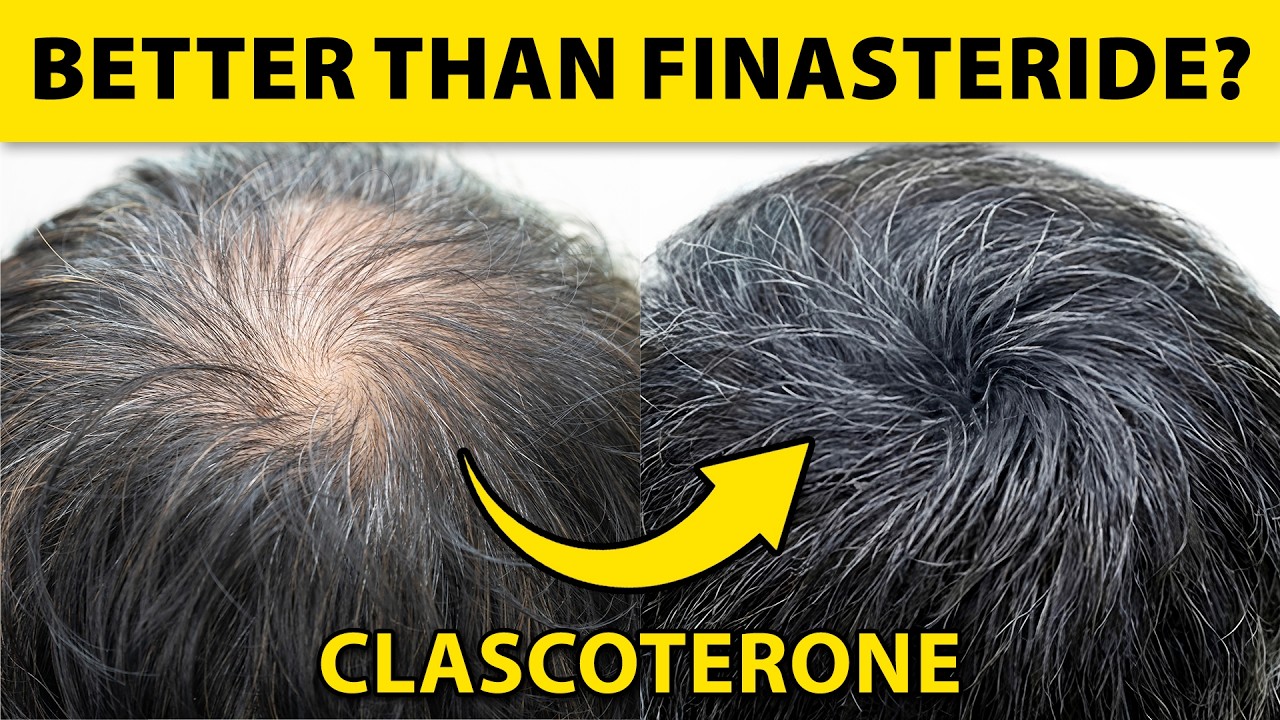
A hair restoration surgeon recently broke down the science, trial design, and real-world cosmetic outcomes behind this topical treatment—and the findings raise important questions about how we measure effectiveness.
Here’s what patients need to know before getting too excited about the headlines.
Jump to:
Understanding Androgenetic Alopecia and DHT
Androgenetic alopecia represents the most common form of hair loss affecting both men and women. This hormone-driven condition involves dihydrotestosterone (DHT) causing progressive miniaturization of hair follicles.
Current treatments focus on reducing DHT levels to prevent further loss. Finasteride, for instance, blocks testosterone conversion to DHT, effectively lowering circulating levels.

If you want something simple that actually works, this is one of the most effective tools I’ve used to build strength, conditioning, and endurance without needing a full gym setup.
- Full-body training with one weight using swings, squats, and presses
- Solid cast iron build that feels stable and lasts for years
- Comfortable grip that makes high-rep workouts easier to handle
The catch? Systemic side effects remain a significant concern with oral medications like finasteride.
How Clascoterone Works Differently
Clascoterone takes a fundamentally different approach as a topically applied androgen receptor inhibitor. Rather than reducing DHT production systemically, it competes directly with DHT at the receptor level.
The chemical structures of clascoterone and DHT look remarkably similar. This similarity proves critical—clascoterone actually has higher affinity for androgen receptors than DHT itself.
Clascoterone actually has a higher affinity for these receptors than DHT does. So even if you have a lot of DHT circulating, it will not be able to bind to the androgen receptor as well because you have this other compound called clascoterone in its way.
This mechanism classifies clascoterone as a competitive antagonist. The compound already received FDA approval in 2020 for acne treatment under the brand name Winlevi.
The Metabolic Advantage
One major benefit sets clascoterone apart: rapid metabolism to an inactive form called cortexolone. This quick breakdown minimizes risk of systemic anti-androgenic side effects.
Theoretically, this could reduce dependence on oral anti-androgen medications while maintaining therapeutic benefit.
If you want something simple that actually works, this is one of the most effective tools I’ve used to build strength, conditioning, and endurance without needing a full gym setup.
- Full-body training with one weight using swings, squats, and presses
- Solid cast iron build that feels stable and lasts for years
- Comfortable grip that makes high-rep workouts easier to handle
The Clinical Trial Journey: Phase 1 and 2
Early research on clascoterone for hair loss began with small-scale studies. Phase 1 enrolled just 18 patients over 28 days, applying 5% solution initially once, then twice daily.
Phase 2 expanded to 70 patients in an exploratory study comparing clascoterone against other anti-androgens like cyproterone acetate and 17α-estradiol. A separate proof-of-concept phase 2 trial included 95 patients with minoxidil as the active comparator.
Side effects emerged early. In phase 1, 72% of patients (13 out of 18) experienced at least one treatment-emergent adverse event, though all were mild to moderate and resolved within 28 days.
- Local skin reactions dominated: erythema, scaling, dryness
- Likely culprit: propylene glycol, the same carrier causing irritation in topical minoxidil solution
- Minoxidil foam removed propylene glycol to reduce reactions
Phase 2 Results: Promising But Not Significant
Phase 2 outcomes showed clascoterone outperforming other anti-androgens in target area hair count changes. However, results failed to achieve statistical significance with a p-value of 0.0971.
Favorable scalp hair growth appeared in 39% of clascoterone patients versus 36% with minoxidil and 16% with vehicle. Again, statistical significance remained elusive at p=0.2213.
For context, most studies require p-values of 0.05 or below to claim statistical significance. Additionally, Cosmo Pharmaceuticals conducted this research and only published an abstract—raising concerns about publication bias.
If you want something simple that actually works, this is one of the most effective tools I’ve used to build strength, conditioning, and endurance without needing a full gym setup.
- Full-body training with one weight using swings, squats, and presses
- Solid cast iron build that feels stable and lasts for years
- Comfortable grip that makes high-rep workouts easier to handle
Phase 3 Trials: SCALP-1 and SCALP-2
Two multi-center, randomized, double-blind, vehicle-controlled trials enrolled 1,465 men over 18 across United States and European sites. Each study featured a six-month double-blind treatment phase followed by six-month single-blind extension.
Co-primary endpoints included target area hair count and patient-reported outcomes assessing perceived improvement.
According to press releases, both trials demonstrated statistically significant improvements compared with vehicle control. One study showed 5.39-fold (539%) relative improvement in target area hair count. The second trial produced 1.68-fold (168%) relative improvement.
But here’s where things get murky. As of early 2026, no full article disclosing complete study results has been published.
The Problem With Relative Percentages
Those impressive-sounding percentages may obscure modest absolute changes. Consider this scenario: if clascoterone increased hair count by 7 hairs per square centimeter compared to 1.1 hairs in vehicle group, the absolute difference equals just 5.9 hairs per square centimeter.
That creates the 539% relative improvement—but gaining approximately six hairs per square centimeter likely produces minimal visible cosmetic change.
If you want something simple that actually works, this is one of the most effective tools I’ve used to build strength, conditioning, and endurance without needing a full gym setup.
- Full-body training with one weight using swings, squats, and presses
- Solid cast iron build that feels stable and lasts for years
- Comfortable grip that makes high-rep workouts easier to handle
Reports like these can sometimes inflate perceived efficacy and they can obscure absolute clinical effect, meaning how much change we actually see when looking at a before and an after image.
Photographic Evidence Raises Questions
Released before-and-after images accompanying press announcements show subtle changes at best. Lighting differences between baseline and six-month photos complicate interpretation.
Brighter flash in before images creates darker perimeters and lighter central portions. Reduced flash in after photos makes central scalp appear darker—potentially mimicking improvement unrelated to treatment.
Even accounting for lighting, transformations appear modest compared to established finasteride and minoxidil results seen in clinical practice.
Real-World Comparison
One hair restoration surgeon shared a patient case seeking hair transplant to cover scalp micropigmentation. After surgery plus minoxidil and finasteride, crown improvement proved dramatic—without any surgical intervention in that area.
When he came back about a year after his surgery, we were shocked by how much improvement there was in his crown. I did not operate on his crown.
Donor area health actually improved despite extracting approximately 3,000 grafts, demonstrating finasteride and minoxidil’s protective power.
Cost Considerations Create Barriers
Clascoterone’s predecessor for acne, Winlevi, carries out-of-pocket costs between $600-$800 per 60g tube. DHT-sensitive zones require approximately 1.5-3g product per application.
If you want something simple that actually works, this is one of the most effective tools I’ve used to build strength, conditioning, and endurance without needing a full gym setup.
- Full-body training with one weight using swings, squats, and presses
- Solid cast iron build that feels stable and lasts for years
- Comfortable grip that makes high-rep workouts easier to handle
That translates to roughly 30 applications per tube—potentially $800 monthly. Insurance coverage remains unlikely since carriers typically exclude cosmetic hair loss treatments.
Contrast this with proven topical finasteride options available for approximately $40 monthly. Patients face spending 20 times more for clascoterone without clear evidence of superior efficacy.
- Clascoterone (projected): $800/month
- Topical finasteride: $40/month
- Cost difference: 20-fold increase
Are We Measuring Clascoterone Wrong?
Recent coverage of hair loss innovations like PP405 and monounsaturated fatty acids focused on stimulating hair follicle stem cells—fundamentally different from blocking DHT effects.
Clascoterone shares more mechanistic similarity with finasteride and dutasteride. Perhaps evaluating it primarily as a growth agent misses the point entirely.
Klescoterone is being judged through a growth lens when it may just be more of a maintenance drug.
Prevention Over Promotion
Hair restoration extends beyond single medications to comprehensive follicle protection strategies. Finasteride occasionally stimulates new growth, but its primary value lies in preventing progressive loss.
This defense-first philosophy applies beyond prescription treatments. Scalp health, inflammation control, and follicle support products complement medical therapy by protecting existing density rather than promising unrealistic regrowth.
If you want something simple that actually works, this is one of the most effective tools I’ve used to build strength, conditioning, and endurance without needing a full gym setup.
- Full-body training with one weight using swings, squats, and presses
- Solid cast iron build that feels stable and lasts for years
- Comfortable grip that makes high-rep workouts easier to handle
Clascoterone’s true test won’t be dramatic before-after transformations. Success means patients maintaining their hair using topical application while avoiding systemic side effects associated with oral anti-androgens.
The Verdict: Wait For More Data
Cosmo Pharmaceuticals plans completing 12-month safety follow-up by spring 2026, after which FDA submission for approval under brand name Breezula will proceed.
Until full study publications emerge with complete data transparency, skepticism remains warranted. Relative percentage improvements sound compelling but may mask modest absolute changes.
Remember: new doesn’t automatically mean better. Head-to-head comparisons against established topical treatments should precede spending substantially more on unproven alternatives.
Clascoterone may eventually prove valuable as maintenance therapy with favorable safety profile. But current evidence doesn’t justify abandoning tried-and-true options offering proven efficacy at fraction of projected cost.