Bodyweight squats get dismissed as warm-up filler, something you knock out before the “real” training starts.
But push past 50 reps, then 75, then all the way to 100, and something fundamentally different happens inside your muscles, joints, and cardiovascular system.
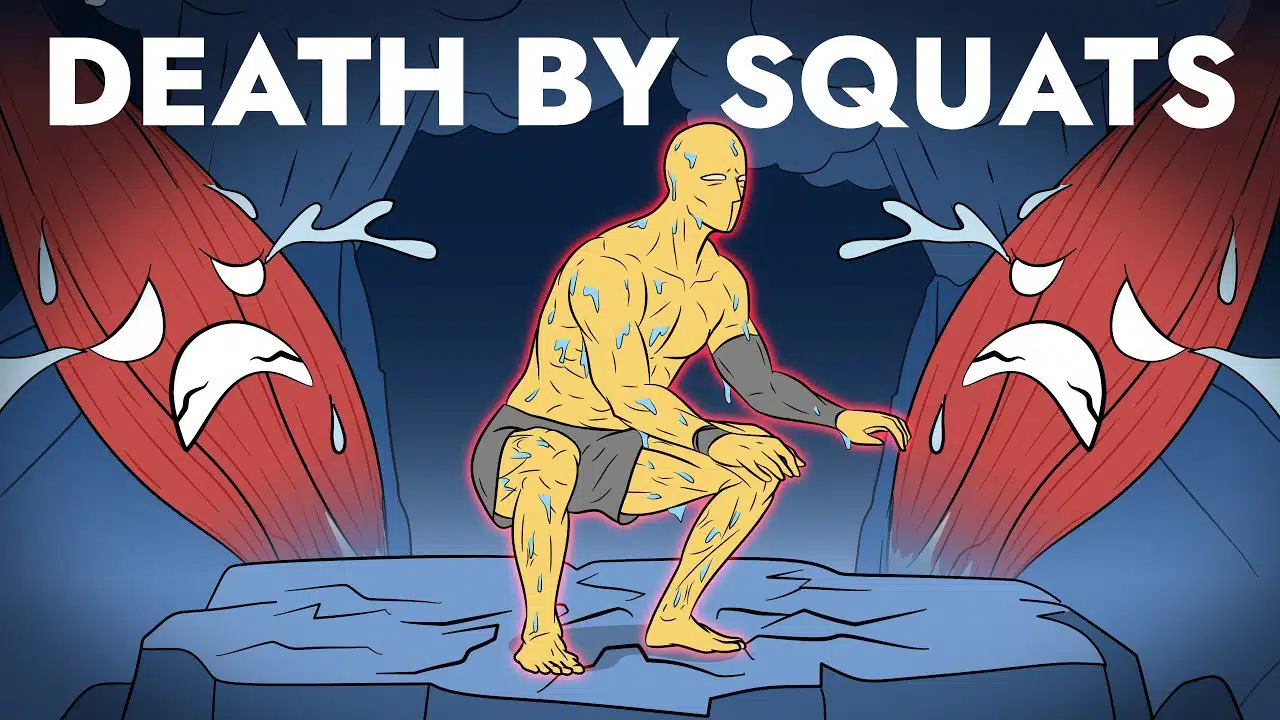
In a recent video, fitness expert Jeff Cavaliere walked viewers through exactly what the body experiences during a 100-rep bodyweight squat challenge—and why most people never tap into this zone of strength endurance.
The results might change how you think about leg training entirely.
Jump to:
- Why the First 20 Reps Feel Like Nothing
- Rep 25: Entering the Strength Endurance Zone
- The Pump Isn’t Just for Show
- Rep 80: Four Minutes of Unbroken Tension
- Rep 90: The Final Push
- What 100 Reps Actually Accomplishes
- Beyond Bodyweight: The Pistol Squat Progression
- The 30-Day Challenge
- Why Most People Never Try This
- The Takeaway
Why the First 20 Reps Feel Like Nothing
Ten reps feel easy. Fifteen still manageable. Twenty might leave you thinking about lunch instead of legs.
That’s because most muscles adapt to sets lasting under 30 seconds—short bursts of effort followed by rest. Bodyweight squats at this stage are simply loading every major lower body joint: hips, knees, ankles.

If you want something simple that actually works, this is one of the most effective tools I’ve used to build strength, conditioning, and endurance without needing a full gym setup.
- Full-body training with one weight using swings, squats, and presses
- Solid cast iron build that feels stable and lasts for years
- Comfortable grip that makes high-rep workouts easier to handle
Quads, glutes, and hamstrings fire together with full range of motion, just without external load. The body barely registers this as stress because it’s conditioned for quick, heavy sets.
Most people do bodyweight squats as a warm-up. 10 reps, shake it out, move on to the real stuff. That thinking is why your legs look the way they do.
Rep 25: Entering the Strength Endurance Zone
Around rep 25, everything shifts. Breathing picks up, muscles start burning, and you’ve officially entered strength endurance territory.
This is the zone most lifters skip their entire training life, stuck in the 8-12 rep range for hypertrophy or 3-5 reps for maximum strength. But high-rep training unlocks something different entirely: connective tissue development.
Tendons, ligaments, and cartilage don’t grow as quickly as muscle fibers. They require repeated blood flow, sustained tension, and time under load to strengthen and adapt.
You might ignore this in your 20s, but by your 30s, when knees start creaking and joints feel fragile, that neglect becomes loud.
The way you build those tissues: pump blood to them repeatedly. High reps do this better than anything.
The Pump Isn’t Just for Show
By rep 50, the muscle pump becomes visible. Blood floods into muscle tissue, delivering oxygen and clearing metabolic waste while creating mechanical stress on muscle fibers.
If you want something simple that actually works, this is one of the most effective tools I’ve used to build strength, conditioning, and endurance without needing a full gym setup.
- Full-body training with one weight using swings, squats, and presses
- Solid cast iron build that feels stable and lasts for years
- Comfortable grip that makes high-rep workouts easier to handle
That stress signals the body to adapt and grow. Heavy squats generate maximum force in short bursts, but high-rep bodyweight squats create metabolic stress and time under tension—two equally powerful drivers of muscle growth.
High-rep squats also torch calories and challenge cardiovascular conditioning in ways that traditional strength training doesn’t touch.
Rep 80: Four Minutes of Unbroken Tension
By rep 80, legs have been under continuous tension for over four minutes. No rest between sets, no water break, no phone scrolling.
This sustained duration is what separates high-rep training from typical leg day routines. Most workouts prioritize load—how much weight you can lift—but rarely emphasize how long muscles can sustain effort without rest.
This is what most leg days are missing. Not load, duration.
Each rep now feels harder than the last, yet the body continues. That’s real-time adaptation, the nervous system problem-solving under fatigue.
Rep 90: The Final Push
Ten reps remaining. Ten reps used to be a warm-up at the start of this challenge.
If you want something simple that actually works, this is one of the most effective tools I’ve used to build strength, conditioning, and endurance without needing a full gym setup.
- Full-body training with one weight using swings, squats, and presses
- Solid cast iron build that feels stable and lasts for years
- Comfortable grip that makes high-rep workouts easier to handle
Now those same ten reps feel monumental. Quads scream, glutes burn, breathing becomes labored. But the decision to finish has already been made.
Rep 95. Rep 100. Done.
What 100 Reps Actually Accomplishes
Completing 100 bodyweight squats delivers more continuous muscular work than many hour-long gym sessions spread across multiple exercises and rest periods.
Here’s what happens physiologically:
- Muscular endurance skyrockets: Muscles learn to sustain effort far beyond typical set durations
- Connective tissues strengthen: Tendons, ligaments, and cartilage receive repeated blood flow and mechanical stimulus
- Cardiovascular demand increases: Heart rate elevates and stays elevated, mimicking cardio conditioning
- Metabolic stress amplifies: The prolonged pump signals muscle growth through different pathways than heavy lifting
- Mental toughness develops: Pushing past discomfort builds psychological resilience that transfers to other training
Beyond Bodyweight: The Pistol Squat Progression
Once 100 bodyweight squats become manageable, the next level involves pistol squats—single-leg squats performed to full depth.
Pistol squats demand extreme balance, mobility, and unilateral leg strength. They expose weaknesses that bilateral movements hide and force each leg to carry the full load independently.
If you want something simple that actually works, this is one of the most effective tools I’ve used to build strength, conditioning, and endurance without needing a full gym setup.
- Full-body training with one weight using swings, squats, and presses
- Solid cast iron build that feels stable and lasts for years
- Comfortable grip that makes high-rep workouts easier to handle
Mastering this movement requires attention to form, common mistakes, and targeted fixes—all critical for safe progression.
The 30-Day Challenge
No equipment needed. No complex program required. Just a few minutes and one simple decision.
Do it three times this week. See what your legs look like in 30 days.
Performing 100 bodyweight squats three times per week for 30 days creates noticeable changes:
- Improved muscle definition: Quads, glutes, and hamstrings respond to sustained tension
- Enhanced joint health: Connective tissues strengthen, reducing injury risk
- Better conditioning: Cardiovascular capacity improves alongside muscular endurance
- Increased work capacity: Other leg exercises feel easier after regular high-rep training
Why Most People Never Try This
High-rep bodyweight training doesn’t look impressive on social media. There’s no loaded barbell, no heavy plates clanging, no obvious display of maximal strength.
But the discomfort past rep 50 is real. The metabolic demand is intense. The mental challenge of continuing when muscles burn and breathing labors separates those willing to embrace discomfort from those who avoid it.
Most training programs emphasize progressive overload through added weight, but progressive overload also comes from increased volume, longer time under tension, and reduced rest periods.
If you want something simple that actually works, this is one of the most effective tools I’ve used to build strength, conditioning, and endurance without needing a full gym setup.
- Full-body training with one weight using swings, squats, and presses
- Solid cast iron build that feels stable and lasts for years
- Comfortable grip that makes high-rep workouts easier to handle
High-rep squats deliver all three simultaneously.
The Takeaway
Bodyweight squats aren’t just warm-up movements. Pushed to 100 reps without rest, they become a legitimate conditioning tool, muscle-building stimulus, and joint health protocol rolled into one.
The strength endurance zone between reps 25 and 100 challenges your body differently than heavy squats or traditional hypertrophy sets. Connective tissues strengthen, cardiovascular capacity improves, and muscles learn to sustain effort far beyond what most training demands.
Try 100 bodyweight squats three times this week. No equipment, no excuses. Just legs, lungs, and the decision to push past what feels comfortable.
Thirty days from now, your legs—and your mental toughness—will prove whether the challenge was worth it.