Building a physique worthy of ancient Greek sculpture doesn’t require a fully-equipped gym or traditional weightlifting equipment.
In fact, one simple tool can forge the broad shoulders, tapered waist, and athletic frame that’s been admired for thousands of years.
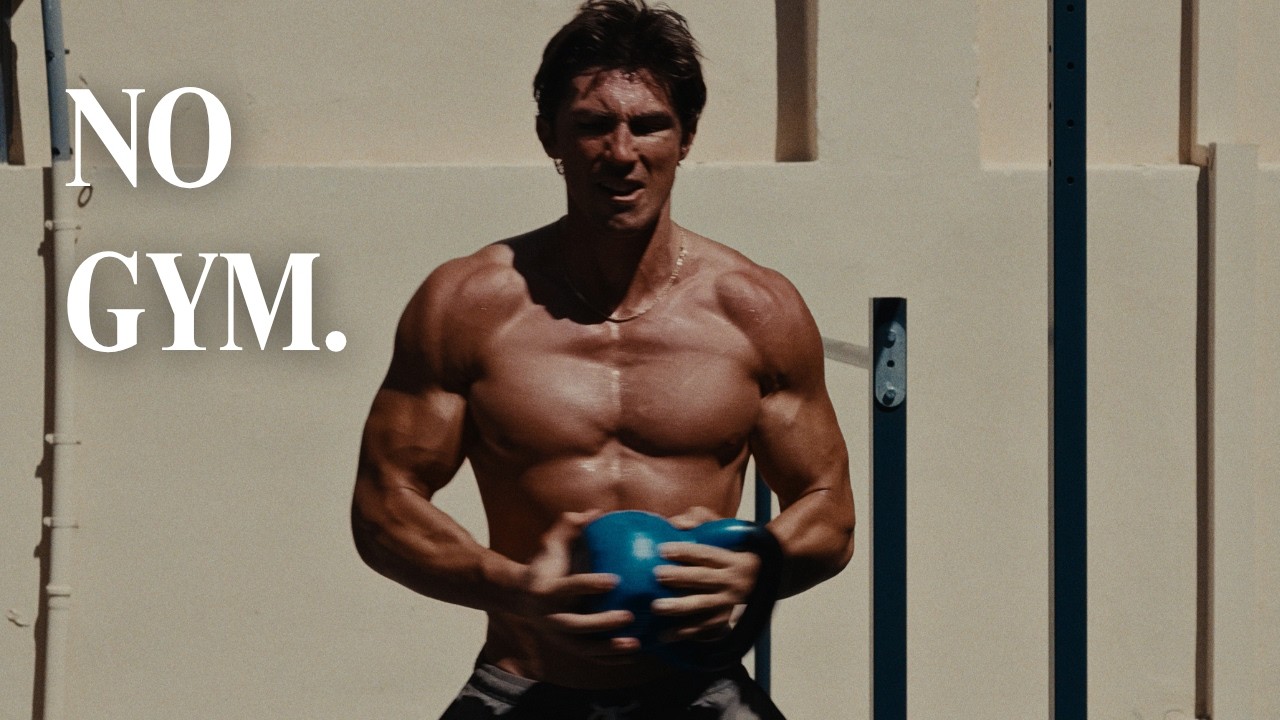
Fitness coaches are increasingly turning to kettlebell training as a complete solution for building what’s often called the “Greek god body” — and the science backs up why this approach works so effectively.
Unlike machines that lock you into fixed movement patterns, kettlebells challenge your body in ways that build functional, warrior-ready strength.
Jump to:
Why Kettlebells Build Athletic Physiques
Ancient warriors didn’t have access to cable machines or specialized equipment. They developed powerful, sculpted bodies through functional movements that challenged multiple systems simultaneously.
Kettlebells replicate this approach by offering something most equipment cannot: both ballistic and grind movements in one tool.
Ballistic movements are explosive, fast, and powerful — think swings and snatches. Grind movements are slower, heavier, and focused on controlled tension — like presses and squats.
This dual capability drives adaptations that machines simply cannot replicate. You’re building strength, power, endurance, and conditioning all at once.
The Foundation: Ballistic Movements
Every kettlebell session should begin with ballistics while energy levels are highest. These explosive movements build power through hip-driven mechanics that engage your entire posterior chain.
The Swing: Your Power Base
The kettlebell swing forms the foundation of all ballistic work. This movement hinges at the hips, loading the hamstrings and glutes before snapping forward explosively.
You’re hinging at the hips, loading the hamstrings and glutes, your entire posterior chain, and snapping the hips forward as if you’re about to do a stationary long jump to launch the bell.
The power comes entirely from your posterior chain — glutes, hamstrings, and spinal erectors. Arms stay relatively passive, letting momentum from the hip snap drive the bell to chest height.
Clean and Press Variations
This movement bridges ballistic and grind work, hitting shoulders, triceps, legs, upper chest, and core simultaneously.
Start by snapping the bell from between your legs to the rack position at your shoulder. From there, two finishing options exist.
Option one is the strict press — driving the bell overhead with zero leg assistance. Pure shoulder building.
Option two is the thruster (cluster) — dipping into a front squat and using leg drive to press overhead. This creates a total body movement involving legs, glutes, core, and shoulders in one explosive motion.
Strict press for pure shoulder strength and size, and clusters if you want total body power and conditioning. I love both of them.
The Snatch: Maximum Explosiveness
Combining swing, clean, and press into one fluid rep, the snatch represents peak explosive movement. It demands posterior chain power, overhead stability, grip strength, and cardiovascular conditioning.
This movement is highly technical and requires thousands of reps to master. Starting with lighter weights while building confidence and technique is essential.
When I started, I was doing it all wrong if I’m being honest with you. But as I put in the reps, it improved and it’s still improving to this day.
Keep elbows close to your body during the upward motion. Safety and gradual progression trump speed every time.
Built-In Conditioning
These ballistic movements are metabolically demanding. Training with them three to four times weekly at high intensity eliminates the need for separate cardio sessions.
You’re building strength and endurance simultaneously — maximum efficiency in minimum time.
Grind Movements: Building Size and Strength
Slow, heavy, controlled grind movements allow for serious loading and progressive overload — the cornerstone of muscle growth.
Squat Variations for Legs
Multiple loading options exist for lower body work:
- Goblet squat: Bell held at chest by the horns
- Offset squat: One bell racked on a single shoulder, forcing core engagement to resist lateral tipping
- Front squat: Two bells racked at shoulders for maximum loading
Front-loaded weight forces an upright torso position, emphasizing quad development while demanding constant core bracing. Maximum depth is critical — you don’t need a barbell to build powerful legs.
Rows for Back Development
Single or double-handed rows work identically to dumbbell variations. Full arm extension at the bottom creates maximum stretch before pulling the elbow back close to your body.
Full stretch, full contraction — simple but devastatingly effective for back thickness.
Core Integration: The Power Transfer System
Core strength extends far beyond visible abs. Your entire midsection transfers power to every movement, making dedicated core work essential.
Three Essential Core Movements
Halos build anti-rotation strength through deep core muscles while improving shoulder and upper back mobility. Circle the bell around your head with control.
Uppercuts develop rotational power by driving the bell up and across like a punch. Rotate through hips and torso, engaging obliques and transferring force efficiently.
You’re generating and transferring force through rotation, working your obliques, and just your entire core while also adding a bit of shoulder engagement.
Pullovers create anti-extension core strength. Keep arms slightly bent in a fixed position as the weight moves overhead, maintaining rib position and flat lower back throughout.
Honorable Mentions and Missing Pieces
Two additional movements deserve recognition. Turkish get-ups excel at building stabilizer strength, mobility, and posture — though they’re less effective for pure muscle building. Floor presses allow heavy loading for chest development.
Kettlebells do have one limitation: vertical pulling patterns. Adding a pull-up bar fills this gap perfectly.
Combining kettlebells with bodyweight exercises and weighted calisthenics provides optimal results. Additional chest and back stimulation from pull-ups, dips, and push-up variations creates a complete training system.
Compound barbell movements can supplement this approach, though they’re not strictly necessary. The key is consistent, intelligent training that challenges your body through multiple planes of motion.
Ancient warriors built legendary physiques without modern equipment. You can too — with one versatile tool, intelligent programming, and dedicated effort.