Elite athletes share a hidden advantage that has nothing to do with muscle size or how much weight they can lift.
According to fascia training pioneer Chong Xie, the secret lies in something most coaches and trainers completely overlook: the intricate web of connective tissue that wraps around every muscle fiber in the body.
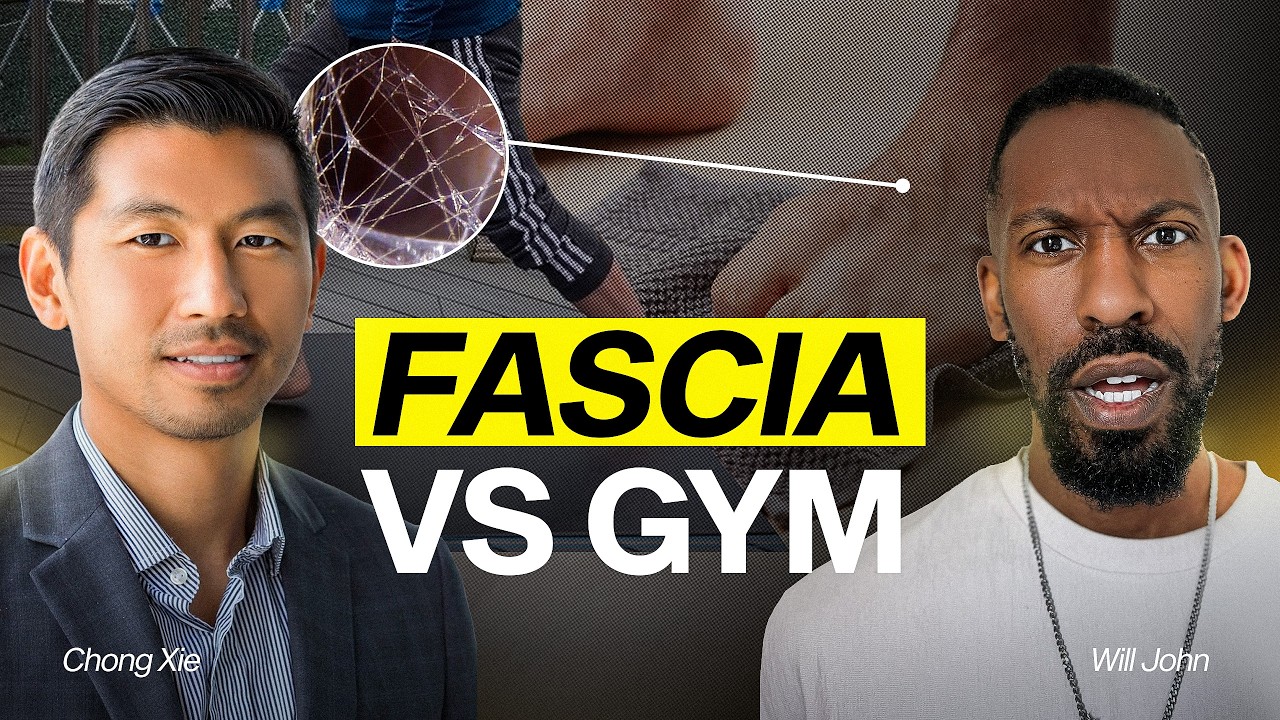
After 13 years of research, including clinical trials and work with world-class athletes, Xie has identified a fundamental difference in how elite performers move compared to everyone else.
The discovery started with a simple question that nobody could answer.
Jump to:
- The Mystery That Started Everything
- The Barefoot Connection
- What Fascia Actually Does
- The Problem With Traditional Weight Training
- How Elite Athletes Generate Explosive Power
- The 10-Second Test That Reveals Everything
- Clinical Evidence and Results
- The Mind-Body Connection
- Practical Application for Speed
- Rethinking Athletic Development
The Mystery That Started Everything
Ten years ago, Xie noticed something peculiar while training athletes. Some people would feel their glutes and core activate intensely during squats, while others felt everything in their quads and lower back.
The ones with strong glute activation? They were consistently more athletic.
Why is it some people when they do a squat they will feel their glutes and core activating, a lot of pressure there, but some athletes, the ones that are not very athletic, they would feel the quad and lower back, which is completely different.
Using EMG suits to measure nerve impulses during movement, Xie discovered clear differences in activation patterns. Elite sprinters actually fall into four distinct categories based on how they use their adductors, glutes, and hip flexors.
But the revelation came when he noticed something unusual about the most athletic individuals.
The Barefoot Connection
While training with Kadour Ziani, founding member of the original dunk shows and owner of a 50-inch vertical jump, Xie observed the group squatting and deadlifting barefoot.
The elite athletes used their feet completely differently. They had calluses on top of their toes, visible flexor tendon engagement, and their feet actively gripped the ground.
When Xie asked Ziani about his childhood, the answer confirmed his hypothesis.
Did you grow up barefoot? And he’s like, how do you know? He never wore a shoe when he was young. He grew up in an environment where he grew up barefooted all the time, and yet he was faster than his peers.
The EMG data revealed something shocking: when elite athletes simply stood and walked, their glutes were already activating. For most people, the glutes stayed completely dormant while the quads lit up instead.
The difference wasn’t muscle strength. It was neurological connection.
What Fascia Actually Does
Standard anatomy charts show isolated muscles on a skeleton. But that’s not how living tissue actually works.
Fascia is a continuous web of connective tissue that surrounds every muscle fiber, organ, nerve, and blood vessel in the body. It exists in multiple layers, from the superficial fascia just under the skin to deep fascia around muscles to visceral fascia around organs.
Each muscle fiber has to be embedded and surrounded by the fascia. There’s no such thing as the sliding filament theory where muscle fiber slides against another muscle fiber. Your muscle fiber has to slide against the fascia and then the fascia interacts with another muscle fiber.
This matters because fascia doesn’t just wrap muscles—it transmits force between them.
Research shows that cutting fascia around a joint reduces force production by up to 30%. When fascial connections are strong and properly functioning, they create what Xie calls a “sling” that transfers energy through the entire body.
When they’re not, you get compartment syndrome, carpal tunnel, chronic calf issues, and a host of other problems that traditional muscle-based rehabilitation struggles to address.
The Problem With Traditional Weight Training
Conventional strength training operates on a simple premise: lift heavy weights to make muscles bigger and stronger, which translates to better performance.
But there’s a critical flaw in this approach.
When you lift weights, the muscle will get damaged, but to damage the muscle, the fascia has to be damaged as well because your muscle fiber is enshrouded, enclosed by fascia. So that fascia tissue has to be damaged first.
Anyone who’s lifted weights knows about delayed onset muscle soreness (DOMS). During the days following a hard training session, performance actually decreases, not increases.
The problem gets worse: muscles adapt to training much faster than fascia. This creates a dangerous window where muscles are stronger but the fascial system hasn’t caught up, actually increasing injury risk.
According to Xie, this explains why ACL tears, Achilles injuries, groin issues, and compartment syndrome have all been trending upward over the past decade despite advances in sports science.
How Elite Athletes Generate Explosive Power
Federico Valverde generates devastating shot power despite a relatively slight frame. Gout, the Australian sprinter, is exceptionally skinny yet explosively fast.
The explanation lies in fascia and relaxation.
EMG analysis reveals that elite athletes show massive spikes of muscle activation followed by complete relaxation. Amateur athletes show random, co-contracting activation patterns where antagonist muscles fight against each other.
When you kick the ball, you put your leg behind you. If your fascia tissue from the core to your glutes is very strong, you’re actually loading a bow. And you let it go. Boom. That’s where the power comes from.
The body has built-in limiters called Golgi tendon organs that shut down excessive muscle contraction to prevent injury. You can’t generate maximum force through muscular effort alone.
But elastic fascial systems bypass this limitation entirely. The power comes from the connective tissue spring, not the muscle contraction.
The 10-Second Test That Reveals Everything
Xie uses a simple exercise called “tall crows” to assess foot-to-glute connection. Stand tall and curl your toes, gripping the ground.
Elite athletes feel their glutes activate within 10 seconds. Most people only feel their feet.
If you are an elite level athlete and your foot to glutes connection is optimal, just do this for 10 seconds. You’re going to feel the glutes.
Darius Clark, who holds the Guinness World Record for highest vertical jump, felt glute activation immediately. A nine-year-old girl who broke multiple American lifting records showed the same connection.
The mechanism behind this involves something called myofibroblast cells. When standard fibroblast cells in fascia experience sufficient mechanical tension, they transform into myofibroblasts with contractile properties similar to muscle.
Creating mechanical tension through exercises like toe curls triggers biochemical signals that change cellular expression. Over time, this develops the neurological pathways that allow foot activation to directly engage the glutes.
Clinical Evidence and Results
Xie recently completed randomized clinical trials with patients suffering from chronic ankle instability. One group performed hyperfascial training while a control group did nothing.
At week eight, the training group showed significant improvements in vertical jump height (CMJ) and ankle stability scores. By week twelve, improvements increased further.
The research paper is currently being prepared for publication.
Beyond controlled studies, Xie has worked with a world champion decathlete who credits fascial training over traditional weightlifting, multiple athletes with resolved compartment syndrome, and numerous cases of improved performance through enhanced glute activation.
The Mind-Body Connection
Fascia responds to more than just physical stress. Mental state directly influences fascial tension.
Xie describes a patient whose hands became permanently clenched overnight following severe emotional trauma. Ultrasound revealed extremely thick, fibrotic fascia—not from physical injury, but from psychological stress.
Your fascia is innervated by over 40% sympathetic nerve fiber. It’s tied to your fight and flight. If you want to relax but your mind is constantly stressed and hateful and negative, your fascia is not going to relax.
This explains why meditation and visualization are core components of hyperfascial training. Research by Dr. Robert Schleip confirms that mental imagery influences fascial tissue.
Tibetan practices like Tummo meditation, which increases body temperature through visualization, work specifically on the neurofascial connection.
For athletes, this means recovery requires more than physical rest. Parasympathetic activation through breathing exercises and meditation accelerates fascial healing and remodeling.
Practical Application for Speed
Most people trying to run fast are quad and hip flexor dominant. They’re essentially pushing themselves forward with muscular contraction rather than bouncing off elastic energy.
Ankle stiffness is paramount for speed, but only if the fascial connection extends from foot to glutes.
If you’re glute dominant and fascial driven, you can do at least a hundred calf raises without feeling calf fatigue. But if you’re not, you do 25, you’re done. You’re not going to reach the glutes.
Xie points to Gout, the Australian sprinter, as a perfect example. His coach spent six months trying to retrain him to walk heel-first instead of on the balls of his feet.
According to Xie, this was completely backwards. Gout naturally walked that way because of his superior fascial connections, not in spite of them.
Rethinking Athletic Development
The implications challenge fundamental assumptions in strength and conditioning.
Brazilian footballers who grew up barefoot and became superstars weren’t succeeding despite their unconventional training—they succeeded because of it.
Allen Iverson’s slight frame didn’t limit his explosiveness. His fascial system enabled it.
The skinny fighter who destroys the muscular opponent in a low-kick competition isn’t an anomaly. He understands how to load and release fascial springs.
Xie’s research suggests that training fascia first, then adding strength work, makes more sense than the traditional approach. Build the fascial connections through barefoot stimulation and specific exercises, then layer muscle strength on top of that foundation.
It’s not about rejecting conventional training entirely. It’s about understanding what conventional training misses.
Those interested in learning more can find Xie on Instagram at Secret of Athleticism or explore detailed protocols on his Patreon page under Hyperfascial Training. His name, Chong Xie, will also lead to resources on this approach to athletic development.