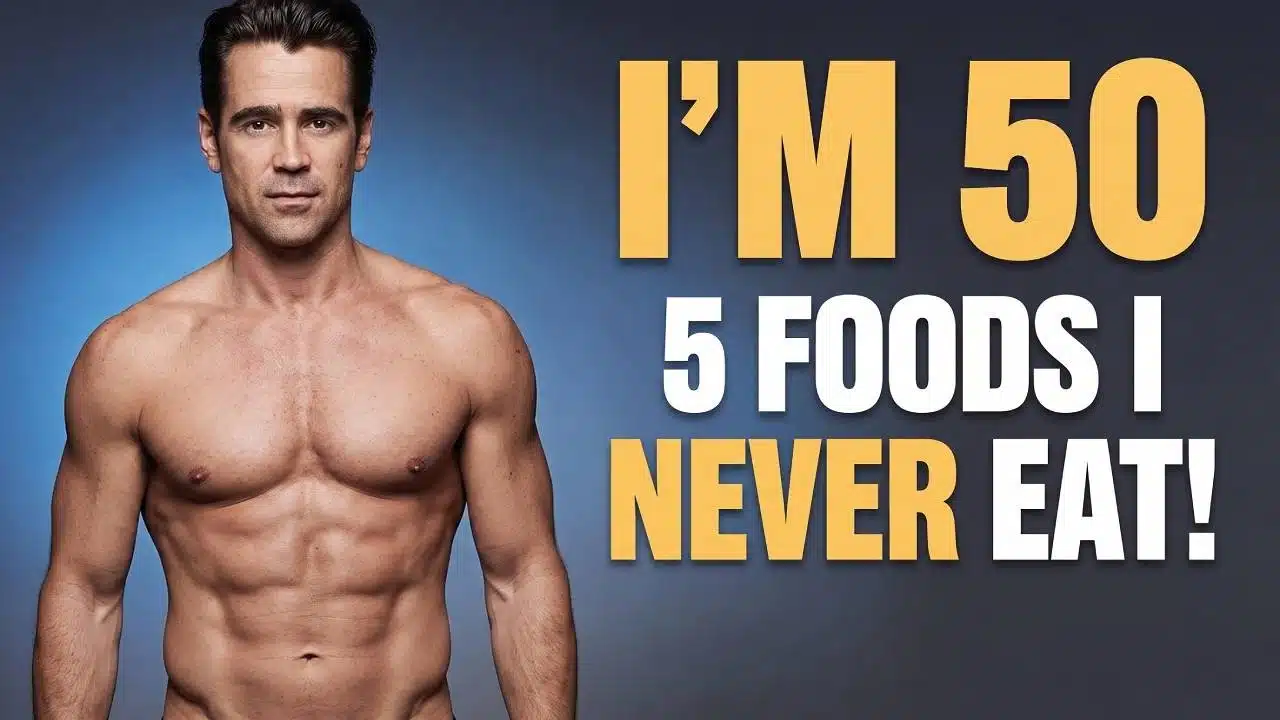
Colin Farrell turned 50 last weekend looking better than he did at 30.
Two decades ago, a psychiatrist asked him to write down everything he consumed in a single week.
The list included 20 ecstasy pills, 4 grams of cocaine, 6 grams of speed, three bottles of Jack Daniel’s, 12 bottles of red wine, and 60 pints of beer.
He looked at that list and made a decision that saved his life.
Jump to:
From Self-Destruction to Sober Longevity
Farrell was born in Dublin in 1976 and by his mid-20s had become one of Hollywood’s most talked-about actors. Starring in Phone Booth, S.W.A.T., Minority Report, and Alexander, his rapid professional success coincided with equally rapid personal destruction.
He has spoken candidly about what those years looked like. A psychiatrist sat him down and asked him to itemize his weekly consumption.

If you want something simple that actually works, this is one of the most effective tools I’ve used to build strength, conditioning, and endurance without needing a full gym setup.
- Full-body training with one weight using swings, squats, and presses
- Solid cast iron build that feels stable and lasts for years
- Comfortable grip that makes high-rep workouts easier to handle
I was only going one way, down. I was self-destructive.
He entered rehabilitation in 2005 and has been sober ever since—now over 20 years without alcohol or drugs. What happened to his body in those 20 years is the real story.
Five Foods Colin Farrell Eats Every Single Day
Food One: Green Tea
Farrell has specifically named green tea as a daily staple, describing it as one of the pillars of his clean lifestyle since getting sober.
Green tea contains EGCG, one of the most potent antioxidant compounds available in any dietary source. It reduces systemic inflammation, supports cardiovascular health, and protects cellular integrity at a molecular level.
It also delivers L-theanine alongside caffeine, producing sustained calm focus rather than the cortisol spike coffee creates. For someone who spent years in chronic cortisol elevation through substance use, this shift represents a physiological reset he has maintained for two decades.
Food Two: Lean Protein
Farrell’s diet has been described across multiple sources as high-protein and Mediterranean in structure, built around lean meats, fish, eggs, and plant-based protein sources at every sitting.
His preparation for Total Recall involved training six days weekly for three months alongside meticulous nutrition, built entirely around protein as the anchor of every meal. Lean protein drives muscle protein synthesis, critical for someone who lost significant muscle mass during addiction years and spent two decades methodically rebuilding.
If you want something simple that actually works, this is one of the most effective tools I’ve used to build strength, conditioning, and endurance without needing a full gym setup.
- Full-body training with one weight using swings, squats, and presses
- Solid cast iron build that feels stable and lasts for years
- Comfortable grip that makes high-rep workouts easier to handle
Food Three: Fruits and Vegetables
Farrell has described his diet as built around eating really well, with high volumes of fruits and vegetables consistently mentioned.
The antioxidant load, micronutrient density, and anti-inflammatory properties of whole plant foods directly support immune function, cardiovascular health, and hormonal regulation that men over 50 need most. For someone whose body endured extreme oxidative stress from chronic substance use, maximizing antioxidant intake isn’t preference—it’s physiological priority.
Food Four: Vitamins and Supplementation
Farrell has specifically described taking loads of vitamins as part of his daily clean lifestyle routine.
His supplementation approach reflects understanding that food alone doesn’t always deliver micronutrient levels an aging male body requires for optimal function. Vitamin D3 for bone density and testosterone support, magnesium for muscle function and sleep quality, omega-3 for cardiovascular and joint health, and zinc for hormonal regulation represent core supplements most consistently associated with health outcomes men over 50 need to protect.
Food Five: Olive Oil and Whole Grains
Farrell’s dietary structure follows the Mediterranean pattern closely, with olive oil, whole grains, legumes, fish, and vegetables forming the base of daily eating.
The Mediterranean diet is the most extensively studied dietary pattern in longevity research, associated with reduced cardiovascular risk, lower inflammatory markers, better cognitive function, and measurably slower biological aging. For someone whose early adult years placed extraordinary inflammatory stress on cardiovascular system and liver, the sustained anti-inflammatory effect of Mediterranean eating over 20 years represents one of the most powerful rehabilitative nutritional interventions available.
If you want something simple that actually works, this is one of the most effective tools I’ve used to build strength, conditioning, and endurance without needing a full gym setup.
- Full-body training with one weight using swings, squats, and presses
- Solid cast iron build that feels stable and lasts for years
- Comfortable grip that makes high-rep workouts easier to handle
What Colin Farrell Eats Daily
Breakfast
Farrell starts his day early with clean breakfast built around protein and complex carbohydrates to fuel morning training.
- Scrambled eggs or omelet with vegetables
- Whole grain toast
- Green tea
Eggs provide complete protein and choline for cognitive function. Whole grain toast delivers slow-release energy without blood sugar spikes. Green tea begins antioxidant and anti-inflammatory work he continues throughout the day.
Lunch
Grilled fish or lean chicken with large salad, vegetables, and a portion of brown rice or quinoa.
This is his primary protein and carbohydrate meal, timed to support afternoon training or physical activity. He has described his Mediterranean-style eating as something he finds sustainable precisely because it never feels like restriction—flavorful, varied, and built around real food rather than diet products.
Dinner
Lighter than lunch, built around protein and vegetables with minimal carbohydrate.
Farrell eats his evening meal early, allowing the body to shift into recovery mode before sleep and maximizing overnight hormonal restoration that drives muscle repair, testosterone regulation, and growth hormone release.
If you want something simple that actually works, this is one of the most effective tools I’ve used to build strength, conditioning, and endurance without needing a full gym setup.
- Full-body training with one weight using swings, squats, and presses
- Solid cast iron build that feels stable and lasts for years
- Comfortable grip that makes high-rep workouts easier to handle
Five Foods Colin Farrell Never Touches
Food One: Alcohol
Completely and permanently eliminated 20 years ago.
Of all substances Farrell has removed from his life, alcohol is the one that made every other positive change possible. Alcohol suppresses testosterone directly, disrupting hormonal environment that drives muscle maintenance, energy, and drive in men over 50. It destroys deep sleep quality, which is the primary recovery window for every physical and hormonal repair process the male body runs overnight.
Farrell spent over two decades drinking alcohol daily from age 14. He stopped at 29 and hasn’t gone back.
Food Two: Recreational Drugs and Stimulants
Also permanently eliminated alongside alcohol with equally profound effects on physical health.
Chronic stimulant use drives cortisol elevation that degrades muscle tissue, suppresses testosterone, disrupts sleep architecture, and creates chronic systemic inflammation that accelerates aging at every level. Farrell has described his recovery not just as removal of substances, but as rebuilding an entirely new relationship with his body—one based on care rather than exploitation.
Food Three: Processed and Fast Food
Farrell has described his clean lifestyle as the direct opposite of processed, convenience-based eating that characterized his addiction years.
If you want something simple that actually works, this is one of the most effective tools I’ve used to build strength, conditioning, and endurance without needing a full gym setup.
- Full-body training with one weight using swings, squats, and presses
- Solid cast iron build that feels stable and lasts for years
- Comfortable grip that makes high-rep workouts easier to handle
Processed food introduces refined oils, artificial additives, excess sodium, and hidden sugars that drive chronic inflammation his Mediterranean diet is specifically designed to counter. For someone who spent years placing extreme stress on liver and cardiovascular system, removing every unnecessary inflammatory input has been as much medical priority as lifestyle preference.
Food Four: Refined Sugar
Eliminated as part of the clean eating approach Farrell has described since getting sober.
Refined sugar drives insulin resistance, promotes abdominal fat storage, accelerates glycation of arterial and skin tissue, and suppresses immune function men over 50 increasingly depend on. For someone whose previous dietary pattern included large amounts of alcohol—essentially liquid refined sugar—elimination of refined sugar from food choices completed removal of the primary inflammatory dietary driver from his system entirely.
Food Five: Late-Night Heavy Eating
Farrell has described his lifestyle as clean and structured, and avoiding heavy eating late in the evening is consistent with that principle.
Late meals suppress overnight release of growth hormone that is the primary mechanism for muscle repair and fat metabolism during sleep. For someone who trains six days weekly and needs effective overnight recovery, protecting that hormonal window is non-negotiable.
Colin Farrell’s Weekly Training Routine
Monday: Chest and Upper Body
- Bench press: 4 sets × 8-10 reps
- Incline dumbbell press: 3 sets × 10 reps
- Cable fly: 3 sets × 12 reps
- Push-ups: 3 sets × 20 reps
- Triceps push-down: 3 sets × 12 reps
- Overhead triceps extension: 3 sets × 12 reps
Tuesday: Running and Cardio
- Treadmill or outdoor run: 3-5 miles at steady pace
- Incline walk: 15 minutes at maximum incline
- Jump rope: 3 rounds × 3 minutes
- Core circuit: planks 3 × 60 seconds, mountain climbers 3 × 30 seconds
Wednesday: Back and Biceps
- Deadlift: 4 sets × 6-8 reps
- Pull-ups: 4 sets × 8-10 reps
- Bent-over row: 3 sets × 10 reps
- Seated cable row: 3 sets × 12 reps
- Barbell curl: 3 sets × 10 reps
- Hammer curl: 3 sets × 12 reps each arm
Thursday: Yoga and Mobility
- Full body yoga flow: 60 minutes
- Targeted stretching for hips, spine, and shoulders
- Breathwork and meditation: 20 minutes
Farrell has described yoga as one of the practices he was most skeptical about and most grateful for, saying he predicted he would start doing yoga after getting sober and eventually proved himself right.
If you want something simple that actually works, this is one of the most effective tools I’ve used to build strength, conditioning, and endurance without needing a full gym setup.
- Full-body training with one weight using swings, squats, and presses
- Solid cast iron build that feels stable and lasts for years
- Comfortable grip that makes high-rep workouts easier to handle
Friday: Legs and Core
- Back squat: 4 sets × 8 reps
- Romanian deadlift: 3 sets × 10 reps
- Walking lunges: 3 sets × 12 reps each leg
- Leg press: 3 sets × 12 reps
- Hanging leg raise: 3 sets × 15 reps
- Russian twist: 3 sets × 20 reps
Saturday: Hill Hiking or Outdoor Activity
Two-hour hill hike or extended outdoor walk.
Farrell has described this as one of his favorite training methods, combining cardiovascular conditioning with the mental reset that being outdoors provides.
Sunday: Rest
Complete rest and recovery, treated as non-negotiable component of his program.
Four Things Colin Farrell’s Journey Teaches Men Over 50
One: The Body Is Remarkably Resilient When Given Right Conditions
Colin Farrell spent over 15 years placing extraordinary stress on liver, cardiovascular system, hormones, and metabolism.
Twenty years of clean living produced visible and measurable physical restoration at 50 that most wouldn’t believe possible from that starting point. It is never too late to begin giving the body what it needs.
Two: Purpose Is the Most Powerful Motivator Available
Farrell has attributed his sustained sobriety and healthy lifestyle entirely to his children, particularly his son James.
If you want something simple that actually works, this is one of the most effective tools I’ve used to build strength, conditioning, and endurance without needing a full gym setup.
- Full-body training with one weight using swings, squats, and presses
- Solid cast iron build that feels stable and lasts for years
- Comfortable grip that makes high-rep workouts easier to handle
For men over 50, connecting physical health decisions to people who depend on them produces more consistent behavior than any goal built around appearance or personal achievement.
Three: Yoga Works
Farrell resisted yoga for months after getting sober before eventually starting.
He has described it as one of the most important physical practices he has adopted, providing flexibility, joint health, and mental clarity that his other training demands. Men over 50 who dismiss yoga as something they don’t need are almost always the men who need it most.
Four: Sobriety Is Physical as Much as Psychological
Every drink, drug, and processed substance a man consumes places demand on his hormonal, cardiovascular, and immune systems.
Removal of those demands produces physical changes that no dietary addition or training program can fully replicate. Farrell’s transformation at 50 began with a single removal. Everything else followed.