How muscular can someone get without steroids?
That simple question has sparked countless online debates, controversy, and comment section wars—especially when a lean, visibly jacked physique comes into question.
One of the most misunderstood aspects in these discussions is the difference between “likely enhanced” and “definitely not natural.”
Let’s break down the science, the real-life examples, and the logic behind how big you can get naturally—and why saying someone is “definitely not natty” without evidence is a big mistake.
Dr. Mike Israetel from Renaissance Periodization recently unpacked this controversy in a detailed breakdown sparked by a Jeff Nippard video about looking enhanced while staying natural.
Here’s what you need to know.
Jump to:
What Is FFMI and Why 25 Is the “Magic” Number
The Fat-Free Mass Index (FFMI) is a metric used to assess lean muscle mass relative to height. In fitness circles, the number 25 gets tossed around as the supposed maximum achievable value for natural athletes.
This number comes from a 1995 study by Kouri et al., which compared steroid users and non-users. Most steroid users fell above the FFMI of 25. Non-users were clustered below.
This led many to assume that anything over 25 was “unnatural.” But there’s a serious flaw here—the sample size was limited, and the non-user’s data topped out just under 25, making the distribution oddly skewed.
“It’s not a normal bell curve,” explains Dr. Mike. “That absence of data above 25 doesn’t confirm a limit; it may just reflect a lack of representation.”
Sampling Error: Why Genetics and Opportunity Matter
Exceptional genetic outliers exist, but they often leave the natural testing pool once their physique becomes competitive enough to transition to professionally enhanced categories.
Many of those capable of exceeding an FFMI of 25 naturally never get documented as such—because they start using steroids before reaching their true natural limit.
“I’ve seen this countless times,” Dr. Mike says. “Guys with elite genetics switch to gear before hitting their natural peak.”
That means realistic natural limits could be higher than previously documented—not because science was wrong, but because high-potential individuals move out of the “natty” category before being counted.
Yes, 25+ FFMI Is Possible for Naturals—And Proven
Contrary to online dogma, the existence of natural athletes with FFMI over 25 is backed by evidence.
- Sumo wrestlers and American football players have tested natural with FFMIs that exceed 25.
- Peer-reviewed literature supports these findings—these aren’t social media claims; they’re data points from actual studies.
This shows not only that FFMI over 25 is possible without steroids, but that muscle distribution and body types vary considerably across populations.
Take a Look Before You Judge: The Hussein Farhat Example
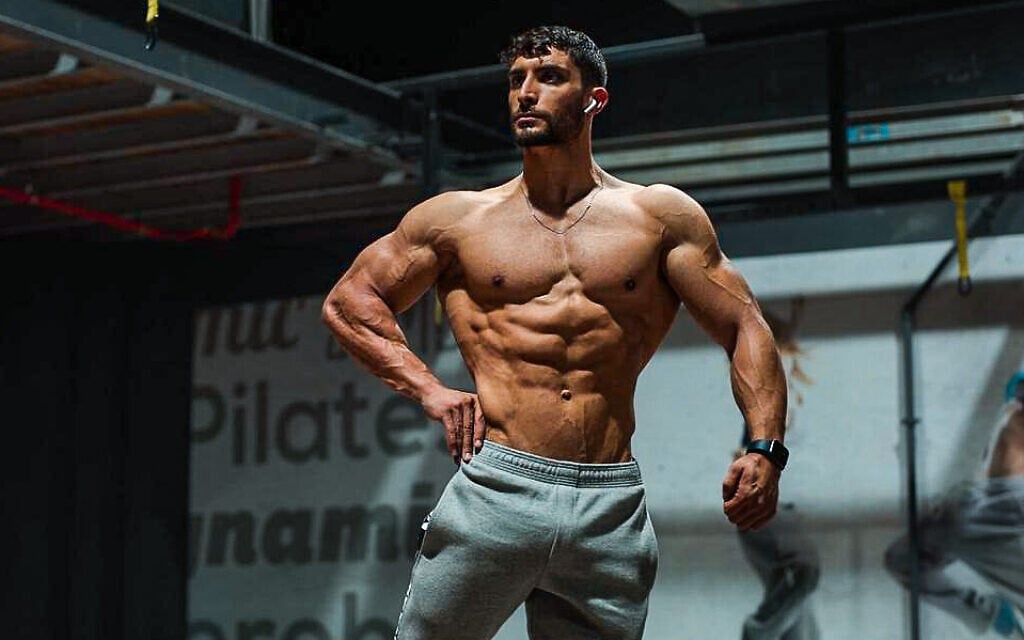
The controversy heated up over athlete Hussein Farhat, featured in Jeff Nippard’s video as a suspected natural with a standout physique.
Many viewers claimed there was no way he could be natural. The twist? His FFMI was under 23—well below even the debated 25 threshold.
“People flipped out over his physique, but he’s not even at the so-called natty limit,” Dr. Mike explained.
What Hussein does have is rare muscle insertions and eye-catching proportions—especially his delts and arms. Muscle shape, not size, was responsible for most of the perception that he looks enhanced.
Why You Shouldn’t Confuse Probability with Certainty
This is where most “natty or not” debates fall apart.
An FFMI over 25 means it’s more likely than not someone uses steroids. But “more likely” does not mean “definitely.”
Here’s a breakdown of how that probability works:
- FFMI 25–27.5: Possibly enhanced, maybe 60–75% probability
- FFMI 27.5–30: Likely enhanced, 85–95% probability
- FFMI 30+: Extremely likely enhanced (97–99%+)
But 97% isn’t 100%. Just like a soldier heading to Vietnam had a 2% chance of dying—that doesn’t mean you tell them “you’ll definitely survive.”
“Don’t clown yourself by saying ‘definitely’—you could be totally wrong,” says Dr. Mike.
How Big Can You Actually Get Without Steroids?
If you’re hoping to find out your natural muscle-building potential, you have two tools:
1. Use Menno Henselmans’ Natty Max Calculator
Enter your height, wrist and ankle measurements to get an estimate. It uses evidence-based formulas and trends observed in natural bodybuilding.
The catch? It’s still just that—an estimate. Some people outperform the prediction. Others fall short despite perfect training and nutrition.
2. Train Hard for 5–10 Years and See
Your best indicator of your genetic ceiling is how you progress over time.
“You’ll never know unless you try,” says Dr. Mike. “And it takes years to truly find out.”
Elite drug-free physiques take a long time and all-out dedication.
Exceptional Genetics Aren’t Common—But They Do Exist
Part of the disbelief around natural physiques comes from unfamiliarity with just how powerful genetics can be.
“Paul Canu had a six-pack at 10 years old. He was jacked before he even started lifting,” Mike says.
These rare individuals exist and often rise to fame because of how rare their genetics are—not in spite of it.
If you assume everyone with a high-tier physique must be enhanced, you’re dismissing outliers too easily.
Final Takeaways: What Should You Believe?
- Falling into the trap of assuming “probably not natural” means “definitely not natural” can mislead and divide the community.
- FFMI over 25 is not an automatic steroid indicator. Use it as a hint, not a final verdict.
- Want to know your natty limit? Train hard and diet well for 5–10 years. The truth is in your effort, not the guesswork.
- Exceptional physiques are rare, but real. Genetics, hard work, and smart training all play a role.
And if you’re chasing your best self, whether you’re drug-free or assisted, the real question isn’t “natty or not.”
It’s—“Am I maxing out what I’m capable of?”
Because in the end, that’s what matters most.