For anyone who’s ever wondered what would happen if you combined a world-class gym, a scientific research facility, and the mind of a meticulous evidence-based bodybuilder — Jeff Nippard may have just answered that question.
In a recent YouTube video, Nippard unveiled the result of two years of secrecy and planning: The Jeff Nippard Muscle Lab.
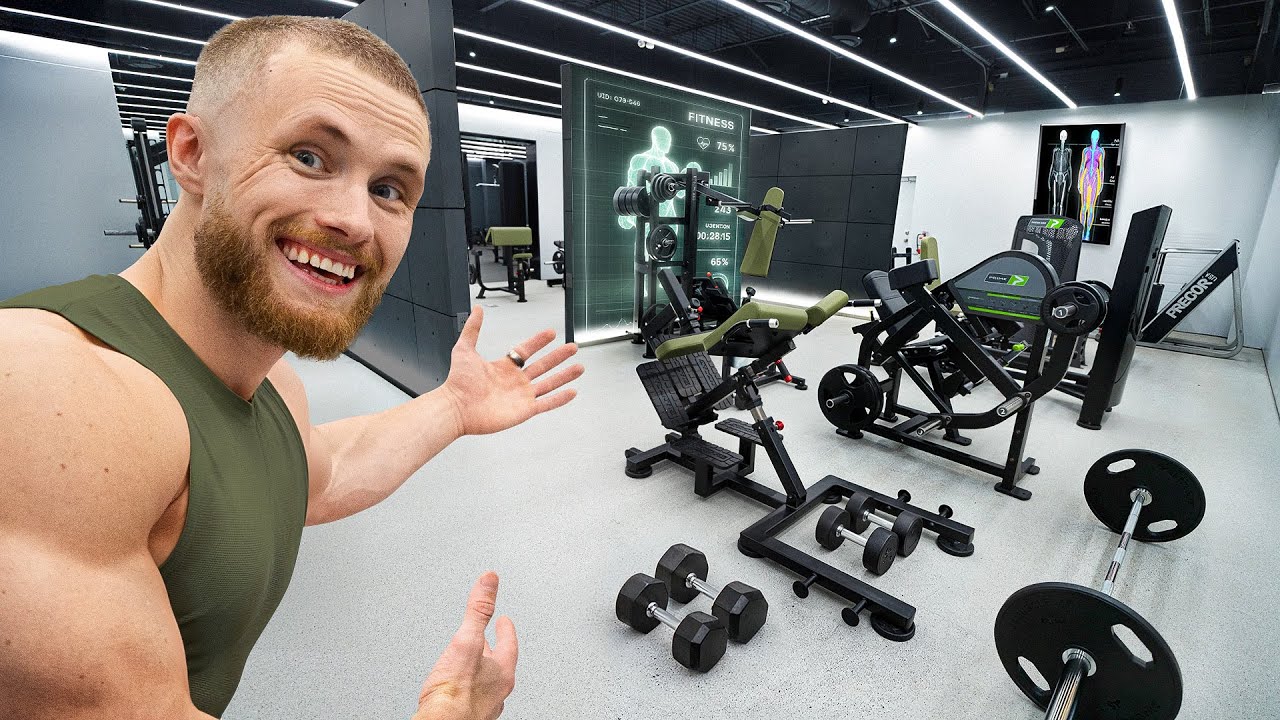
It’s not just a training space — it’s a full-scale experimental laboratory designed to push the boundaries of muscle science.
From advanced DEXA scans to real-time EMG testing and muscle ultrasound imaging, this lab is engineered to document and share scientifically-grounded fitness breakthroughs — in real time.
Here’s a breakdown of what makes this possibly the most scientifically sophisticated personal gym on the planet — and what it means for the future of fitness content.
Jump to:
A Gym and a Lab Like No Other
Nippard spared no expense in creating a dual-purpose facility that now serves as both his personal training haven and a hub for controlled fitness experiments.
He emphasized that nothing in the gym was sponsored — everything was personally selected and paid for using revenue from his training programs and MacroFactor nutrition app.
The facility includes:
- Light Gym: Optimized strength training space with a bright atmosphere.
- Dark Gym: A moody, bodybuilding-centric space featuring dramatic spotlighting.
- Podcast Room: A media production suite for his re-launched podcast.
- The Lab: A $300,000+ room equipped for exercise science research.
Light Side: Strength and Functionality
This room includes carefully selected equipment, from a deadlift platform and squat rack to Prime Fitness machines that allow precise manipulation of loading across different ranges of motion.
Take the Prime leg extension machine as an example. By loading different cam positions, Nippard can target either the stretched, mid-range, or contracted part of the rep — an option rarely available at commercial gyms.
Another standout: the Atlantis pendulum squat, which he praised for its quad-dominant emphasis, especially in the challenging bottom portion of the rep.
Small touches like custom Jeff Nippard Muscle Lab plates and branded dumbbells elevate every detail.
Dark Side: Bodybuilding Focus Under Spotlight
This section is full of high-end, hypertrophy-centric equipment like seal rows, chest-supported Prime rows, and the legendary Phil Heath hammer strength chest press.
The dramatic lighting was intentionally designed for both motivation and filming purposes. Each light is individually dimmable to create hyper-focused shadows and definition, essential for understanding muscular engagement during exercise demos.
“I call it the thumbnail lighting,” Nippard joked while demonstrating how just a few well-placed spotlights can dramatically increase muscle definition on camera.
The Real Star: The Jeff Nippard Muscle Lab
Located just behind a $300,000 door, the Muscle Lab is where theory meets practice. Equipped with gold-standard tools used in academic research, Nippard aims to tackle long-standing fitness questions — and even publish peer-reviewed studies.
Tools Inside the Lab
- DEXA Scan: Measures body composition with a 0.5% margin of error.
- Ultrasound Imaging: Allows direct tracking of muscle growth, down to the millimeter.
- EMG Machine: Tracks electrical muscle activation to validate which exercises trigger the most hypertrophy.
- BIA Machine: Fast body composition analysis used when DEXA isn’t practical for large sample sizes.
One of Nippard’s first experiments? Training one bicep daily for 30 days, and the other bicep only twice a week — then using the ultrasound to compare muscle growth. It’s this type of tightly controlled, self-directed protocol that traditional institutions have struggled to execute quickly or transparently.
Scientific Integrity Meets Accessibility
The Muscle Lab isn’t just a flashy prop. Nippard says the ultimate vision is to make quality research visual, relatable, and actionable.
Past barriers in academic studies — small sample sizes, lack of filming production, and limited exercise protocol tracking — won’t exist here. Every experiment, every rep, every measurable gain can be documented in stunning detail and clarity.
“We’ll be able to film every single subject in every study,” said Nippard. “That’s never been done in exercise science ever.”
Real-World Studies That Hit Home
Some of Nippard’s ideas for future studies include:
- Comparing fat and health outcomes between a “junk food” diet and a “clean foods” diet under controlled conditions.
- Measuring muscle loss when enhanced lifters come off steroids without changing diet or training.
- Validating whether higher EMG activation truly predicts greater long-term muscle growth.
By running large sample studies and opening the lab doors to hundreds of subjects, the goal is to create research that’s both scientifically rigorous and widely applicable.
Powered by Community Support
The Muscle Lab, DEXA machines, and top-tier workout equipment weren’t funded by sponsors. Nippard credited everything to his audience and the users of the MacroFactor app.
“That’s honestly how all of this is even possible,” he said.
He uses MacroFactor daily during his current fat loss phase and praised its adaptive feedback algorithm that mirrors a professional coach’s flexibility, with built-in automation for macro adjustments over time.
A Vision That Blends Entertainment with Evidence
In a space where flashy transformations and pseudoscience dominate much of fitness media, the Jeff Nippard Muscle Lab represents a powerful middle ground between academia and everyday gym goers.
It’s educational, experimental, and above all — transparent.
With plans for peer-reviewed studies, public filming access, and large-scale controlled fitness research previously unheard of online, this facility might truly shape the future of muscle science content.
As Nippard puts it: “It’s going to be like doing a study… but this [lab] is the university.”