Most lists of “testosterone-boosting foods” floating around the internet rely more on wishful thinking than actual science.
A fitness nutrition expert recently drew a critical line in the sand: only five whole foods have direct clinical evidence showing they can actually raise testosterone levels in humans.
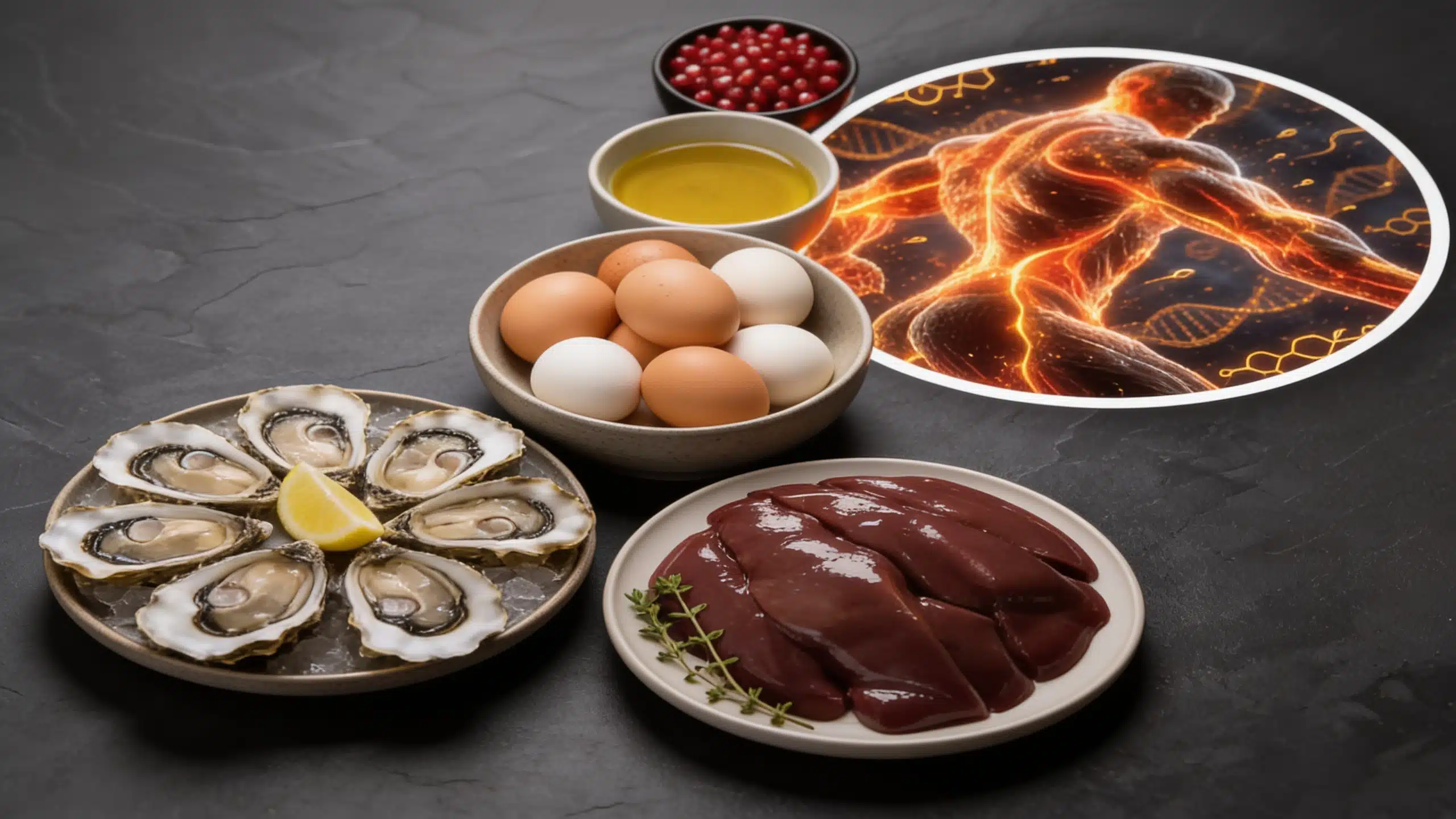
Everything else? Just mechanistic plausibility—meaning the food contains nutrients that theoretically support testosterone pathways, but nobody’s actually proven it works in real people.
For men seeking natural hormone optimization through diet, understanding this distinction could save considerable time, money, and disappointment.
Jump to:
- The Evidence Gap in Testosterone Nutrition
- The Five Foods With Direct Clinical Evidence
- The Mechanistic vs. Clinical Evidence Distinction
- Why Dietary Effects Remain Modest
- The Bigger Picture: Lifestyle Synergy
- What Sports Dietitians Recommend
- Research Quality Considerations
- The Declining Testosterone Context
- Practical Takeaways for Men
The Evidence Gap in Testosterone Nutrition
Testosterone is the primary male androgenic hormone, produced mainly in specialized Leydig cells within the testes. Normal levels range from approximately 270–1070 ng/dL in men, peaking around age 20 and declining roughly 1–2% annually after age 30.
The hypothalamic-pituitary-gonadal axis regulates testosterone through tight negative feedback loops. This biological reality explains why external interventions—including dietary ones—rarely produce dramatic or sustained hormonal shifts in healthy individuals.
No products found.
A 2020 analysis revealed that only about 25% of supplements marketed as testosterone boosters had any supporting data. Worse yet, roughly 10% contained ingredients that may actually suppress testosterone production.
Foods commonly cited in mainstream articles include oysters (for zinc), fatty fish (omega-3s and vitamin D), eggs, leafy greens, pomegranate, and ginger. But the quality and directness of evidence varies dramatically across these options.
The Five Foods With Direct Clinical Evidence
While the original post doesn’t explicitly name all five foods in the caption, the academic references cited point to specific whole foods that have been studied in controlled human trials.
Pomegranate Juice: The Salivary Testosterone Study
A 2012 study published in Endocrine Abstracts found that two weeks of pomegranate juice consumption increased salivary testosterone by approximately 24% in healthy volunteers. Participants also reported improved mood markers.
However, salivary testosterone represents a less reliable biomarker than serum total or free testosterone measured via blood draw. This limitation doesn’t invalidate the findings, but it does contextualize their applicability.
Whole Eggs: Beyond Just Protein
A 2021 Journal of Strength and Conditioning Research study delivered particularly compelling evidence. Men who consumed whole eggs—rather than egg whites only—after resistance training showed significantly higher testosterone levels.
No products found.
The whole-egg group also demonstrated superior knee extension strength and handgrip strength compared to their egg-white-consuming counterparts.
This makes biochemical sense: testosterone synthesis requires cholesterol as a direct substrate. Egg yolks provide dietary cholesterol along with fat-soluble vitamins and nutrients that support hormonal production pathways.
Ginger: From Traditional Medicine to Clinical Research
A 2013 paper in Natural Product Communications examined ginger supplementation and its effects on Leydig cell function—the specialized cells that produce testosterone.
While animal models have shown promising results, human trials remain relatively small. Still, ginger represents one of few spices with direct research examining testosterone outcomes rather than merely mechanistic plausibility.
Zinc-Rich Foods: Correcting Deficiency Matters Most
A 2022 Journal of Trace Elements in Medicine and Biology paper reinforced what endocrinologists have known for decades: zinc functions as a critical cofactor for testosterone biosynthesis.
Zinc deficiency demonstrably reduces testosterone production. Correcting that deficiency through diet or supplementation can restore levels to normal ranges.
No products found.
The catch? Supplementation above sufficiency doesn’t appear to further elevate testosterone. If levels are already adequate, consuming more zinc won’t push testosterone higher.
Oysters remain the most concentrated whole-food source of zinc, delivering roughly 74 mg per 3-ounce serving—about 673% of the daily value.
The Mechanistic vs. Clinical Evidence Distinction
Understanding the difference between these two types of evidence represents crucial health literacy.
Mechanistic plausibility means a food contains nutrients known to support testosterone pathways through biochemical mechanisms. For example, vitamin D functions as a steroid hormone precursor, so theoretically, vitamin D-rich foods might support testosterone production.
Direct clinical evidence means researchers gave actual humans the actual food and measured actual testosterone changes in controlled trials.
Most “testosterone-boosting food” articles rely almost exclusively on mechanistic reasoning without clinical confirmation.
No products found.
Why Dietary Effects Remain Modest
The National Academy of Sports Medicine notes that negative feedback mechanisms in the hypothalamic-pituitary-gonadal axis will generally return testosterone to baseline levels. This regulatory system limits the ceiling effect of any dietary intervention in healthy individuals.
An endocrinologist would likely emphasize that for men with clinically normal testosterone, no food is likely to produce meaningful or sustained increases. Research applications primarily benefit men with deficiency-related suppression.
Common deficiency triggers include:
- Zinc deficiency from inadequate dietary intake or absorption issues
- Vitamin D deficiency from limited sun exposure or dietary sources
- Caloric restriction severe enough to suppress reproductive hormones
- Extremely low-fat diets that limit cholesterol availability for hormone synthesis
The Bigger Picture: Lifestyle Synergy
The original post correctly contextualizes dietary effects as synergistic with lifestyle factors rather than standalone interventions.
Sleep quality profoundly influences testosterone production. Even one week of poor sleep can reduce testosterone by 10–15% in young men, according to research on sleep deprivation and hormonal health.
Resistance training creates both acute and chronic testosterone responses. Heavy compound movements—squats, deadlifts, bench presses—trigger temporary spikes that may support muscle-building processes.
No products found.
Body composition matters significantly. Excess adipose tissue converts testosterone to estrogen through aromatase enzyme activity, making fat loss a potentially more impactful intervention than any specific food for overweight men.
Older controlled studies found that diets providing roughly 40% of calories from fat were associated with higher testosterone compared to diets providing only 20% from fat.
What Sports Dietitians Recommend
Registered dietitians specializing in sports nutrition emphasize that broader dietary patterns matter far more than individual foods.
Key nutritional foundations include:
- Adequate total calories to support training demands and prevent metabolic suppression
- Sufficient fat intake from whole-food sources to provide cholesterol and fat-soluble vitamins
- Micronutrient adequacy through varied whole foods rather than reliance on supplements
- Minimization of ultra-processed foods that may contribute to inflammation and metabolic dysfunction
- Consistent protein intake distributed throughout the day to support muscle protein synthesis
No single superfood will override poor sleep, sedentary behavior, chronic stress, or overall dietary inadequacy.
Research Quality Considerations
A research methodologist examining these studies would note several important caveats about evidence quality.
No products found.
Sample sizes in many food-testosterone studies remain relatively small. The pomegranate juice study, while intriguing, measured salivary rather than serum testosterone—a less reliable biomarker for clinical assessment.
One citation references a 2026 paper from The Innovation Nutrition, an extremely new journal with limited citation history. This doesn’t automatically invalidate findings, but it does mean peer review processes haven’t been extensively tested.
Heterogeneity across studies—different populations, dosages, measurement methods, and study durations—makes direct comparisons challenging.
The Declining Testosterone Context
Population studies have documented average testosterone levels declining over recent decades, independent of dietary changes alone.
Contributing factors likely include increased obesity rates, endocrine-disrupting chemicals in the environment, higher stress levels, worse sleep quality, and more sedentary lifestyles.
This broader context suggests that addressing testosterone through diet requires simultaneous attention to environmental and lifestyle factors that weren’t as prevalent in previous generations.
No products found.
Practical Takeaways for Men
For men aged 20–50 interested in natural hormone optimization, the evidence suggests a hierarchy of interventions.
Prioritize sleep quality and duration as the foundation. Seven to nine hours of consistent, quality sleep outweighs any dietary intervention for hormonal health.
Implement progressive resistance training with compound movements at least three times weekly. This remains the most evidence-supported lifestyle intervention for testosterone optimization.
Ensure adequate total calorie and fat intake. Chronic dieting and extremely low-fat approaches may suppress testosterone more than any food could elevate it.
Address potential micronutrient deficiencies through blood testing when possible. Correcting documented zinc or vitamin D deficiency through targeted supplementation makes more sense than randomly adding foods.
Include the evidence-supported foods—pomegranate juice, whole eggs, ginger, zinc-rich options like oysters—as part of a varied, whole-food-based dietary pattern rather than expecting them to work as isolated interventions.
No products found.
The distinction between mechanistic plausibility and direct clinical evidence matters. It separates evidence-based nutrition from marketing hype, helping men make informed decisions about where to focus their dietary efforts for genuine hormonal health benefits.