Frank Grillo is lifting more than weights — he’s lifting the veil on Hollywood’s unspoken secret: the widespread use of performance-enhancing drugs (PEDs) to achieve the superhuman physiques audiences see on screen.
In a brutally honest conversation on Men’s Health’s Strong Talk podcast, the 60-year-old actor, known for roles in Captain America and Peacemaker, didn’t hold back.
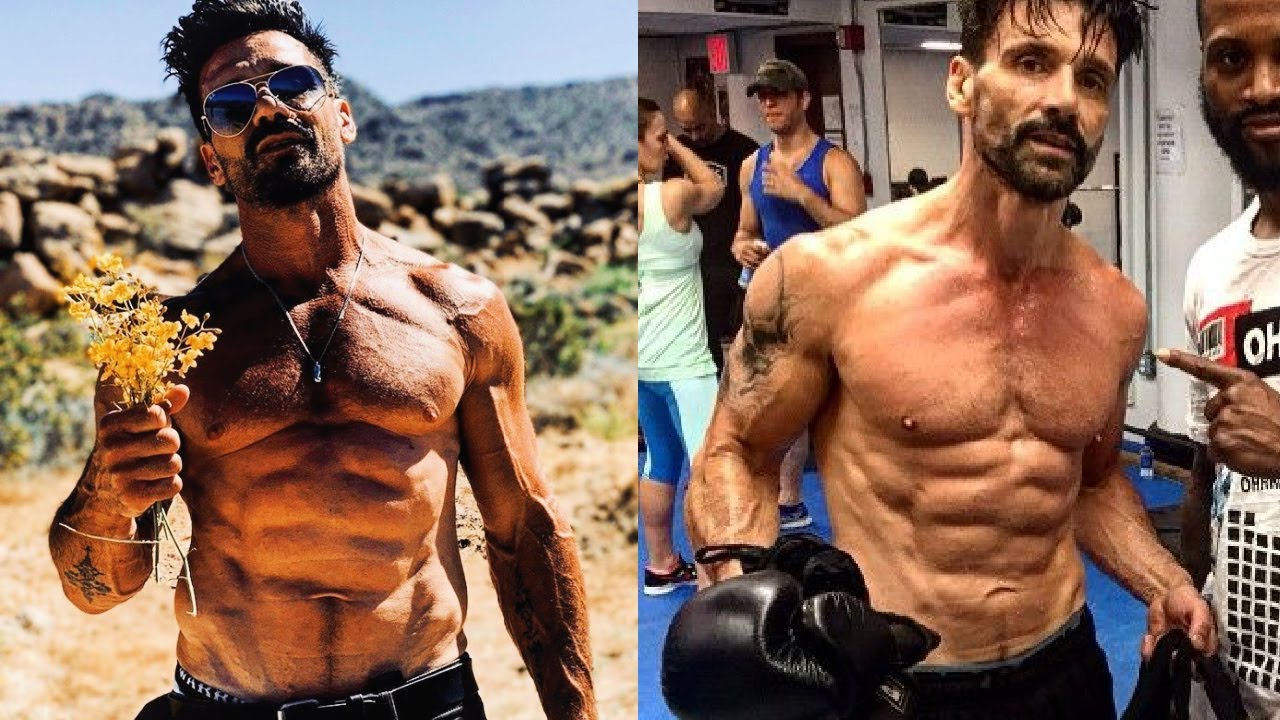
Grillo shared his own experiences with testosterone therapy and peptides, defended their use, and took aim at the illusion of “natural” transformations in the entertainment industry.
Jump to:
“Let’s Be Honest About It”
Grillo admitted to using testosterone replacement therapy (TRT) after discovering his levels were low six years ago — a decision that improved his sleep, recovery, and overall mood.
“There’s nothing wrong with using those drugs,” he said. “But let’s be honest about it, that’s all.”
In his view, the real issue isn’t the substances — it’s the silence. While some actors continue to claim clean gains from chicken, rice, and reps, Grillo says the truth is far more pharmaceutical.
“You’re gonna go on a cycle or two and you’re gonna look a certain way for a certain role,” he said. “They might not want to say it, but they all do it. Everybody.”
He specifically named Anavar (Oxandrolone) and Deca (Nandrolone) — both anabolic steroids commonly prescribed today — as go-to options for rapid physical transformations under medical supervision.
The Physics Behind the Facade
For anyone who’s marveled at how actors seemingly pack on 30+ pounds of lean muscle in a matter of months, Grillo offers a reality check:
“Those guys don’t walk around looking one way for six months and then all of a sudden have 35 pounds of muscle on them. We all know what they’re doing.”
And the consequences? Beyond the deception, there are real physical costs to these transformations.
When co-hosts on Strong Talk discussed the toll that rapid mass gain can take — from diminished athleticism to joint issues — Grillo agreed. Putting on size may look impressive, but it often sacrifices movement, agility, and longevity.
“Bodybuilders don’t move well,” he noted. “If they get a hold of me and want to squeeze the life out of me, I’m in trouble. But as far as being able to move? They’re not built for that.”
What Grillo Does to Stay Fit at 60
Despite dabbling in medical testosterone and some peptides for recovery, Grillo is far from relying solely on shortcuts. His regimen is relentless:
- Daily boxing sessions with veteran trainer Justin Fortune
- Strength and conditioning 4–5 nights a week
- One meal a day, made up entirely of whole foods
- 8–9 hours of sleep per night
- No alcohol, no grains, and no artificial ingredients
“I don’t eat grains. I don’t eat bread — unless I’m in Italy,” he said, half-joking. “I’m like a dog. I’ve programmed myself to do the same thing every day.”
His gym sessions are simple, effective, and fast. On strength days, he might train chest with incline presses and flies — avoiding flat bench presses to prevent injury. Each workout is less than an hour with minimal rest between sets.
And while others use smartwatches or trackers, Grillo avoids tech completely.
“I don’t even wear a watch. I’m not interested in time. I’m a weirdo.”
Discipline Over Motivation
Motivation, he argues, is overrated. Discipline is what matters.
“People say, ‘What motivates you to go to the gym?’ Nothing. I just go to the gym,” he said. “Not every time is going to be the best time, but I go. That’s it.”
He emphasizes this mindset with his three sons, pushing a stoic philosophy rooted in routine and responsibility.
“If you’re waiting for someone to say, ‘Come on, let’s do this,’ forget it. You’ve got to program yourself.”
Steroids vs. Aging — A False Debate?
Grillo challenges the stigma around testosterone therapy for aging men. Unlike athletes competing for medals or records, he argues, actors are simply trying to maintain or enhance their appearance for roles — and that’s not “cheating.”
“I’m not the linebacker for the Giants. I’m not an Olympic wrestler. I’m not cheating at anything — except aging.”
And while some fans may scoff at the idea of PEDs for Hollywood physiques, he believes the outrage is misplaced. The issue isn’t the drugs — it’s the denial.
“There’s nothing wrong with it. If you get the role in the superhero movie and you want to look like a superhero and you take some Anavar — God bless you.”
Reclaiming the Conversation Around Muscle
Beyond the steroid talk, the episode dove into the broader obsession with muscle in mainstream fitness. Hosts questioned whether society overemphasizes mass over function — prioritizing big biceps over strength, balance, or force production.
Grillo agreed, advocating for a more balanced approach.
“Lifting weights is important. Not just for men — for women too. We all need muscle as we age.”
Yet even as he trains harder than many half his age, Grillo doesn’t chase extreme size. He’s been as heavy as 188 lbs but didn’t like the way it felt.
“I felt top-heavy. I was lumbering. I like being light. I like training empty.”
For him, feeling great — physically and mentally — is the true reward. Not just looking good.
The Takeaway: Transparency and Choice
Grillo’s remarks underscore a critical point: there’s a difference between cheating and choosing. He’s not telling others what to do — he’s asking for honesty about what’s being done.
And in an industry where physical perfection is often sold as natural, that honesty matters.
“I tell people whatever I’m doing — otherwise I wouldn’t do it. I’m not embarrassed. I take one shot of testosterone a week. That’s all me. The rest is dedication, diet, and discipline.”
In a world where Instagram filters and fitness lies dominate the conversation, maybe the most radical thing you can do is tell the truth.
Even when it’s not pretty.