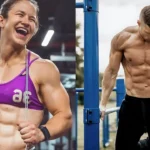
Getting lean after 50 doesn’t require extreme dieting or constant hunger pangs.
Lawrence from Fit and 50 recently achieved sub-8% body fat at 60 years old without resorting to drugs or starvation tactics.

His approach centers on high-volume, low-calorie meals that keep hunger at bay while steadily burning fat.
Best of all, most men don’t need to go nearly that extreme to see their abs emerge and maintain a lean, athletic physique.
Jump to:
Realistic Body Fat Targets for Visible Abs
Chasing single-digit body fat isn’t necessary for most men over 50 who want visible abs. At 15% body fat, abs start becoming visible, at least in favorable lighting. Drop to 12-13%, and a clear six-pack emerges that looks both athletic and healthy.
I went below 8%. That’s basically fitness model. That’s a little extreme for most guys.
Most men over 50 targeting visible abs should aim for somewhere between 10 and 15%. Under 13% delivers a really solid six-pack without the extreme measures required to maintain lower levels.
The beauty of this range? It’s far more sustainable long-term than constantly battling to maintain fitness model leanness.
Adjusting Calorie Deficits as Body Fat Drops
Deficit strategy needs to shift as body composition changes. Starting at higher body fat percentages (25-30%), more aggressive cuts work effectively.
At this stage, creating a deficit of 500-750 calories daily produces faster fat loss while preserving muscle, assuming adequate protein intake and resistance training.
The Moderate Phase (15-25% Body Fat)
Once body fat drops into the 15-25% range, backing off to a moderate deficit of 300-500 calories daily maintains steady progress without excessive restriction.
The Lean Phase (Below 12%)
Below 12% body fat, everything changes. Fat reserves become limited, and muscle loss risk escalates with every pound shed.
Fat loss should slow to a quarter to half percent of body weight weekly, keeping deficits small at around 200-400 calories.
At the end of my cut, I stay between 200 and 300 calories below maintenance.
This conservative approach protects hard-earned muscle while still progressing toward leanness goals.
Scaling Protein Intake Based on Leanness
Protein requirements aren’t static during a cut. They escalate as body fat percentage drops.
Above 15% body fat, around 1.6 grams of protein per kilogram of goal or lean body weight provides adequate muscle protection when combined with resistance training.
Moving into the 15-12% range or lower demands pushing protein closer to 2 grams per kilogram daily (just under a gram per pound).
By the time I was chasing 8%, I was eating closer to 2.4 g per kilogram. That’s slightly more than a gram per pound.
Why the increase? With minimal fat reserves remaining, the body starts eyeing muscle tissue as potential energy. Higher protein intake combined with weight training signals the body to preserve muscle mass.
Lawrence spread his protein across every meal, targeting 30-40 grams each time. For men over 50, this distribution maximizes muscle protein synthesis per meal.
High-Volume, Low-Calorie Eating Strategy
Volume eating kept hunger at bay throughout Lawrence’s aggressive cut. His meals featured large portions of low-calorie, nutrient-dense foods.
Breakfast Options
Typical morning meals included one whole egg with egg whites plus two cups of vegetables, prepared as an omelet or scramble. Alternatively, nonfat Greek yogurt or 1% cottage cheese with salsa and seasonings provided variety.
Lunch Formula
Lunch consistently featured chicken breast paired with high-volume vegetables. Favorite choices included:
- Green beans
- Broccoli
- Cauliflower
Each meal included a controlled portion of starchy carbs—quinoa, lentils, small potato portions, or occasionally whole wheat or Ezekiel bread.
Dinner Variety
Dinner mirrored lunch’s structure but featured rotating protein sources. Cod appeared frequently, alongside steak, salmon, and ham.
Later in the cut, massive spinach salads returned to rotation, loaded with mushrooms, onions, cucumbers, celery, and tomatoes. These salads delivered maximum fullness with minimal caloric impact.
Strategic Fat Sources
Dietary fats came primarily from whole eggs, lean meats, and low-calorie dressings on vegetables.
Notably absent were ultra-processed snacks, high-calorie sauces, and fried foods. Even favorites like cheese and peanut butter got temporarily eliminated due to their calorie density and low satiety factor.
Building in Strategic Flexibility
Despite high food volume, Lawrence ate slightly lower calories during weekdays. This strategy created room for a special meal with dessert on weekends.
This flexibility prevented burnout and made the entire approach sustainable. Eating large quantities of lean protein, vegetables, and controlled carb portions maintained satiety while keeping overall calories low.
The Sustainable Approach for Most Men Over 50
For most men over 50, reaching 12-15% body fat represents an ideal target. Abs become visible, strength remains high, and the look stays maintainable without feeling constantly deprived.
That’s in the 12 to 15% range. The principles are exactly the same to get there, except you don’t have to cut as aggressively.
Getting to this range requires the same fundamental principles—adequate protein, resistance training, calorie deficit, volume eating—just without the extreme measures needed for single-digit body fat.
The result? A sustainable, healthy physique that doesn’t require constant sacrifice. Men can maintain visible abs while still enjoying life, special meals, and social occasions without derailing progress.
Lawrence’s approach demonstrates that getting lean after 50 doesn’t mean living on chicken and broccoli while constantly battling hunger. Strategic meal composition, appropriate protein timing, and adjusted deficit sizes based on current leanness create a roadmap anyone can follow.
Whether targeting 15% for visible abs or pushing toward 10% for definition that really pops, these principles work at any age—especially when combined with patience and consistency.