Movement doesn’t need to be complicated.
In a world obsessed with complex training programs and expensive equipment, one movement specialist has stripped everything down to three fundamental patterns that transformed his own body—and the bodies of thousands of clients.
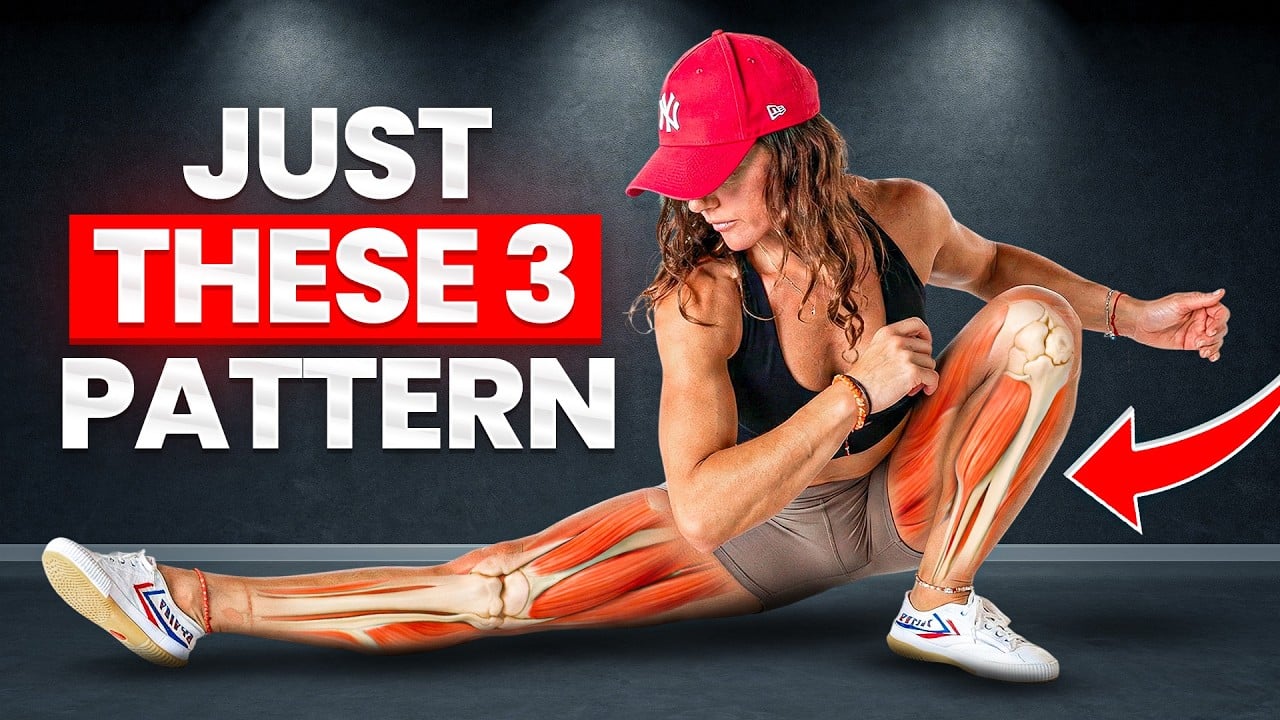
These aren’t trendy exercises or the latest fitness hack.
They’re ancient movement patterns that humans have been doing for millennia, and they might be the key to maintaining capability well into your 90s.
Jump to:
From Professional Athlete to Movement Dysfunction
Despite competing at elite levels, this former professional athlete discovered something shocking: his body was falling apart. Years of linear training patterns and “doing everything right” had created a paradox—he could perform his sport but couldn’t move freely.
I move better now than I did as a professional athlete. And these three patterns are the reason why.
The revelation came when he couldn’t perform a simple deep squat—a movement his 80-year-old grandmother could do effortlessly. That moment became a turning point, sparking years of experimentation and research into what truly works for long-term movement health.
The Deep Squat: Your Lower Body Foundation
Modern society has systematically trained the squat out of most adults. Chairs, couches, and sedentary lifestyles have stolen one of humanity’s most natural positions.
The deep squat isn’t just an exercise—it’s a way of existing. Cultures that maintain squatting throughout life experience significantly fewer hip, knee, and back problems. Not because of genetics, but because they never abandoned what humans are designed to do.
I spend hours here every single day reading, working, just being. This isn’t about training. It’s about living.
Accumulating 20 to 60 minutes daily in squat position creates profound changes. This isn’t about 30 seconds of mobility work—it’s about restoring what sitting has systematically stolen from your body.
Why the Squat Is a Gateway Movement
When you can sit comfortably in deep squat position, everything else unlocks:
- Hip mobility opens up dramatically
- Ankle flexibility increases naturally
- Knee strength develops through full range of motion
- Locomotive patterns improve—lunging, jumping, running, sprinting
Every joint in your lower body gets loaded and fed nutrients. Hips, knees, ankles, even feet benefit from time spent in this position. You cannot move powerfully if you cannot squat deeply—it’s the foundation for all lower body power.
Hanging: The King of Upper Body Work
Research reveals something remarkable about hanging: grip strength predicts longevity better than almost any other fitness metric. Better than cardiovascular fitness, better than leg strength.
Your ability to hang correlates directly with how long you’ll live and how capable you’ll be during those years.
I had a shoulder injury for 2 years. Doctors couldn’t tell me what was wrong. Physical therapists couldn’t fix me. But when I started hanging, moving through four ranges of motion, my body fixed itself.
Hanging isn’t magic—it’s medicine. Movement is medicine.
What Hanging Actually Does
Most adults can’t support their own bodyweight for even 10 seconds. That single fact reveals everything about modern movement dysfunction.
Daily hanging provides multiple benefits:
- Decompresses your spine after lifetime of gravity compression
- Strengthens every muscle from hands to lats
- Fixes shoulder problems that traditional therapy often can’t address
- Builds grip strength necessary for all pulling movements
- Creates shoulder health that lasts decades
Once you can comfortably hang, progression becomes possible. Pull-ups, muscle-ups, levers—or simply maintaining the most important upper body position for life.
Crawling: Where Everything Integrates
It might look silly. Most adults have completely lost their relationship with the ground—can’t get down comfortably, can’t get back up without using hands.
That’s a massive problem crawling fixes.
When I was competing at the highest level, I could perform my sport, but I couldn’t move freely. I was a robot running a program. Crawling brought back movement as expression, not just execution.
Crawl patterns activate both brain hemispheres simultaneously, building neural pathways that maintain sharpness and coordination as you age. This isn’t just about muscle—it’s about keeping your brain and body connected.
Why Crawling Opens Everything
Crawling teaches you to trust your hands. Once you can crawl confidently, you can place weight through hands in any position—touching ground, pushing off ground, supporting yourself inverted.
Five to 10 minutes daily using various patterns creates profound changes:
- Bear crawls build shoulder stability
- Crab crawls strengthen posterior chain
- Lizard crawls improve ground mobility
- Directional changes—forward, backward, lateral—challenge total body coordination
Crawling is foundation for handstands, press movements, and any advanced bodyweight skill. Once you own the crawl, you own your body in space. You can fall safely, move in any direction, play.
Three Movements, Three Gateways to Complete Movement
These patterns work synergistically, each opening different aspects of human movement capability.
The squat opens lower body. Every locomotive pattern, every expression of ground-based power flows from here.
The hang opens upper body. Every pull, every carry, every expression of grip and shoulder strength flows from here.
The crawl opens integration. Every complex movement, every skill, every expression of total body coordination flows from here.
Real Results From Real People
Grandparents moving better than their grandchildren. People throwing away pain medications. Lives completely transformed.
Not because these movements are magic, but because they give your body what it’s been craving—and open doors to everything else.
You don’t need a gym. You don’t need equipment. You need consistency and understanding that movement isn’t optional.
Your Movement Reality Check
Testing current capability reveals exactly where to start. Can you sit in deep squat for 30 seconds? Can you hang from bar for 10 seconds? Can you crawl forward comfortably for one minute?
Most people can’t. That’s not failure—it’s information. Your starting point doesn’t matter. What matters is beginning the process of reclaiming what modern life has systematically removed.
You live in physical body. You have responsibility to make it capable. Not for aesthetics, not for performance—for living fully until the day you die.
Squat, hang, crawl. Three patterns that maintain capability for life and unlock every other movement pattern you’ll ever want to explore. Everything else is built from here.
Your body is already losing what you’re not using. Movement is life. These three movements are foundation.
Stop waiting.