A quick scroll through YouTube’s fitness corner can leave viewers optimistic, maybe even a little naive. Videos with titles like “Get Abs in 2 Weeks” rack up hundreds of millions of views. But do they deliver on those big promises?
In a reaction video filled with scientific analysis and biting humor, Dr. Mike Israetel, professor of exercise science and co-founder of RP Strength, tackled Chloe Ting’s mega-viral ab workout, which has amassed over 543 million views. His verdict? The routine may be fun and accessible, but when it comes to building visible abs in two weeks, “almost impossible” is the phrase that comes to mind.
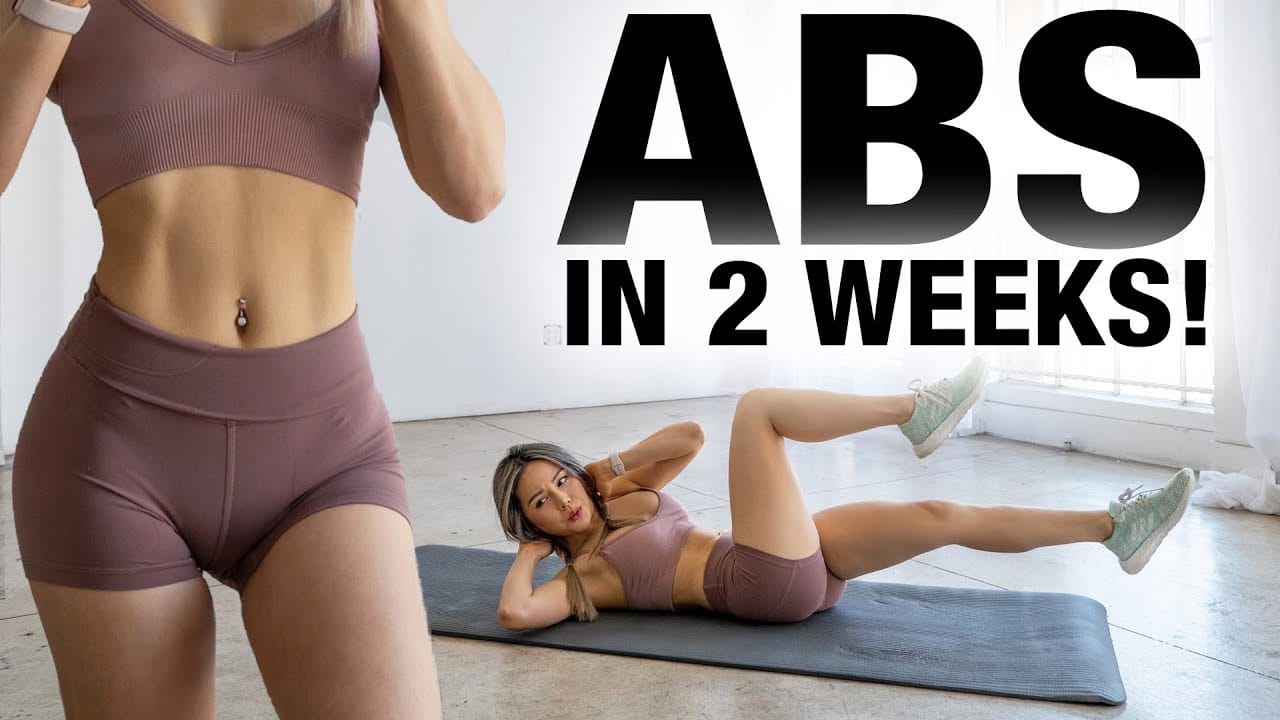
“In two weeks—short of a mini cut to prep for a bulking phase—you’re not getting shredded. That’s not how this works,” says Israetel.
The video is a lesson in separating fitness entertainment from fitness education—and why the path to visible abs involves far more than white curtains, upbeat music, and endless Russian twists.
Jump to:
- The Promise vs. The Physiology
- Why Chloe Ting’s Workout Still Attracts Millions
- The Workouts: Do They Actually Work?
- What She Gets Right: Good Cues and Positive Messaging
- Real Results Require Real Resistance
- Rest Time Isn’t Just About Heavy vs. Light
- So Should You Do Chloe Ting’s Workout?
- Final Thoughts: Fun vs. Effective — You Can Have Both
The Promise vs. The Physiology
“Get abs in two weeks” may be a click magnet, but it oversimplifies a complex process. Fat loss, muscle hypertrophy, and core definition all demand sustained effort across multiple variables—not just time, but training intensity, load, rest, and nutrition.
“Getting shredded in two weeks is, I would say, almost impossible. I’d much more be concerned with time frames of four to 12 weeks—probably more like eight to twelve,” Israetel explains.
He also points out that “tightening the core” is a misleading concept. “There’s no such thing. You can’t tighten up a muscle into shape. You can build it or lose fat covering it. That’s it.”
Why Chloe Ting’s Workout Still Attracts Millions
Ting’s appeal isn’t necessarily about evidence-based programming. It’s her presentation, approachability, and aesthetic polish that draw in a global audience. The video opens with high-energy music, pastel workout gear, and a crisp, all-white studio setup.
“Scott, we don’t have enough K-pop with some drums mixed into our intros. Fix this,” jokes Israetel, calling out the production value and playful tone.
But even with its limitations, Ting’s content is low-barrier fitness. It welcomes beginners who might be too intimidated to walk into a weight room, much less throw a barbell on their back.
“You really can’t be too out of shape for this, which is nice,” Israetel admits. “It’s a low-lying stepping stone.”
The Workouts: Do They Actually Work?
Ting’s 10-minute workout includes 21 bodyweight ab-focused exercises, performed in 30-second intervals with minimal rest. From reverse crunches to Russian twists, the routine is marketed as high-intensity and results-driven.
But according to Israetel, many of the exercises don’t provide enough resistance to spark real change.
“The amount of resistance her abdominals are under in any categorization of that term is really, really close to nothing,” he says while reviewing her Russian twists. “There’s no way your abs are burning so badly at this point with that degree of effort.”
He notes that isometric holds like planks offer limited benefit compared to concentric and eccentric movements that challenge muscles through a full range of motion.
“Planks are largely a waste of time,” Israetel claims. “Muscles grow from tension and movement—not just holding still.”
He also critiques the lack of eccentric control in Ting’s reverse crunches. “Coming down slow would be great to see. That’s where the real challenge lives.”
What She Gets Right: Good Cues and Positive Messaging
It’s not all criticism. As the video shifts into Ting’s glute training routines, Israetel’s tone becomes more complimentary.
From encouraging mind-muscle connection to demonstrating good exercise form cues, Ting shows an understanding of training principles—particularly in newer content.
“Now I know why she’s popular—she’s saying all the right [stuff]. I love it. Good stuff.”
One standout? Ting talks about progressive overload—a term that’s rarely mentioned in mainstream female fitness content.
“Building glutes is all about progression and increasing your weights or intensity over time,” Ting says in the video.
That one line earns real praise from Israetel. “This is super important and usually totally missing in this world. Thank God Chloe’s talking about progression.”
Real Results Require Real Resistance
Chloe Ting’s content might offer a fun way to break a sweat, but it won’t deliver high-level physique changes—especially not in two weeks.
For visible results, resistance training with progressive overload is key. That means using challenging weights, pushing close to technical failure, and taking adequate rest between sets.
“There are thousands of women in their 30s, wealthy, professionally successful, hitting the gym. But they’re not progressing. They use the same dumbbells every week. That’s not how you build muscle,” Israetel says.
He explains that muscle growth requires challenge. If you’re not increasing weight or reps over time, the body won’t adapt.
“You want that round glute look? You’re going to have to lift some [heavy] weights. Plain and simple.”
Rest Time Isn’t Just About Heavy vs. Light
Another myth Israetel busts is the common idea that heavy weights require long rest while light weights mean shorter rest.
“The purpose of rest is so that your next set is productive. That’s it,” he explains. “Sometimes after light weights, you’re still gassed. Sometimes after heavy sets, you’re good to go fast. It depends on the exercise and the person.”
So whether you’re doing kickbacks or RDLs, rest long enough to push hard again—not just according to an arbitrary rule.
So Should You Do Chloe Ting’s Workout?
The answer depends on your goals.
If you’re just starting your fitness journey and looking for a safe, beginner-friendly space to move your body—yes, Chloe Ting’s videos are a fantastic introduction. They’re upbeat, non-threatening, and wildly accessible.
“She’s going to welcome you to fitness. It’s not scary. There are no steroid meatheads yelling at you,” Israetel says.
But if your goal is to build muscle, get stronger, or dramatically change your physique, you’ll need to graduate from YouTube workouts to progressive resistance training with a focus on diet, recovery, and consistency.
“When you want to take your results to the next level, go to the gym. Lift heavy. Sets of 5 to 30 reps. Close to failure. Push yourself.”
Final Thoughts: Fun vs. Effective — You Can Have Both
Chloe Ting isn’t doing harm. In fact, she’s doing a lot of good. She’s getting millions of people to move their bodies, and her tone is one of inclusion and encouragement—not shame or intimidation.
“There’s nothing wrong with dabbling in fitness and doing fun YouTube workouts with Chloe,” Israetel concludes. “But if you want more results, come to the dark side. We got heavier weights, uglier people, and no eyelid surgery.”
Humor aside, the real lesson is this: Your body will only change in response to real, consistent effort. If you’re serious about your goals, be ready to get uncomfortable—mentally and physically. But if you’re just looking for a way to stay active and enjoy movement, don’t let elitism keep you from pressing play.
As Israetel puts it best: “Fun and a little effect is great. But serious results require serious training. It’s up to you to decide what you want.”