If you had access to thousands of hours of supplement studies, what would actually make it into your daily routine?
That’s a question Nick, PhD in molecular medicine and creator of Physionic, gets asked regularly. Known for his deep-dive research reviews and evidence-based approach, Nick finally shared which supplements he takes—and just as important, why.
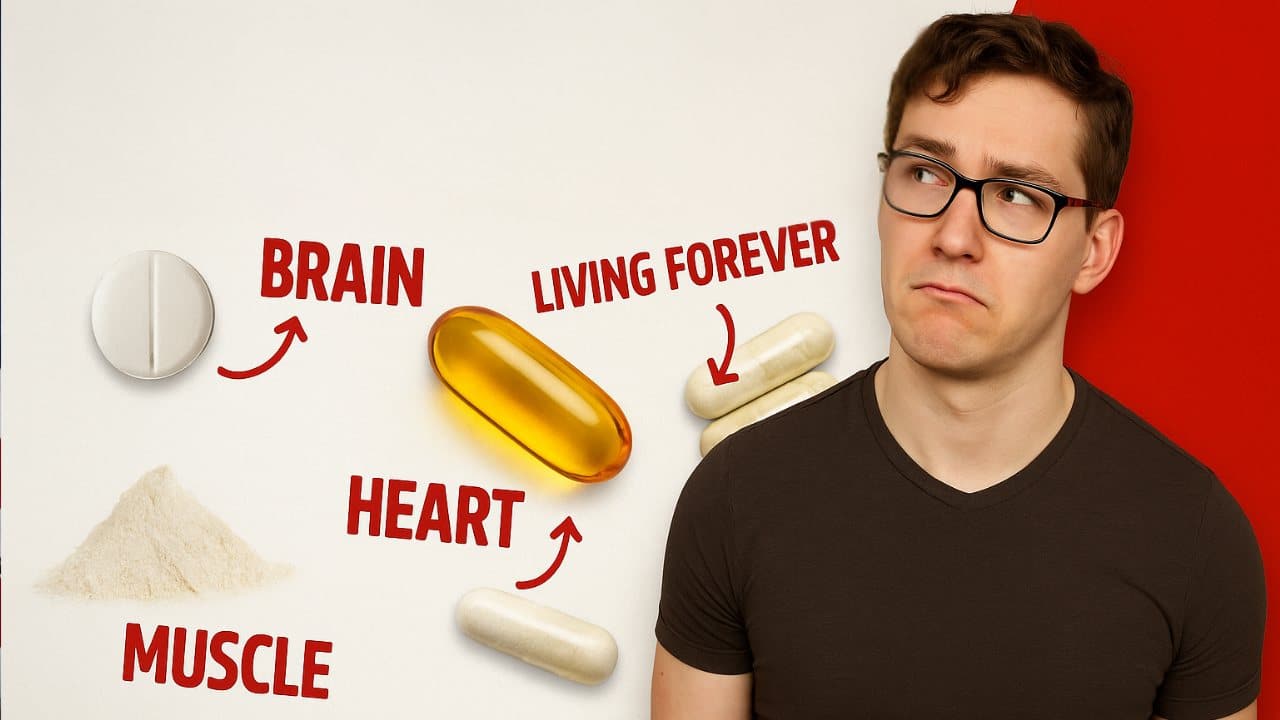
In this breakdown, we’ll explore the six supplements this science sleuth uses, who might benefit from them, and why he believes they deserve a place in his daily stack. Plus, what he skips—and why even a perfect supplement regimen still can’t replace foundational health habits.
Jump to:
- 1. Creatine: The King of Physical and Mental Performance
- 2. Omega-3 Fatty Acids: Fuel for Brain and Heart Health
- 3. Multivitamin: A Light Nutritional Backup
- 4. Lutein and Zeaxanthin: Eye Support for Screen Warriors
- 5. Collagen Peptides: Skin First, Joints Eventually
- 6. Vitamin D (Seasonal): A Wintertime Essential
- Bonus: Occasional Stress Support
- What He Doesn’t Take—and Why
- The Bigger Picture: Supplements Aren’t the Foundation
- Final Thoughts
1. Creatine: The King of Physical and Mental Performance
If there’s one supplement Nick could be considered an expert on, it’s creatine. He’s published extensive analyses on it—likely more than any other supplement in his arsenal.
“Creatine is beneficial for my muscle performance when lifting weights—and it also improves mental performance,” he notes. “It’s an incredible molecule.”
Creatine monohydrate is one of the most researched sports supplements and is backed by a wealth of data. While often associated with strength and muscle mass, creatine may also support cognitive function, memory, and brain energy metabolism.
Nick takes 5 grams per day, sometimes more. He’s not loyal to any brand, choosing the most cost-effective monohydrate available.
Is creatine safe?
Two of the top concerns people have—hair loss and kidney damage—aren’t supported by current evidence, Nick emphasizes. “There’s no evidence that it causes hair loss. Or harms the kidneys,” he says, citing his own data-driven videos on the topics.
2. Omega-3 Fatty Acids: Fuel for Brain and Heart Health
Next on the list is omega-3s—another highly evidence-supported supplement. According to Nick, omega-3s may benefit both brain and cardiovascular health.
He keeps his dose simple: one capsule daily. While he currently uses a Life Extension brand, there’s no affiliation—he regularly jokes about brand partnerships to highlight his independence.
Research shows omega-3s, particularly EPA and DHA, support:
- Lowered triglycerides
- Improved brain function and focus
- Reduced blood pressure and inflammation
Those with low fish intake or who are vegan may particularly benefit from supplementing.
3. Multivitamin: A Light Nutritional Backup
Nick isn’t big on heavy multivitamin dosing. Since he eats what he describes as a nutritious diet, he takes half a multivitamin occasionally as a safety net.
“People are always trying to dismiss expert views by focusing on a person’s diet or lifestyle,” he says. “So I don’t talk much about mine. I just do what works for me.”
While broad-spectrum vitamins are debated in terms of necessity, they may offer value in covering small nutrient gaps, especially in people with restricted diets or limited produce intake.
4. Lutein and Zeaxanthin: Eye Support for Screen Warriors
As someone constantly analyzing research on a screen, maintaining eye health is vital for Nick. That’s where lutein and zeaxanthin come in—carotenoids with strong evidence for retinal protection and filtering high-energy blue light.
“I wear glasses and I’m on the computer all day,” he explains. “So it’s just a good way to protect my eyes.”
He takes one capsule daily, again from an unaffiliated Life Extension brand, and occasionally supports this with very infrequent eye exercises.
While beneficial for those with high screen time, people consuming diets rich in kale, spinach, and egg yolks may already get sufficient amounts through food.
5. Collagen Peptides: Skin First, Joints Eventually
Nick includes 10 grams of collagen peptides in his supplement stack—again, from whichever brand offers the best deal.
“I largely take it for my skin. As I get older, I hope it’ll also aid in joint health,” he says.
Collagen peptides, particularly hydrolyzed types, have shown promise supporting:
- Skin elasticity and hydration
- Joint discomfort and mobility
- Nail and hair strength
While not essential for everyone, collagen has potential use for aging individuals, athletes with joint stress, or those looking for skin-glow support from within.
6. Vitamin D (Seasonal): A Wintertime Essential
During colder months, Nick adds a low dose of vitamin D3, especially since he avoids sun exposure due to cancer risks and skin aging.
“I’m a sunscreen fanatic to keep my skin looking 35—although I’m 94,” he jokes. “But my vitamin D blood levels tend to drop when sunlight goes away.”
Vitamin D supports:
- Immune resilience
- Mood and mental health
- Bone structure and calcium regulation
However, more is not always better. Nick specifically avoids megadosing, preferring the lowest effective amount.
Bonus: Occasional Stress Support
While not part of his daily regimen, Nick will occasionally supplement with rhodiola rosea for stress management. Rhodiola is an adaptogenic herb studied for its potential effects on fatigue and mood under pressure.
Still, Nick emphasizes it’s not a core supplement—more of an “as needed” tool for particularly demanding days.
What He Doesn’t Take—and Why
Despite covering a wide range of supplements in his videos (like taurine, glycine, berberine, and lion’s mane), Nick keeps a minimal personal stack. Why?
“The reality is that supplements aren’t going to change the world for most people,” he states bluntly. “Your supplement choices should depend on your individual need.”
For example:
- Lutein wouldn’t be necessary if your plant-rich diet already supplies plenty.
- Curcumin might be prioritized if you’re prediabetic.
- Electrolytes are valuable for endurance athletes.
- Potassium salt could help with high blood pressure.
In short, supplement choices should be individualized, not dogmatic.
The Bigger Picture: Supplements Aren’t the Foundation
Nick underscores that supplements are a small part of what keeps you healthy. More powerful lifestyle levers include:
- Consistent exercise
- A nutrient-rich diet
- Quality sleep
- Daily stress management
- Social connection
“If those aren’t dialed in, no pill will make much of a difference long term,” he reminds.
Final Thoughts
Nick’s supplement stack offers a streamlined example of using evidence-based tools to fill gaps—not replace health fundamentals. His use of creatine, omega-3s, a multivitamin, lutein + zeaxanthin, collagen, and seasonal vitamin D builds resilience without overcomplication.
His message is clear: personalize your stack based on your goals, behaviors, and lab values. Then focus most of your energy on the big rocks—movement, nutrition, sleep, and stress.
“I’ll keep cranking out supplement analyses,” he says. “But in the end, this stuff is context-dependent. Optimize your lifestyle first—then supplement wisely.”