Building a powerful, stable core isn’t just about endless crunches.
According to fitness coach Eric Higgins, the hanging leg raise might be one of the most effective movements for developing anterior chain strength—when done correctly.
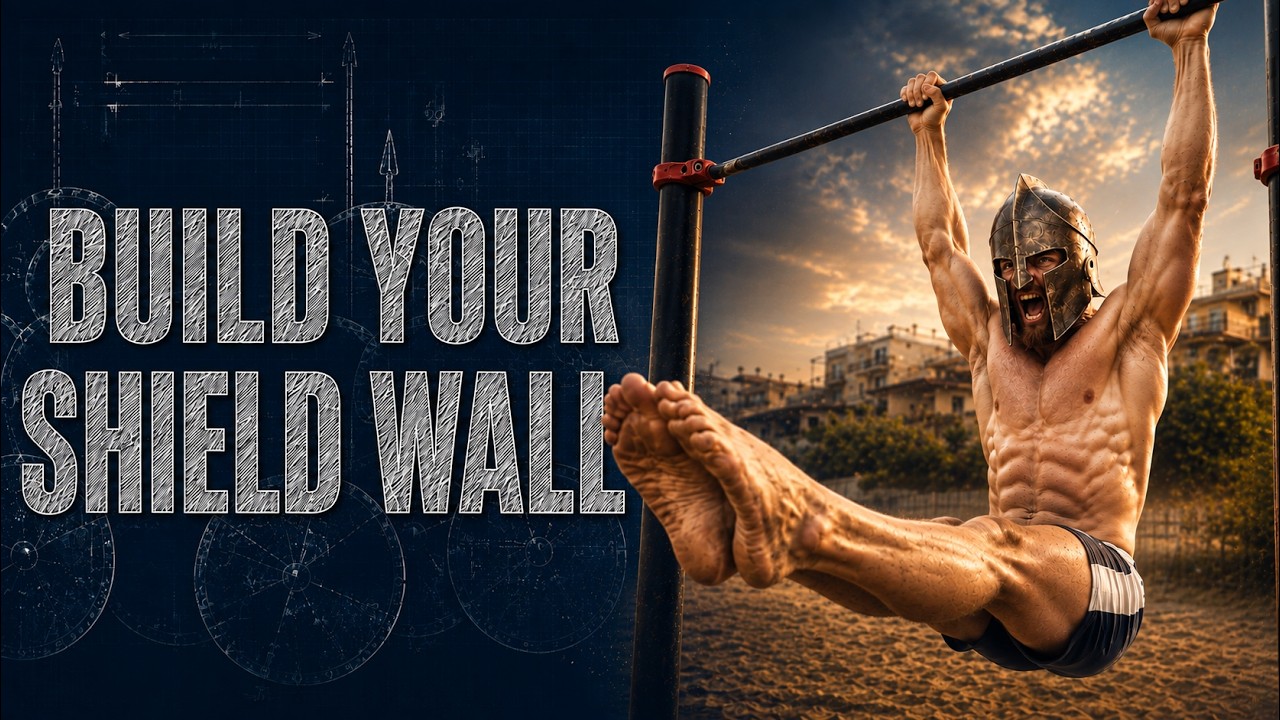
In a recent tutorial video, Higgins breaks down multiple variations of this challenging exercise, designed for everyone from beginners to advanced athletes.
What makes his approach different is the emphasis on proper setup and stability before ever attempting a single rep.
Jump to:
- Understanding Where the Work Happens
- Setting Up for Success: Stability Points
- What NOT to Do
- Priming Exercise: Anti-Motion Holds
- Four-Part Breathing Pattern
- Beginner Variation: Platform-Assisted
- Intermediate Variation: Straight-Leg Eccentric
- Advanced Variation: Full Straight-Leg
- Parallel Bar Alternative for Shoulder Sensitivity
- Key Takeaways for Implementation
Understanding Where the Work Happens
Where you initiate movement dictates which muscles take the brunt of the workload. Higgins explains that flexion below 90 degrees targets hip flexors primarily, while going above 90 degrees with spinal flexion shifts focus toward the rectus abdominis.
Leaning back too far transfers load onto the lats—something Higgins deliberately avoids in this training approach.

If you want something simple that actually works, this is one of the most effective tools I’ve used to build strength, conditioning, and endurance without needing a full gym setup.
- Full-body training with one weight using swings, squats, and presses
- Solid cast iron build that feels stable and lasts for years
- Comfortable grip that makes high-rep workouts easier to handle
We want to focus on the main thing being the main thing, which is the anterior chain, the rectus abs, the hip flexors combined. We’re not separating here. We’re working on the strength and stability of both of those areas working as a unit.
For those intimidated by traditional hanging leg raises, Higgins offers parallel bar alternatives that reduce shoulder stress while maintaining effectiveness.
Setting Up for Success: Stability Points
Grip and Hand Position
Chalk becomes essential for preventing slippage. Higgins emphasizes maintaining even grip distribution across both hands, particularly through the ring and pinky fingers.
When these fingers drift, elbow tendons bear excessive load. His cue? Crush the bar while creating external rotation through the shoulder joint to prevent impingement.
Shoulder Width and Positioning
Bar width matters significantly. Higgins recommends going just outside shoulder-width, keeping elbows along the ribs when reaching up to catch the bar.
Once gripped, shoulders shouldn’t drift toward ears. Instead, pull shoulder blades down and into posterior tilt, opening the humeral head and creating shoulder stability.
If I do a leg raise from here, two problems. I’m going to whip through the hips and all the shoulders, so I’ll have lack of stability. But also, I just have that feeling that my shoulders are going to be disturbed.
Engaging lats prevents excessive forward-back motion, creating what Higgins calls “spiral tension” throughout the upper body.
If you want something simple that actually works, this is one of the most effective tools I’ve used to build strength, conditioning, and endurance without needing a full gym setup.
- Full-body training with one weight using swings, squats, and presses
- Solid cast iron build that feels stable and lasts for years
- Comfortable grip that makes high-rep workouts easier to handle
Pelvic Positioning
After establishing shoulder stability, tilt the pelvis into posterior position, pull feet together, and activate the abdominal wall. This posterior pelvic tilt must be maintained at the bottom of every single rep, regardless of variation level.
What NOT to Do
Momentum becomes the biggest enemy in hanging leg raises. Higgins warns against dropping into anterior tilt then swinging back into posterior tilt to start movement—what he humorously calls the “leaping salmon version.”
Other mistakes to avoid:
- Bending elbows: Breaks kinetic tension through the chain
- Excessive trunk movement: Upper torso should remain locked down
- Uncontrolled eccentrics: Lowering phase requires deliberate control, not momentum
- Shoulder shrugging: Keeps tension in wrong areas
According to Higgins, the eccentric (lowering) portion presents the most challenging control aspect. Fighting momentum here builds significant strength.
Priming Exercise: Anti-Motion Holds
Before attempting any variation, Higgins recommends priming the body by connecting with stability points through what he calls “anti-motion” work.
This involves stiffening body parts that shouldn’t move, allowing concentrated focus on working muscles. The drill: catch the bar, pull shoulders away from ears, posterior tilt the scapulae while engaging lats.
If you want something simple that actually works, this is one of the most effective tools I’ve used to build strength, conditioning, and endurance without needing a full gym setup.
- Full-body training with one weight using swings, squats, and presses
- Solid cast iron build that feels stable and lasts for years
- Comfortable grip that makes high-rep workouts easier to handle
From neutral hang, move into posterior pelvic tilt while pulling legs together and squeezing abdominal wall. Hold for two to three counts, then release back to long neutral position.
I’m trying to feel out where am I holding tension in the body right now. As I posterior tilt, I’ve got adductors, I’ve got quads, I’ve got calves when I push the toes down. I’m pulling the scaps down, so I’m kicking on those lats.
This multi-directional tension through the structure stabilizes for cleaner, more controlled repetitions.
Four-Part Breathing Pattern
Breath synchronization proves crucial for efficient execution. Higgins teaches a four-part breathing pattern:
- Inhale while expanding through diaphragm and stiffening stabilizer points
- Exhale during the lift to top position
- Quick inhalation to restabilize at the top
- Exhale under control during lowering while keeping anterior chain loaded
This pattern applies across all variations—beginner through advanced.
Beginner Variation: Platform-Assisted
Beginners start with a step or platform positioned in front of the bar, not directly beneath it. This placement maintains posterior pelvic tilt while eliminating the dreaded anterior-to-posterior swing.
Platform placement also allows rest at the movement’s most challenging point—the bottom. Setup involves:
If you want something simple that actually works, this is one of the most effective tools I’ve used to build strength, conditioning, and endurance without needing a full gym setup.
- Full-body training with one weight using swings, squats, and presses
- Solid cast iron build that feels stable and lasts for years
- Comfortable grip that makes high-rep workouts easier to handle
- Placing foot on step before gripping bar
- Achieving full grip with knuckles toward sky
- Pulling scapulae down and around, hugging rib cage
- Bringing feet together in posterior tilt
- Creating compression through abdominal wall
From there, jump and catch yourself for the concentric (lifting) phase, aiming for both hip flexion below 90 degrees and spinal flexion above 90 degrees. Slowly lower legs down, touch platform, recalibrate if needed, then repeat.
If managing both flexion points proves too difficult initially, Higgins advises focusing solely on eccentric deloading of the first portion below 90 degrees.
Intermediate Variation: Straight-Leg Eccentric
Intermediate athletes introduce a slow concentric phase lifting to top position, then extend the entire leg for lowering. This modification dramatically increases core and hip flexor loading.
Platform use remains optional but recommended—when fatigue sets in, maintaining posterior tilt becomes difficult, and the platform prevents momentum-based cheating.
The pattern: bring knees up from hips, achieve spinal flexion portion engaging abs, shoot legs out straight, then slowly exhale while lowering with posterior tilt maintained.
It is a balancing act of what is stiffening, what is working, and what is the movement portion. You will be limited on your range of motion based on the control you have.
Higgins recommends performing straight-leg eccentrics for the first three to four reps, then reverting to flexed-knee eccentrics when control deteriorates, gradually building toward full sets with straight legs.
If you want something simple that actually works, this is one of the most effective tools I’ve used to build strength, conditioning, and endurance without needing a full gym setup.
- Full-body training with one weight using swings, squats, and presses
- Solid cast iron build that feels stable and lasts for years
- Comfortable grip that makes high-rep workouts easier to handle
Advanced Variation: Full Straight-Leg
Advanced practitioners perform straight-leg concentric raises to approximately 20 degrees in front of the bar—not toes-to-bar, which shifts excessive load onto lats and rear deltoids.
Platform gets eliminated entirely. Bottom position requires locked posterior tilt without assistance, demanding significant control and strength.
Maximum stiffness comes from leg adduction and trunk adduction (pulling bar together mentally). After establishing grip, posterior tilt, and leg adduction while stiffening abdominal wall, inhale then exhale during straight-leg raise. Inhale at top, slowly lower while pointing toes and maintaining posterior tilt.
If swinging occurs, more anchoring is needed—swing indicates insufficient stabilization through the kinetic chain.
Parallel Bar Alternative for Shoulder Sensitivity
For those with shoulder issues, parallel bars offer effective alternatives. Instead of pulling on the bar, athletes push down with arms and upper trunk while pulling up with lower body.
Setup involves squeezing elbows into rib cage and externally rotating shoulders as much as possible. Higgins cues crushing an imaginary orange under the armpit to open shoulders into proper anchoring position.
If you want something simple that actually works, this is one of the most effective tools I’ve used to build strength, conditioning, and endurance without needing a full gym setup.
- Full-body training with one weight using swings, squats, and presses
- Solid cast iron build that feels stable and lasts for years
- Comfortable grip that makes high-rep workouts easier to handle
Beginner parallel bar variation uses the drop box with feet positioned forward in posterior pelvic tilt. Small pulses to top position with torso flexion effectively engage abs, followed by slow leg lowering.
Intermediate adds flexed-leg concentric with straight-leg eccentric, while advanced performs full straight-leg concentrics and eccentrics while maintaining shoulder blade depression and scapular hooking under rib cage.
Key Takeaways for Implementation
Higgins’ methodology prioritizes stability before strength. Without proper anchoring through grip, shoulder position, and pelvic alignment, hanging leg raises become ineffective at best and potentially injurious at worst.
The bottom phase challenges core and hips most significantly—this transition requires mindful control. Beginners shouldn’t hesitate to release legs and restart reps rather than compromising form or experiencing lower back discomfort.
Since most strength gains occur during eccentric loading (muscle firing while stretching), controlled lowering matters more than explosive lifting. Building hip flexor strength in stretched positions pays dividends across movement quality.
Progressive overload happens through variation progression—not necessarily added weight. Moving from platform-assisted to unsupported, from bent-knee to straight-leg eccentrics, then to full straight-leg execution provides sufficient challenge for most athletes.
If you want something simple that actually works, this is one of the most effective tools I’ve used to build strength, conditioning, and endurance without needing a full gym setup.
- Full-body training with one weight using swings, squats, and presses
- Solid cast iron build that feels stable and lasts for years
- Comfortable grip that makes high-rep workouts easier to handle
Whether starting from complete beginner or refining advanced technique, Higgins’ systematic approach to hanging leg raises offers a roadmap for building genuine core strength rather than just completing repetitions.