Lane Norton doesn’t mince words when it comes to fitness myths and scientific truth.
The PhD in nutritional science and world champion powerlifter recently sat down for an in-depth conversation covering everything from training protocols to controversial supplement debates.
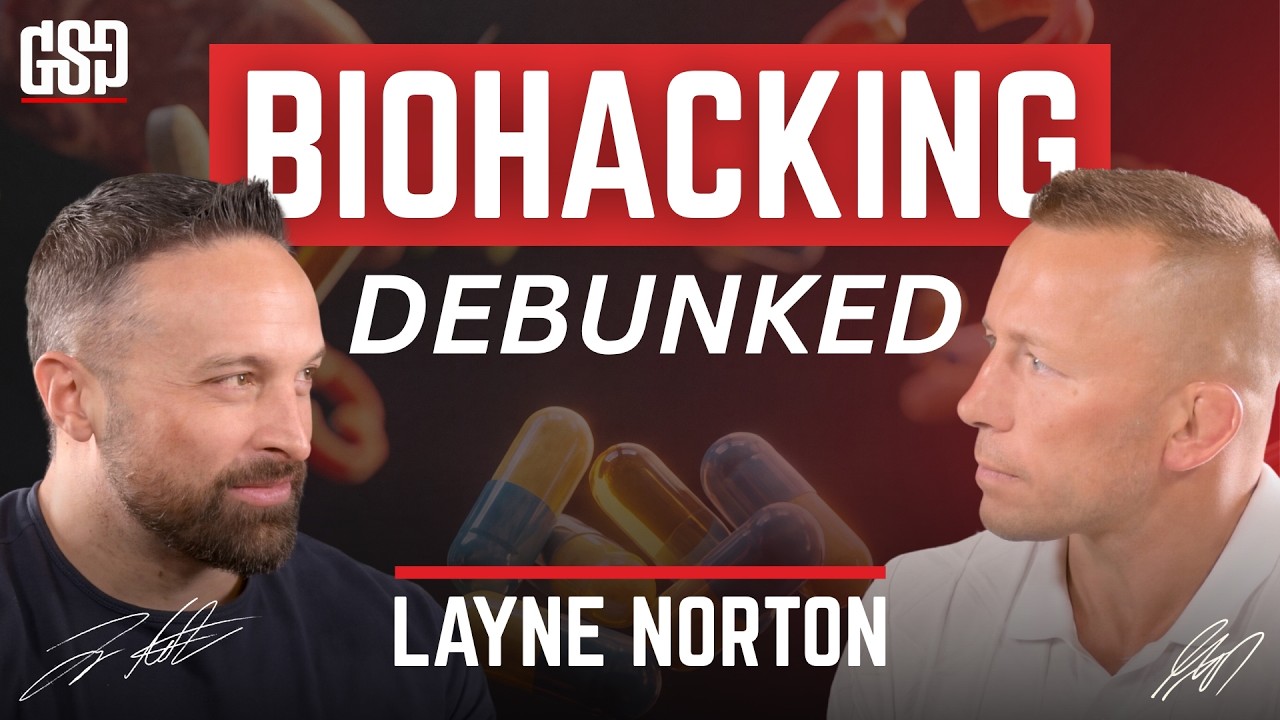
His insights challenge conventional wisdom while offering practical, evidence-based guidance for anyone looking to build muscle, improve performance, or simply understand what actually works.
And some of his revelations might surprise even seasoned athletes.
Jump to:
- The Surprising Truth About Building Muscle at Any Age
- Rethinking Heavy vs. Light Weight Training
- Why Movement Beats Rest for Recovery
- The Mental Game: Embracing Arousal Over Calm
- Strategic Attempt Selection in Competition
- Visualization: More Than Mental Gymnastics
- Meticulous Competition Preparation
- Kids and Strength Training: Debunking Growth Myths
- Cardio and Lifting: Managing the Interference Effect
- The LDL Cholesterol Revelation
- Understanding Obesity: Genetics, Environment, and Appetite
- The Carnivore vs. Vegan Debate
- Industry-Funded Research: Understanding the Nuance
- Ice Baths: The Recovery Controversy
- Inflammation: Finding the Optimal Range
- The Single Best Supplement
- Compression Garments: An Underrated Recovery Tool
- Looking Back: The Wisdom of Slowing Down
The Surprising Truth About Building Muscle at Any Age
One of Norton’s most encouraging revelations centers on muscle growth across different age groups.
Contrary to popular belief, people over 40 build muscle just as effectively as younger individuals—as a percentage of their starting lean mass. Even more remarkable, this holds true for people well into their 60s and 70s.

If you want something simple that actually works, this is one of the most effective tools I’ve used to build strength, conditioning, and endurance without needing a full gym setup.
- Full-body training with one weight using swings, squats, and presses
- Solid cast iron build that feels stable and lasts for years
- Comfortable grip that makes high-rep workouts easier to handle
As a percentage of your starting strength and starting lean mass, people over the age of 40 or under the age of 40, they build the same relative amount of muscle when they start lifting.
Norton points to studies involving frail elderly people in their 90s who began resistance training. These individuals not only built lean mass but became noticeably stronger—progressing from barely being able to sit and stand to actually lifting with weights after just 12 weeks.
The key factor isn’t age—it’s training intensity and volume.
Rethinking Heavy vs. Light Weight Training
Norton dismantles another persistent fitness myth: that you must lift heavy weights to build muscle.
Research shows that muscle growth occurs similarly with both heavy weights and low reps or light weights and high reps—provided you train close to failure. The critical variable is what Norton calls “hard sets,” which are sets taken within a few reps of muscular failure.
The intensity is the drug, the volume in terms of the number of hard sets you do, that’s the dosage.
This approach differs for pure strength training, where heavy loads and specific techniques matter more. But for muscle growth alone, how hard you train matters more than how heavy you lift.
Why Movement Beats Rest for Recovery
Norton advocates for active recovery over complete rest when dealing with minor injuries or stiffness.
If you want something simple that actually works, this is one of the most effective tools I’ve used to build strength, conditioning, and endurance without needing a full gym setup.
- Full-body training with one weight using swings, squats, and presses
- Solid cast iron build that feels stable and lasts for years
- Comfortable grip that makes high-rep workouts easier to handle
Research on pain management shows that loading an injured area to a tolerable level—where you can feel it but it’s not worsening—typically produces better outcomes than total rest.
Motion is lotion and you are better off doing something versus nothing.
The principle applies across training modalities. Whether recovering from soreness or managing chronic issues, strategic movement often provides more benefit than passive rest.
The Mental Game: Embracing Arousal Over Calm
Norton’s approach to competition psychology offers valuable insights for any performance situation.
He describes the physiological state of arousal or excitement as nearly identical to anxiety—the difference lies entirely in perception. Rather than trying to calm nerves before a big lift, Norton deliberately amplifies his arousal state.
I hit my last warm up, I’m like it’s all today, baby. I’m trying to convince myself I will die in this squat rack.
This reframing transforms nervous energy from a liability into an asset. The butterflies and elevated heart rate become signals of being alive and ready to perform rather than indicators of impending failure.
Strategic Attempt Selection in Competition
Norton’s competitive success stems partly from intelligent attempt selection rather than raw strength alone.
If you want something simple that actually works, this is one of the most effective tools I’ve used to build strength, conditioning, and endurance without needing a full gym setup.
- Full-body training with one weight using swings, squats, and presses
- Solid cast iron build that feels stable and lasts for years
- Comfortable grip that makes high-rep workouts easier to handle
In powerlifting, athletes get three attempts per lift, but can only increase or maintain weight—never decrease. This creates a strategic dimension where attempting too much too soon can sabotage an entire competition.
Norton references coach Matt Gary’s fundamental question: What’s the goal of powerlifting? To win. How? By having the biggest total. How? By hitting as many lifts as possible.
The best lifters in the world on average hit seven and a half out of nine attempts on average.
Norton applies this principle rigorously, sometimes taking lighter attempts than planned when a lift isn’t clicking on competition day. At the 2015 World Championships, he won a silver medal partly because he took a conservative 2.5 kilogram increase on bench press rather than risking a miss.
Visualization: More Than Mental Gymnastics
Norton confirms the value of visualization for performance preparation.
He visualizes various scenarios including negative outcomes—missing an attempt, wrong weights being loaded, equipment delays—but always works through to a positive resolution.
This approach draws support from research on catastrophic event survivors. People who have mentally rehearsed adverse scenarios respond more effectively when real crises occur because their brains have already created neural pathways for those situations.
If you want something simple that actually works, this is one of the most effective tools I’ve used to build strength, conditioning, and endurance without needing a full gym setup.
- Full-body training with one weight using swings, squats, and presses
- Solid cast iron build that feels stable and lasts for years
- Comfortable grip that makes high-rep workouts easier to handle
People freeze because they’ve never visualized. If you visualized something bad happening in your life, it won’t be the first time your brain has had to make that connection.
Meticulous Competition Preparation
Norton’s preparation for the 2015 World Championships in Finland exemplifies attention to detail.
He arrived a week early to adjust to the time zone. He visited the competition venue multiple times to familiarize himself with the specific platform he’d compete on. He located bathrooms, secured family passes, and brought his own scale to calibrate against the official weigh-in scale.
- Environmental familiarization: Knowing exactly where to look during lifts
- Equipment verification: Eliminating surprises on competition day
- Logistical troubleshooting: Resolving potential issues before they become problems
- Strategic isolation: Avoiding the venue two days before competition to maintain focus
These preparations don’t guarantee victory, but they eliminate variables that could cause defeat.
Kids and Strength Training: Debunking Growth Myths
Norton dismisses the persistent myth that strength training stunts children’s growth.
Research shows no evidence that lifting—even heavy weights—negatively impacts growth in young people. In fact, children who lift weights demonstrate better metabolic health, improved cognitive function, higher test scores, and superior bone density.
They used to send kids out to the farm and work all day. They’re doing loads all the time.
The human body proves remarkably resilient across all ages. Norton’s position: unless someone lacks a working spinal column, they should incorporate resistance training for muscle, strength, bone health, and metabolic benefits.
If you want something simple that actually works, this is one of the most effective tools I’ve used to build strength, conditioning, and endurance without needing a full gym setup.
- Full-body training with one weight using swings, squats, and presses
- Solid cast iron build that feels stable and lasts for years
- Comfortable grip that makes high-rep workouts easier to handle
Cardio and Lifting: Managing the Interference Effect
Norton addresses concerns about cardiovascular training interfering with strength gains.
For most people, the negative interference effect remains relatively small—primarily a timing issue or recovery problem. Excessive cardio that depletes overall recovery capacity can impair lifting performance.
Timing matters significantly. Cardio performed before lifting can impair workout performance. Cardio after lifting may dampen the muscle protein synthesis signaling, according to rodent studies that likely translate to humans.
Norton’s recommendations for combining both:
- Separate days: Ideal scenario when possible
- Morning/afternoon split: If same-day training is necessary
- Upper/lower separation: Upper body lifting with lower body cardio minimizes crossover interference
- Modality selection: Biking (concentric-only) causes less muscle damage than running (eccentric pounding)
The LDL Cholesterol Revelation
Norton underwent a significant perspective shift regarding cholesterol based on Mendelian randomization studies.
He previously dismissed LDL cholesterol’s importance, focusing instead on the HDL-to-LDL ratio. But research examining lifelong genetic exposure to different cholesterol levels changed his position dramatically.
If you want something simple that actually works, this is one of the most effective tools I’ve used to build strength, conditioning, and endurance without needing a full gym setup.
- Full-body training with one weight using swings, squats, and presses
- Solid cast iron build that feels stable and lasts for years
- Comfortable grip that makes high-rep workouts easier to handle
If you look at lifetime exposure to LDL cholesterol and the risk of heart disease, you can draw like a straight line through it.
The data reveals a clear dose-response relationship: for every 1 millimole lowering of LDL over a lifetime, cardiovascular disease risk drops 50-55%. This effect remains consistent regardless of the mechanism—whether through receptor clearance, secretion reduction, or dietary absorption.
Importantly, while HDL indicates good metabolic health, raising HDL itself doesn’t appear cardioprotective. Norton now takes a mild statin that reduced his LDL from 150 to 75 milligrams per deciliter.
Understanding Obesity: Genetics, Environment, and Appetite
Norton explains obesity as an interaction between genetic predisposition and environmental factors.
Genetically obesity-prone individuals have lower sensitivity to satiety signals and experience greater reward responses from food. They also lack the spontaneous activity increase that obesity-resistant people exhibit when overeating.
Genetics load the gun for obesity, but behavior and environment pull the trigger.
The modern obesogenic environment—hyperpalatable, energy-dense foods available everywhere combined with sedentary lifestyles—activated genetic vulnerabilities that remained dormant when such foods required effort to obtain or prepare.
Interestingly, exercise improves satiety signal sensitivity, making it one of the best interventions for appetite regulation beyond simple calorie burning.
If you want something simple that actually works, this is one of the most effective tools I’ve used to build strength, conditioning, and endurance without needing a full gym setup.
- Full-body training with one weight using swings, squats, and presses
- Solid cast iron build that feels stable and lasts for years
- Comfortable grip that makes high-rep workouts easier to handle
The Carnivore vs. Vegan Debate
Norton takes a nuanced middle position on dietary extremes.
Despite industry sponsorship from beef, egg, and dairy organizations, he acknowledges most people would benefit from eating more plants. Forced to choose between carnivore and vegan diets, he’d select vegan for long-term health—primarily for fiber intake’s consistent association with longevity.
That said, carnivore diets can produce dramatic improvements when people lose significant weight. The mistake lies in attributing benefits to meat consumption rather than weight loss and the elimination diet effect.
One of the best diets for cardiovascular disease and cancer and mortality, it’s a Mediterranean diet, which is mostly lean proteins, a lot of fiber, legumes, monounsaturated fats and polyunsaturated fats, nuts.
Norton emphasizes that human adaptability enabled survival on diverse diets throughout evolution—from seafood-heavy coastal populations to plant-focused foragers to meat-dominant ice age hunters.
Industry-Funded Research: Understanding the Nuance
Norton defends industry-funded research while acknowledging legitimate concerns.
His own research received industry funding from dairy, beef, and egg organizations. Studies require substantial financial resources, and researchers need compensation for their work.
If you want something simple that actually works, this is one of the most effective tools I’ve used to build strength, conditioning, and endurance without needing a full gym setup.
- Full-body training with one weight using swings, squats, and presses
- Solid cast iron build that feels stable and lasts for years
- Comfortable grip that makes high-rep workouts easier to handle
The critical factor isn’t funding source but replication and consensus. Norton looks for consistent effects across multiple labs, time periods, and populations before drawing confident conclusions.
Creatine monohydrate exemplifies gold-standard evidence—thousands of studies showing remarkably consistent outcomes across 90+ percent of research.
Ice Baths: The Recovery Controversy
Norton remains skeptical of ice bath benefits for athletes focused on muscle growth.
Studies comparing resistance training with regular recovery versus cold water immersion show both groups build muscle—but the ice bath group builds significantly less. The mechanism appears to be dampened cellular signaling for muscle protein synthesis.
Unknown variables include timing effects. Would morning ice baths followed by afternoon training produce the same interference? The data doesn’t yet answer this question.
Norton contrasts this with sauna and hot baths, which improve recovery without negatively impacting muscle growth. These modalities enhance blood flow rather than restricting it—possibly explaining the difference in outcomes.
If you want something simple that actually works, this is one of the most effective tools I’ve used to build strength, conditioning, and endurance without needing a full gym setup.
- Full-body training with one weight using swings, squats, and presses
- Solid cast iron build that feels stable and lasts for years
- Comfortable grip that makes high-rep workouts easier to handle
For therapeutic benefits or sleep improvement, contrast therapy (alternating hot and cold) may offer advantages without the muscle-building drawbacks.
Inflammation: Finding the Optimal Range
Norton challenges the “lower is always better” assumption about inflammation.
Studies using high-dose NSAIDs like ibuprofen reveal age-dependent effects on muscle growth. In young people (around 25), anti-inflammatories impair muscle development. In older individuals (around 65), they enhance it.
The explanation: elderly people have higher baseline inflammation, while younger people have lower levels. This suggests an optimal inflammation range for muscle growth—too little impairs development, as does too much.
Everything in there is in there for a reason. It’s only when systems become disregulated that things can be problematic.
The Single Best Supplement
Asked to choose one supplement for performance and longevity, Norton selects creatine monohydrate without hesitation.
The compound offers cognitive benefits, physical performance enhancement, strength gains, and excellent safety profiles. While adequate protein intake can come from whole foods, achieving saturated creatine levels through diet alone proves extremely difficult unless someone happens to be a non-responder.
If you want something simple that actually works, this is one of the most effective tools I’ve used to build strength, conditioning, and endurance without needing a full gym setup.
- Full-body training with one weight using swings, squats, and presses
- Solid cast iron build that feels stable and lasts for years
- Comfortable grip that makes high-rep workouts easier to handle
Norton dismisses popular biohacking trends like alkaline water as overrated. Everything consumed passes through stomach acid, making blood pH changes impossible—and undesirable, since small pH shifts could prove fatal.
Compression Garments: An Underrated Recovery Tool
True compression garments—distinct from regular athletic tights—show consistent benefits for recovery.
Research indicates compression clothing decreases soreness and possibly lowers inflammatory markers without negatively impacting muscle growth. The mechanism likely involves improved circulation.
Important distinction: Authentic compression garments are extremely tight and difficult to put on—not the casual leggings people wear for workouts.
Looking Back: The Wisdom of Slowing Down
Asked what advice he’d give his younger self, Norton advocates for a more measured pace.
His coping mechanism for stress, fear, anxiety, and emotional pain has always been pressing forward to the next challenge. While this drive contributed to his success, it also created negative consequences.
If you want something simple that actually works, this is one of the most effective tools I’ve used to build strength, conditioning, and endurance without needing a full gym setup.
- Full-body training with one weight using swings, squats, and presses
- Solid cast iron build that feels stable and lasts for years
- Comfortable grip that makes high-rep workouts easier to handle
You don’t have to do it all at once. Pick your spots. You have to be honest with yourself about the bandwidth you have in your life.
Norton now practices saying no 90% of the time—a difficult shift for someone whose success came from saying yes to everything. He recognizes that different life seasons allow focus on different priorities: athlete, scholar, parent. Trying to excel at everything simultaneously often means excelling at nothing.
The achievement-driven mindset that fueled his success—born from being told he was worthless—required addressing underlying issues that continued surfacing despite external accomplishments.
True wisdom lies not in doing everything but in choosing what matters most for each season of life.