For years, high-protein diets have been hailed as the holy grail for muscle growth.
From bodybuilding legends eating over 300 grams per day to protein-packed lattes lining grocery shelves, the narrative has been simple: more protein equals more muscle.
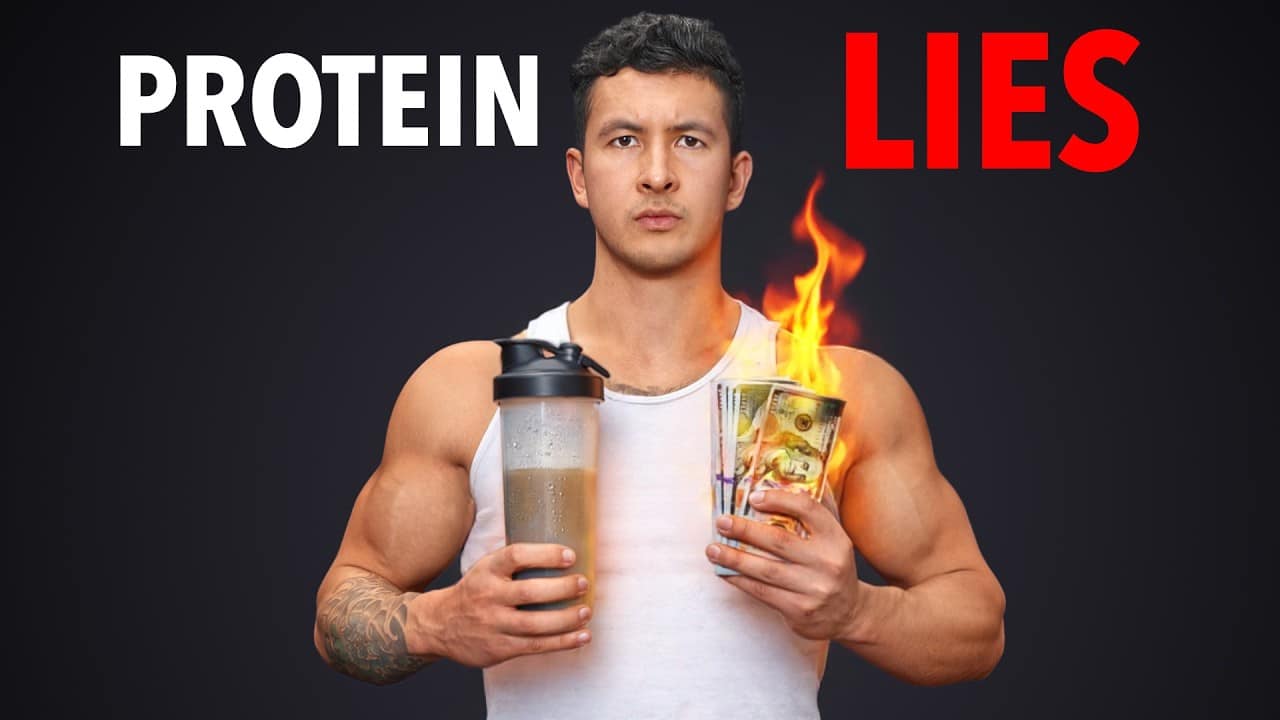
But what if this deeply ingrained belief is wrong—or at least, wildly overstated?
New research sheds light on the surprising limits of protein’s role in building muscle, revealing that two other factors may be even more important.
And before you toss your protein shaker in disbelief, you’ll want to see the data that challenges everything we thought we knew.
Jump to:
Protein Is Necessary—But Only to a Point
Protein matters for muscle growth, no question.
When you lift weights, you stimulate muscle protein synthesis, which essentially tells your muscles to “grow.” Protein provides the building blocks—amino acids—needed to carry out that order.
But as with any construction project, piling on more bricks doesn’t mean the house grows bigger than the original blueprint allows.
That’s exactly how Dr. Eric Trexler, a muscle protein metabolism researcher at Duke University, puts it: “If you’re building a house and you have more bricks than the blueprint calls for, that doesn’t mean you end up with a bigger house.”
Once muscle-building signals are maximized, extra protein does little—or nothing—for additional muscle gain.
What the Research Actually Shows
A recent meta-analysis looked at 62 long-term resistance training studies examining different protein intakes and resulting muscle growth.
Participants in some studies consumed as little as 0.45 grams of protein per pound of body weight, while others consumed more than 270 grams per day—more than 1.5 grams per pound.
The outcome? Beyond moderate protein levels, muscle growth plateaued. No noticeable increase in gains was seen despite dramatic increases in protein consumption.
In fact, some groups consuming triple the protein appeared to gain less muscle mass than lower-protein groups.
The trend line remained essentially flat across moderate to high intakes, meaning extra protein offered almost no added benefit for growth.
“The anticipated benefit of pushing your protein even higher is very, very small,” Trexler points out. “So small that many researchers aren’t even confident that a benefit exists at all.”
A Real-Life Example: Plant-Based Gains
Alex Leonidas, a natural bodybuilder known for monster strength (like a 405 lb bench press at 181 lbs), transitioned from eating 200 grams of protein daily—including animal products—to a fully plant-based diet with as little as 90 grams daily.
The result? No loss in performance or recovery.
“My gains have not been affected whatsoever,” he says. “I’ve tried 220 g, and 120 g. Just as strong as I’ve ever been.”
Calories and Training Drive Growth—Not Just Protein
In one study, two groups increased their protein intake, one to 70 grams per day and the other to 140, but neither group trained. No increase in muscle happened.
In contrast, kidney patients consuming less than 50 grams daily gained 30% more strength and 20% more muscle mass simply by lifting weights.
This reinforces what research shows time and again: training stimulates growth, and calories fuel it.
In another experiment, three groups of lifters were compared: one consumed no extra calories, another drank a 2,000-calorie, carb-heavy shake daily, and the third had the same shake but with 82 grams of protein added.
The outcome? Both high-calorie groups gained similar amounts of muscle, despite one having far less protein.
When Protein Can Actually Work Against You
Protein isn’t calorie-free, and its downsides can sneak up on you:
- Satiating: Protein is extremely filling. If you’re a hardgainer, that can make it harder to eat enough total calories.
- Thermogenic: It burns more calories to digest, further reducing your net gain from food.
- Expensive: Replacing inexpensive carbs with premium protein sources can cost hundreds monthly with little payoff.
- Displacing carbs/fats: Overemphasizing protein can shortchange key nutrients essential for hormones and workout performance.
Bottom line: more isn’t always better, and in some cases, it’s actually less effective.
When Protein Is Absolutely Worth Prioritizing
Still, there are critical situations where protein intake is essential:
- Recovery threshold: Below 0.55 grams per pound of bodyweight, recovery and gains suffer. This appears to be the lower limit for most lifters.
- Dieting phases: Hunger-suppressing effects and muscle preservation are crucial when cutting calories, especially under 15% body fat.
- Adherence: You simply enjoy eating more protein—and that helps you stay consistent with your diet. That’s a valid reason, too.
So How Much Protein Do You Actually Need?
The sweet spot for most lifters lies between:
- 0.55–0.63 g per pound of body weight: Optimal for the majority. For a 160 lb person, that’s 88–100 g per day.
- 0.64–0.72 g/lb: High-likelihood of maximizing muscle gains in most conditions.
- 0.73–1 g/lb: Ideal for lean lifters in a deficit or those wanting total assurance they’re maxing out growth potential.
No need to obsess about chicken breasts or chugging shakes. Protein is in more of your food than you think—beans, bread, peanut butter, even pasta add up fast.
One simple meal with a shake and two pieces of peanut butter toast already packs 50 g of protein.
So next time you consider spending an extra $1,500 a year chasing a protein target far beyond what your body can use, consider shifting more calories to carbs or fats for better energy, hormones, and performance.
And remember: training hard and eating enough total energy are what truly move the needle in building muscle.
Protein helps—but only to a point.