Retatrutide is being hailed as a revolutionary weight loss drug that could reshape how we approach obesity, metabolic disease, and even conditions like Alzheimer’s.
Unlike earlier GLP-1 medications such as Ozempic, this once-weekly injection works on three different receptors in the body—not just one.
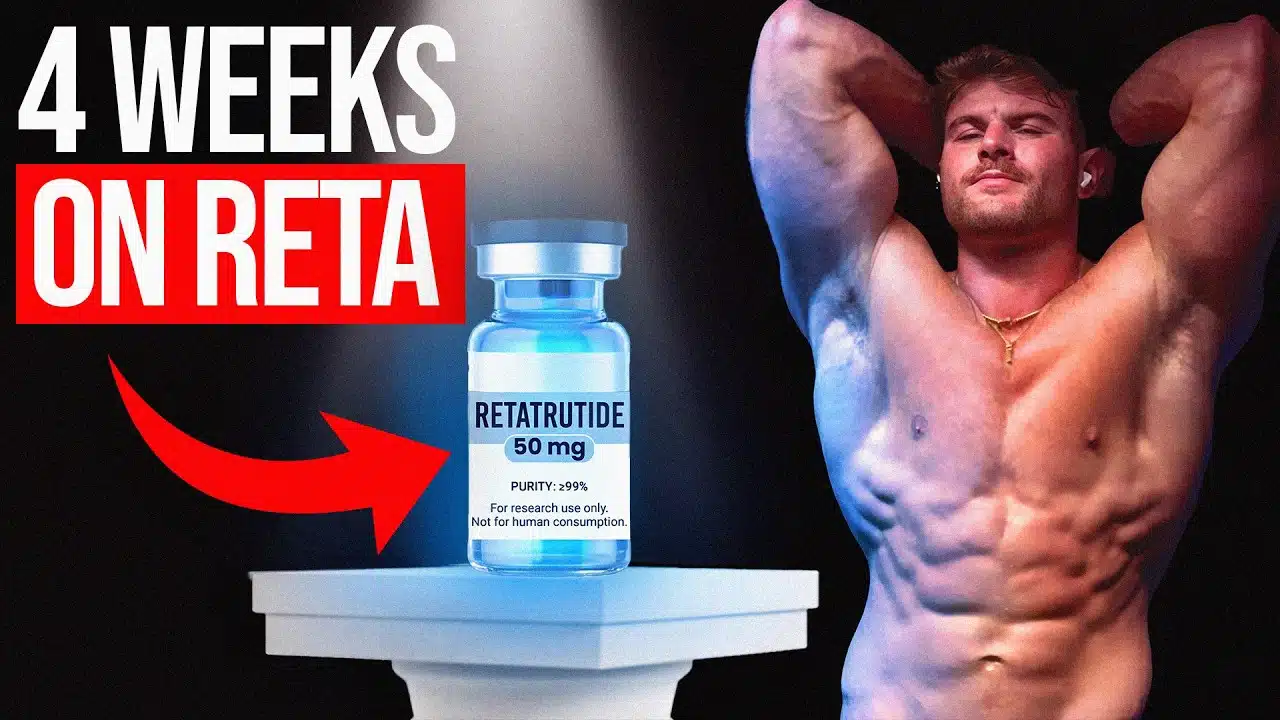
Fitness enthusiasts and health influencers are calling it “the hard R,” and early reports suggest it can reduce body weight by up to 30% in under five months.
But does it live up to the hype, and what are the risks?
Jump to:
What Makes Retatrutide Different From Other GLP-1 Drugs
Retatrutide isn’t just another appetite suppressant. While drugs like Ozempic focus solely on the GLP-1 receptor to reduce hunger, retatrutide acts on three receptors: GLP-1, GIP, and glucagon.
One content creator who recently documented his experience with the drug described the mechanism using a nightclub analogy.
Think of the three receptors as three different guards in the nightclub and each guard is cutting off a different part of the nightclub that we don’t want to go into.
The first “guard” (GLP-1) controls hunger. The second (GIP) blocks carbohydrates from being stored as fat, redirecting them to muscles instead. The third (glucagon) increases metabolic rate, helping the body burn more calories even at rest.
This triple-action approach means users aren’t simply starving themselves—they’re optimizing how their body processes and stores energy.
Weight Loss Results: What Users Are Seeing
The primary reason people turn to retatrutide is rapid fat loss. Clinical observations and user reports indicate an average weight reduction of up to 30% in less than five months.
For someone weighing 200 pounds, that could mean dropping to around 140 pounds. While that’s dramatic for individuals with significant weight to lose, it can be excessive for those closer to a healthy weight.
I just finished a round of retta about a few weeks ago and on the most recent round I did, I way overdid it.
One user shared that after increasing his dose to 4 mg per week, he noticed significant changes in appetite and body composition—but also some unwanted muscle loss.
I got really skinny. I have severely come down in size even just on the arms.
Most users report feeling satisfied sooner during meals rather than experiencing complete loss of appetite. Portions shrink naturally, and food becomes less compelling once satiety hits.
Beyond Weight Loss: Surprising Health Benefits
Retatrutide’s potential extends far beyond aesthetics. Emerging data suggests it may address several serious health conditions tied to metabolic dysfunction.
Fatty Liver Disease
Approximately one in four Americans suffers from fatty liver disease, a condition with no currently approved medication. Retatrutide has demonstrated a 93% reduction in liver fat, bringing levels below the 5% threshold considered healthy.
This improvement can reduce inflammation and significantly lower the risk of metabolic diseases linked to liver dysfunction.
Visceral Fat Reduction
Visceral fat—the dangerous fat surrounding internal organs—has been reduced by up to 50% in many users. This type of fat is particularly harmful because it forces organs to work harder, increasing the risk of heart disease, diabetes, and stroke.
Reducing visceral fat can dramatically improve organ function and overall longevity.
Cardiovascular Health
Some users have experienced lower blood pressure and reduced triglycerides, leading doctors to reduce or eliminate blood pressure medications. Given that heart disease remains the leading cause of death in the U.S., these cardiovascular benefits could be life-saving.
Alzheimer’s and Brain Health
Perhaps most intriguing are anecdotal reports suggesting retatrutide may help combat Alzheimer’s disease. Often referred to as “diabetes of the brain,” Alzheimer’s is linked to poor glucose regulation.
Retatrutide’s ability to reroute glucose away from the brain and into muscle tissue could theoretically reduce the buildup of sugar that contributes to cognitive decline.
While this remains unproven in large-scale trials, early observations are promising.
The Downsides: What You Need to Know
No drug is without risks, and retatrutide is no exception. Understanding potential side effects is critical before starting treatment.
Nausea and Digestive Issues
At higher doses (8–12 mg per week), roughly one in four users report nausea or vomiting. However, these symptoms are far less common at moderate doses (1–4 mg).
Retatrutide also slows digestion significantly, meaning food moves through the system at roughly half the normal speed. This raises questions about nutrient absorption and meal timing for athletic performance.
Muscle Loss
Despite claims that retatrutide preserves muscle mass better than earlier GLP-1 drugs, some muscle wasting does occur—especially at higher doses.
There is some muscle wasting. It’s nowhere in comparison to the Ozempics and the tirzepatides. That will take muscle by the boatload. It is much more selective, but it is not zero.
Maintaining a high-protein diet and resistance training can mitigate this, but users should monitor their strength and muscle mass closely.
Hair Thinning
Rapid weight loss is often associated with hair thinning, and retatrutide is no exception. This side effect appears more common in women, potentially due to lower protein intake compared to men.
Ensuring adequate protein consumption may help prevent this issue.
Cardiovascular Concerns
While some users experience improved heart health, others report increased blood pressure and heart strain. Anyone with pre-existing cardiovascular conditions should consult a physician before using retatrutide.
Dosing: Start Low and Go Slow
Proper dosing is essential. Retatrutide requires a gradual titration process to allow the body to adjust.
- Week 1–4: Start at 0.5–1 mg per week
- Week 5–8: Increase to 1–2 mg per week
- Week 9+: Adjust based on response, rarely exceeding 4 mg unless medically necessary
One user emphasized the importance of not overdoing it:
It is really easy to overdo it on this stuff, guys. You do not want to be in a situation where all of a sudden it’s really hard to finish your meals and it makes you want to throw up, but you got to hit your protein count.
If hitting daily protein targets becomes difficult, that’s a clear sign the dose is too high.
Is Retatrutide Right for You?
Retatrutide was designed for individuals struggling with severe obesity, not for people looking to shed a few pounds for aesthetic purposes. That said, many fitness enthusiasts have found success using lower doses during cutting phases or even bulking phases to optimize body composition.
In my opinion, the most practical use of retatrutide is actually not in a cutting phase. I believe it is the most beneficial in a bulking phase.
By increasing metabolic rate and redirecting carbohydrates toward muscle instead of fat storage, users may be able to gain muscle while losing fat—a feat traditionally considered impossible.
However, anyone considering retatrutide should do so under medical supervision. Working with a licensed provider ensures proper dosing, monitoring, and adjustment based on individual response.
Final Thoughts
Retatrutide represents a significant leap forward in metabolic health and weight management. Its multi-receptor approach offers benefits beyond simple appetite suppression, including improved liver function, reduced visceral fat, and potential cognitive protection.
But it’s not without risks. Muscle loss, digestive issues, and cardiovascular effects are real concerns that require careful management.
For those who qualify and approach it responsibly, retatrutide could be the most effective tool available for transforming body composition and metabolic health. Just remember: start low, go slow, and prioritize protein intake above all else.