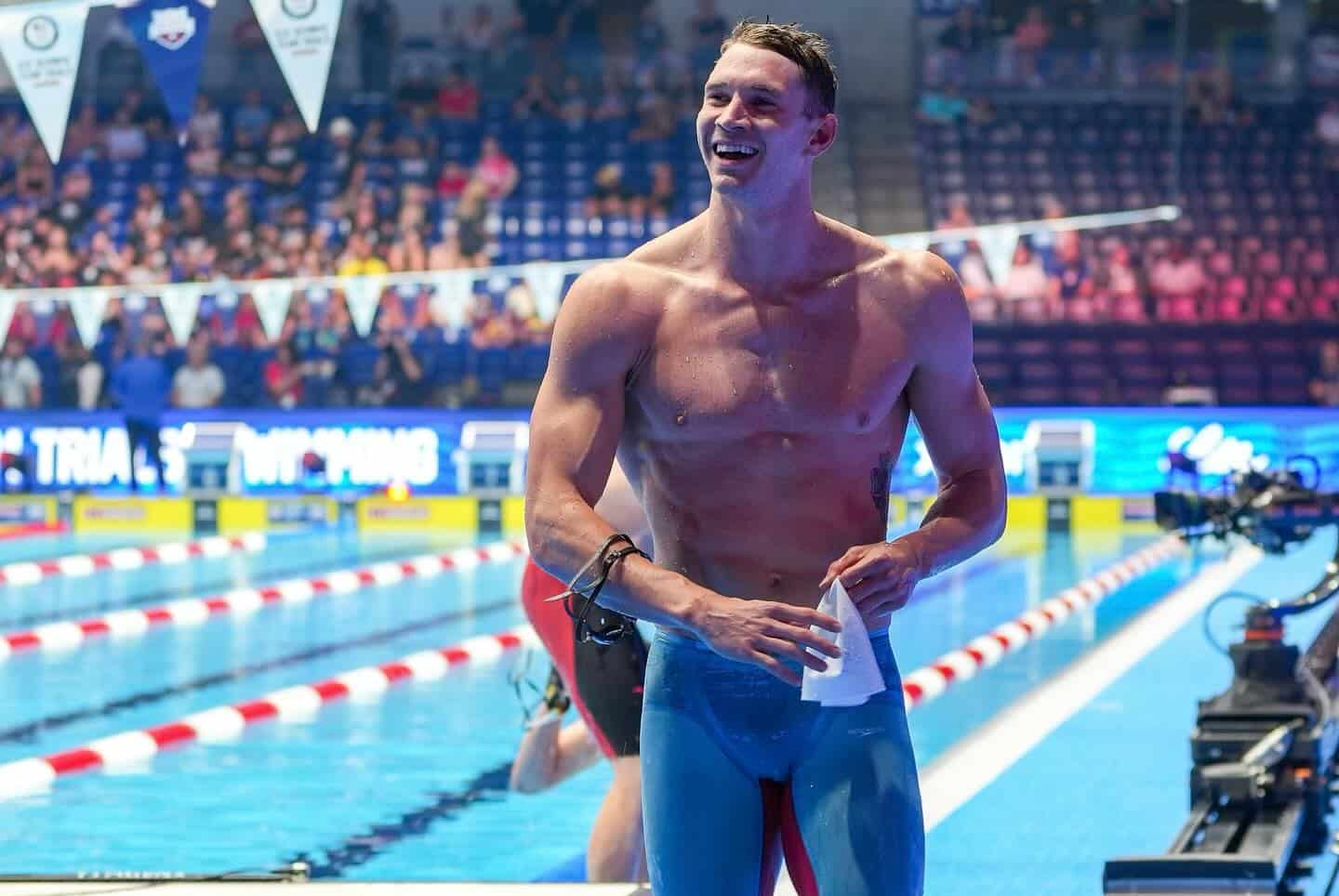
Olympic gold medalist Ryan Murphy isn’t just training hard — he’s fueling smart.
With a schedule packed with nine swim practices, weekly weightlifting, and dry land sessions, his body demands precision nutrition for peak performance and recovery.
In a recent video breakdown, Murphy revealed the key components of his daily diet, why timing matters just as much as food quality, and how he tweaks his meals based on training intensity.
His strategy is all about simplicity, performance, and recovery — and it’s surprisingly doable.
If you’re training hard or looking to optimize your athletic performance, Murphy’s plan offers valuable insight into how elite athletes use food as fuel. Let’s take a closer look at what fuels an Olympic swimmer every day.
Jump to:
- Nutrition Built Around Training
- Breakfast on the Go: Pre-Workout Fuel
- Post-Practice Recovery Breakfast
- Smart Carbs in the Morning, Protein Later
- Pre-Practice Lunch: Balanced but Light
- Dinner: The Day’s Biggest Meal
- Adjusting Intake Based on Training Phase
- Managing Cravings and Finding Balance
- Simplicity and Consistency Are Key
- The Bottom Line
Nutrition Built Around Training
Murphy’s training load is intense: nine water sessions, three weight room workouts, and two dry land efforts each week. Combined, that’s over a dozen physically demanding sessions in just seven days.
“There’s a lot of fuel that goes into making my body work at its max,” Murphy says. “My diet’s got to complement that.”
To support his schedule, Murphy bases his diet on three foundational principles:
- Prioritize carbs early in the day for fuel
- Focus on proteins post-practice and later in the day for recovery
- Adjust macronutrients based on the training phase (aerobic vs. strength)
Breakfast on the Go: Pre-Workout Fuel
Murphy starts his day at 5:20 a.m. But like many athletes, he doesn’t enjoy cooking at sunrise.
“I’m not a morning person,” he admits. “I grab a banana on the way to practice.”
This quick choice delivers fast, digestible energy and potassium — a mineral important for muscle function and cramp prevention — just before his aerobic-based swim session.
Post-Practice Recovery Breakfast
After the morning training, Murphy’s body needs serious replenishment. He whips up a hearty and nutrient-dense breakfast:
- Omelet with: Eggs, salmon, spinach, onions, mushrooms
- Side: Yogurt with granola and berries
This combo balances protein, healthy fats, complex carbs, and antioxidants. Salmon adds omega-3s and lean protein, while leafy greens and colorful veggies fight inflammation.
“That tastes phenomenal,” he says. “After a hard day of training, I need something solid.”
Smart Carbs in the Morning, Protein Later
Murphy strategically shifts his carb and protein intake throughout the day. He front-loads carbohydrates to fuel early workouts and tapers them off by nightfall.
“I try to have carbs earlier in the day and my proteins later, so I’m not going to bed with a lot of carbs in my stomach,” he says. “That’s an easy way for me to gain weight.”
Pre-Practice Lunch: Balanced but Light
Lunch comes before his afternoon workout and is intentionally lighter — around 500 calories — to avoid a sluggish practice.
He typically builds his plate with:
- Grain: Rice, quinoa, barley, or lentils
- Lean protein: Chicken or salmon
- Veggie: Any seasonal vegetable for fiber and micronutrients
This balanced plate ensures sustained energy and proper amino acids to support recovery without weighing him down.
Why Protein and Carbs Matter Together
Murphy highlights the importance of not leaning too heavily on one macronutrient.
“I don’t want just protein or just carbs. My muscles get broken down in the weight room – especially doing legs,” he says. “Backstroke is very leg driven. I need the protein to repair and carbs to drive performance.”
Dinner: The Day’s Biggest Meal
Evening marks Murphy’s main refuel opportunity after a long stretch of training. His dinner mirrors lunch but at a larger scale:
- Grain: Brown rice, quinoa, barley, or lentils
- Lean protein: Chicken, salmon, or turkey
- Vegetable: Broccoli, carrots, or bell peppers
“That’s my biggest meal of the day,” he says. “I want it to taste good and help me completely refuel.”
The focus here is on replenishing glycogen stores, promoting muscle recovery overnight, and ensuring he starts the next day fully stocked with nutrients.
Adjusting Intake Based on Training Phase
Murphy doesn’t eat the same exact amounts every single day. He listens to his body and adjusts his carbs and protein based on how he’s feeling or where he is in his training cycle.
- During heavy aerobic phases: He increases carb intake to counteract fatigue.
- During strength cycles: He boosts protein for muscle repair and growth.
“If I’m drained, I’ll bump up the carbs. If I’m sore, I bump up the protein,” he explains.
Managing Cravings and Finding Balance
Even Olympians have a sweet tooth.
To avoid derailing progress, Murphy makes smart substitutes.
“When I feel that coming on at the end of the night, I grab a yogurt, some berries and granola,” he says. “That kind of acts as my dessert.”
This approach helps him honor cravings without spiking blood sugar or overdoing calories late in the day.
Simplicity and Consistency Are Key
Murphy doesn’t overcomplicate his meals. In fact, his guiding principle is simplicity.
“My philosophy is to keep it simple. Use my diet to complement my training,” he says. “It’s all about keeping fat percentage stable and fueling the work I’m doing.”
He acknowledges that genetics or metabolism don’t give him a hall pass to eat however he wants.
“I gain weight easily,” Murphy shares. “I can’t just eat garbage because I’m training hard.”
The Bottom Line
Ryan Murphy’s diet isn’t about fads or magic foods — it’s a consistent plan built around fueling, recovery, and performance. It’s tailored to his workload, adapts based on how he feels, and emphasizes whole, nutrient-dense ingredients timed to optimize training.
Whether you’re an elite athlete or training for your first sprint triathlon, Murphy’s approach offers powerful takeaways:
- Fuel early and recover strong
- Balance carbs, proteins, and fats strategically
- Listen to your body and adjust macros as needed
- Satisfy cravings smartly, not mindlessly
Small shifts can lead to major results — especially when aligned with your training. Take a page from Murphy’s playbook and make nutrition work as hard as you do.