In a recent video on the Respire YouTube channel, strength icon Franco Columbu was spotlighted for a surprising confession—he rarely trained his abs directly.
Yet, the two-time Mr. Olympia frequently won awards for best midsection.
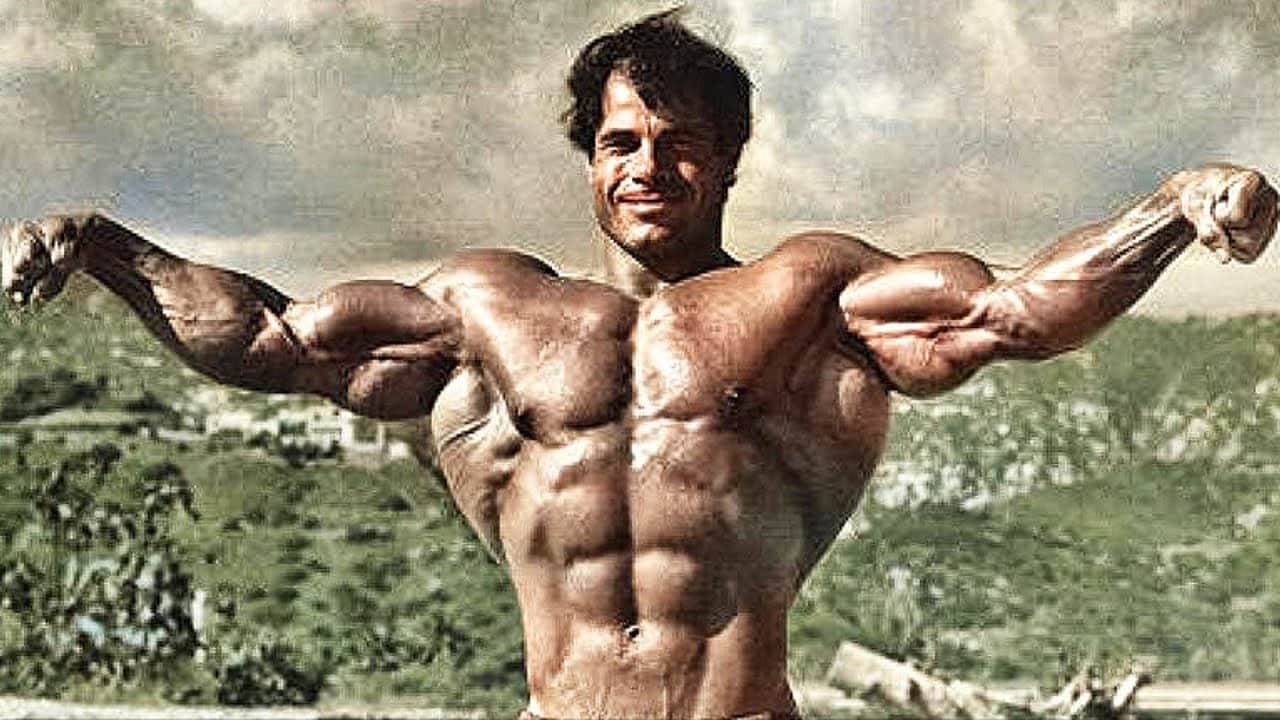
How is it possible to develop such visible abdominal definition without endless crunches? The answer lies not in volume or variety, but in tension, strength, and strategic training.
This article unpacks the core principles of abdominal training as explored in the Respire video, breaks down why most ab routines fail, and explains smarter strategies to build a stronger, more functional core—without wasting reps or risking your spine.
Jump to:
Why Traditional Ab Training Fails
Despite the popularity of high-rep ab workouts, they often miss the mark. Doing dozens—or hundreds—of sit-ups will not melt off belly fat. In fact, research consistently confirms that “spot reduction” is a myth (source).
Worse, excessive reps can strain your lower back without meaningfully building strength. The key isn’t doing more—it’s doing smarter. High-rep movements rarely create enough tension to stimulate deep abdominal activation.
“You’re not going to burn off fat by doing more reps,” explains strength expert Pavel Tsatsouline. “You’re just going to irritate your back.”
The Real Purpose of Core Training
Rather than chasing a burn, core training should build intra-abdominal pressure and stability. Your abs aren’t just show muscles—they’re part of a complex system that supports your spine and transfers force throughout your body.
“The point really is tension and attention,” Tsatsouline says. Think of your abs like any other muscle: you wouldn’t do 100 bicep curls with baby weights and expect growth, right? The same logic applies to your midsection.
The Role of Intra-Abdominal Pressure
Your body uses intra-abdominal pressure (IAP) to stabilize the spine—especially under load. In lifting, IAP acts like an internal weight belt. But when training abs specifically, you’re working against that tension, demanding even more control and strength.
This concept leads to what Tsatsouline calls “internal isometrics”—contractions of the core under high pressure, with or without spinal movement depending on the context. In many cases, the most effective ab work involves low reps, high tension, and total body engagement.
High Tension, Low Reps: A Smarter Approach
So what does effective core training actually look like?
Start thinking of ab training like any strength skill. That means:
- Low to moderate reps (e.g., 3–5 reps for 3–5 sets)
- Heavy loading or high tension
- Slow, controlled movement
- Internal focus and precision
Your goal is to create maximal tension with every contraction. Exercises like double kettlebell front squats or Zercher squats are great teachers here—they force your core to brace reflexively, giving you a visceral feeling of what real abdominal tension is.
Forget the Plank—At Least at First
While the plank is often prescribed as a beginner ab exercise, it isn’t always effective for those with little core control. “Getting somebody just weak in a plank… it’s hopeless,” Tsatsouline remarks. Without deep internal engagement, it often turns into an exercise in futility.
Instead, spend time learning to create and direct internal tension. This includes engaging the pelvic floor, diaphragmatic breathing, and isometric holds with conscious awareness of your entire midsection.
Breathing: The Secret Weapon in Core Training
Understanding how to breathe properly is critical for both ab training and heavy lifting. Most notably, use the Valsalva maneuver, which involves inhaling deeply and bracing the core before initiating a lift or high-tension contraction.
Here’s an exercise you can try right now:
- Sit or stand upright.
- Take a deep abdominal breath — in through pursed lips or one nostril for added resistance.
- Engage your pelvic floor (“pull your butt up” as if preventing an urgent trip to the restroom).
- Press your tongue against your teeth and begin hissing in short bursts.
- Keep the pressure in your abdominal region, not your neck or head.
This technique demands coordination and conscious control—keys to high-level performance. Over time, it becomes second nature, useful during lifting, throwing, even striking sports.
“Breathe Behind the Shield”
Once you’ve mastered this bracing technique, you’ll graduate to what’s known as “breathing behind the shield.” This allows you to remain tight and pressurized, while still speaking or interacting. It’s essential for long-duration lifts or movements requiring dynamic effort.
For example, in strength workshops, students are instructed to tense their core while lying down, then sing a song—to test if they can remain contracted without losing tension.
Internal vs. External Focus
In coaching, there’s ongoing debate between using external focus cues (e.g., “push the floor away”) and internal ones (e.g., “squeeze your abs”).
While research often favors external cues early on, advanced athletes invariably develop internal references. “Any top strength athlete you meet,” says Tsatsouline, “they have their own internal cues. They may forget them later, but they know how to engage the muscle.” This is especially true for core training.
When You Get Strong Enough, You May Not Need Direct Ab Work
Franco Columbu didn’t isolate his abs—but he trained heavy and stayed tight. That constant bracing built his iconic midsection through compound movements rather than crunches or sit-ups.
When your lifts demand full-body tension and your technique is dialed in, your abs cannot help but grow. Combine this with sound nutrition and smart programming, and traditional ab routines become optional.
Practical Core Strategies You Can Apply Today
If you’re ready to overhaul your core training, here are a few takeaways:
- Train your core with the same intent as you would a major lift: focus, contraction, and control.
- Emphasize low reps and high tension. Think quality, not quantity.
- Learn proper breathing and bracing techniques. They form the foundation of real core strength.
- Use exercises that involve full-body coordination (e.g., front squats, Turkish get-ups, carries).
- Only add direct ab work if needed, and keep the volume low.
Final Thoughts
Core training isn’t about carving out hours for crunches and planks. Instead, it’s about learning to use your abdominal muscles effectively: under load, under control, under pressure.
Approach midsection training like a strength event—not a cardio session—and you’ll build a strong, functional, and yes, defined core that supports every movement without wasting time or risking your spine.
As Tsatsouline reminds us, “If you’re trying to be polite and quiet, maybe bodybuilding isn’t for you.” Strength is noisy. Effective ab training? That’s pure tension, built from the inside out.