What if reclaiming youthful mobility didn’t require hours of complicated stretching routines?
A mobility expert who transformed himself from “extremely tight and stiff” to more mobile than 99% of people has distilled a decade of experience into just five essential positions.
After years of extensive stretching and mobility work, he discovered something surprising: establishing and maintaining these specific positions is all most people need.
No advanced yoga credentials or gymnastic skills required—just consistent practice with movements our bodies were designed to perform.
Jump to:
- The Real Culprit Behind Stiffness
- Position #1: Downward Dog for Posterior Chain Freedom
- Position #2: Horse Stance for Hip Mobility
- Position #3: Resting Squat for Lower Body Joint Health
- Position #4: Crab for Behind-the-Back Mobility
- Position #5: Lunge for Hip Flexor Health
- The Essential Sixth Movement: Hanging
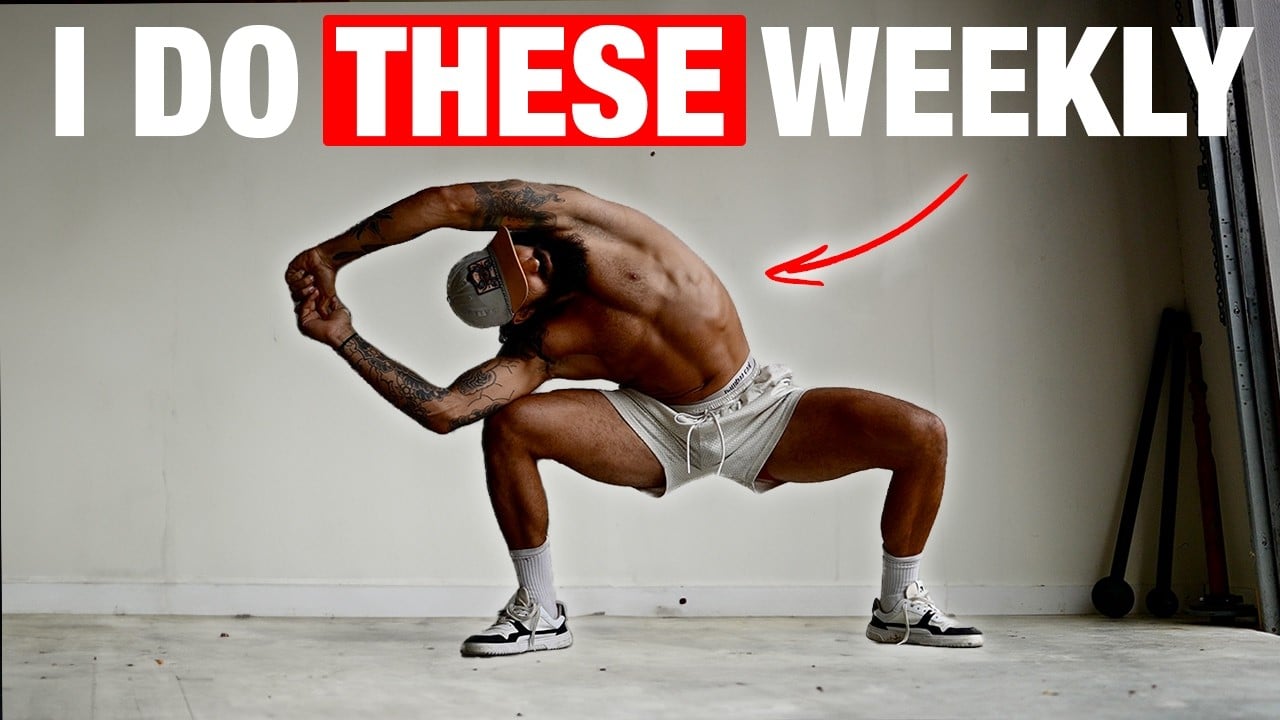
- Sneaky Bonus: Side Flexion From Horse Stance
- Practical Implementation Routine
The Real Culprit Behind Stiffness
Before diving into solutions, understanding the root cause matters. Modern life—characterized by prolonged sitting—shortens the entire posterior chain of muscles. This isn’t about getting old. It’s about not asking our bodies to move through full ranges of motion throughout the day.
The expert emphasizes a crucial distinction: “It’s not getting old that makes us lose our ability. It’s that we don’t ask our hips to open enough throughout the day.”
Position #1: Downward Dog for Posterior Chain Freedom
Hours spent sitting compress and shorten hamstrings and calves. Downward dog directly counteracts this adaptation while simultaneously opening thoracic spine and overhead mobility.
It’s no wonder it’s such a staple in yoga practices. It’s a position that can solve your tight hamstrings and calves while also opening up your thoracic spine and overhead mobility.
Starting Point for Stiff Bodies
Extremely tight individuals should begin with hands elevated on a surface like a bench or chair. This modification makes the stretch accessible while still targeting hamstring length.
Key cues include lifting the tailbone, squeezing chest toward thighs, and maintaining patience if heels don’t touch the ground initially. They will eventually with consistent practice.
Progressive Advancement
Once comfortable on the floor, focus on creating a clean A-shape: extended upper back, straight knees, and elevated tailbone. Taking steps forward and backward in this position accelerates progress by engaging hip flexors, spine, and shoulders more dynamically.
Position #2: Horse Stance for Hip Mobility
Sitting collapses hips into a chronically closed position. Horse stance—essentially a wide-legged squat where you become your own chair—activates all the muscles that sitting shuts off.
If the horse dance is your own chair, then the resting squat is your own lazy boy.
This position accommodates all levels. Tighter hips can start with feet closer together and higher hip position. As mobility improves, sink lower and gradually widen stance.
Progressive Goals
- Initial target: Hold position for 30 seconds
- Intermediate goal: Build up to full 60-second hold
- Advanced bonus: Take steps forward and back while maintaining upright torso
Expect shaky legs initially—that’s part of unlocking exceptional flexibility while building strength simultaneously.
Position #3: Resting Squat for Lower Body Joint Health
Lower body joints require full flexion to stay healthy. Losing this capacity contributes significantly to ankle, knee, and hip problems that plague many adults.
The resting squat maintains this essential capacity—and can eventually become a comfortable passive position for rest.
Starting With Stiff Ankles
The expert personally dealt with extremely stiff ankles from old basketball injuries. His solution: elevate heels and grab onto something stable for support.
My advice is to not be a tough guy. Use the heel elevation and the hand assistance to get strong and comfortable down here.
After months of daily practice with these modifications, hand assistance became unnecessary. Eventually, the position transformed into genuine rest.
Target goal: Work toward spending one full minute in deep squat position. As a bonus challenge, take steps from squat position to dramatically accelerate hip mobility while strengthening toes—benefiting the entire lower kinetic chain.
Position #4: Crab for Behind-the-Back Mobility
Many adults experience pain and restriction reaching arms behind their back. Google blames “age-related factors,” but the actual reason is simpler: never practicing this movement pattern.
Tight chest and shoulder muscles gradually steal this capability. Crab position reverses everything.
Basic Setup
Sit with knees bent, hands positioned directly behind hips. Push hips off ground and move them slightly forward. Notice the immediate stretch through arms positioned behind you.
Hold stretched position 5-10 seconds, release to start, then repeat. As anterior shoulder opens, posterior shoulder strengthens—a perfect balance.
Progression Path
Next step involves extending hips upward. Wrists, posterior shoulder, and glutes work intensely to establish this elevated position. Higher hips create greater shoulder stretch.
Long-term goal: Achieve body parallel to ground. At this level, behind-the-back mobility becomes exceptional.
Advanced practitioners can move in crab position—taking steps forward and backward convinces the body this position needs both strength and comfort.
Position #5: Lunge for Hip Flexor Health
Sitting fixes hips in one dominant position. Tight hip flexors wreak havoc throughout the body—affecting knees, lower back, and even shoulders.
The common-sense solution: spend time in the opposite position through lunges.
Starting Modification
Begin with back knee on ground. Grab something stable and practice lifting knee off ground. This fantastic stretch incorporates strength elements—most adults thrive when gaining strength within mobile positions.
Eventually, work toward holding lunge position without hand assistance.
Ideal End Position
- Hips level with front knee
- Back leg as straight as possible
- No rush—this takes time
Bonus variation: Push front knee forward into deep split squat. This strengthens full knee flexion and front ankle while maintaining back hip stretch. Hold position or perform controlled repetitions.
The Essential Sixth Movement: Hanging
Though he wanted to keep everything bodyweight-friendly for apartment or backyard practice, one position proved too valuable to exclude for anyone with shoulder stiffness.
Hanging heals shoulder problems by opening joint space. Begin with feet on ground for support while still receiving amazing benefits.
Target progression: Build toward 30-60 second full hang. This dramatically improves shoulder function while developing most grip strength needed for daily life.
Sneaky Bonus: Side Flexion From Horse Stance
One underrated range of motion didn’t make the main list—but got smuggled in strategically. Side flexion keeps lateral body tissues mobile; these areas easily become adhesed from excessive sitting.
Simple standing side bends work, but the expert prefers performing them from horse stance. Start by reaching one arm over past centerline. As mobility improves, aim to touch side of core to thigh.
This stretches QLs, lats, psoas, and other core muscles simultaneously.
Practical Implementation Routine
Translating positions into actionable practice requires structure. Here’s the recommended routine with specific targets:
- Crab: Three 10-second holds (30 seconds total)
- Horse stance: 30-60 second hold
- Downward dog: 30-60 second hold
- Lunge: 30 second hold per side
- Resting squat: 30-60 seconds
- Hanging: 20-60 seconds (if bar available)
Commit to completing this sequence once through. As capacity improves, repeat two to three times.
Frequency Recommendations
Daily practice works for those who enjoy it, but every other day represents the sweet spot for most people. This allows adequate recovery while maintaining consistency.
The beauty of these positions lies in their simplicity and accessibility. No equipment required. No complex choreography to memorize. Just fundamental human movements that modern life has gradually stolen—movements we all performed effortlessly as children.
Reclaiming 20-year-old mobility doesn’t demand becoming an advanced yogi or gymnast. It requires consistently reintroducing these five positions until they become comfortable, strong, and natural again.