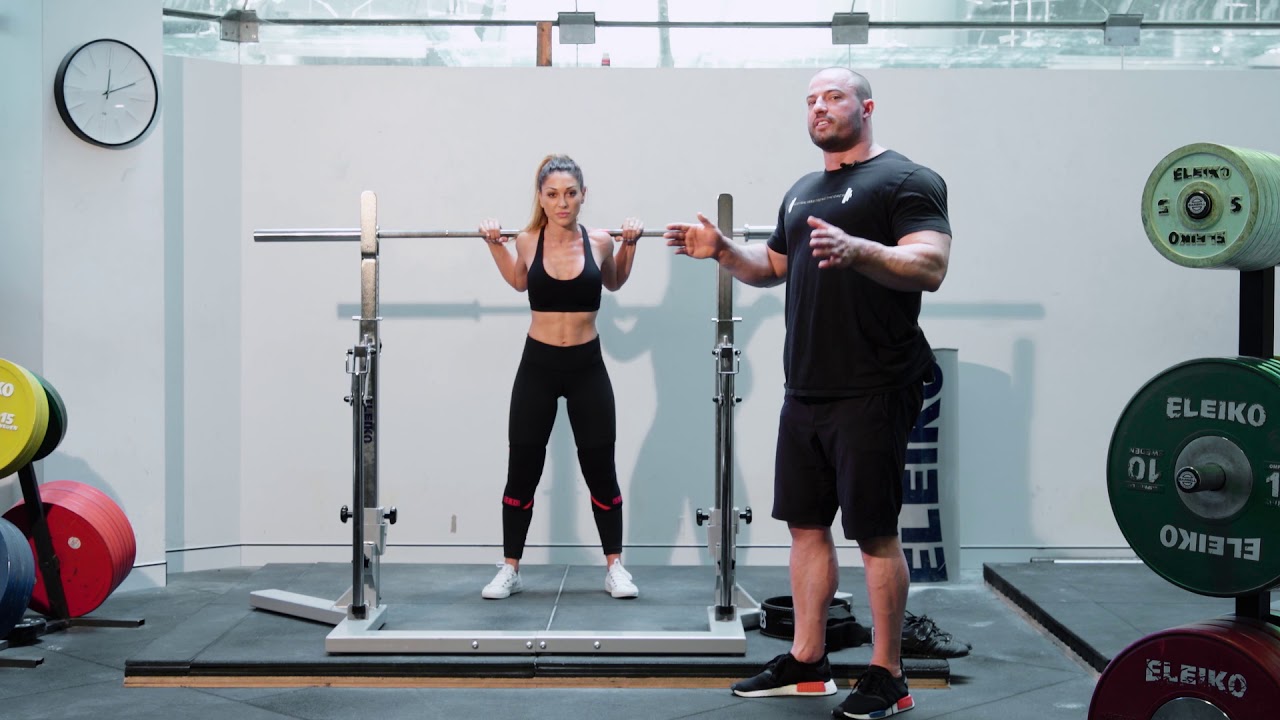
In a recent video, popular strength coach Sebastian Oreb, also known as the Australian Strength Coach, took his audience behind the scenes for a detailed walkthrough of his secondary squat day workout. This wasn’t just another gym vlog — it was a masterclass in programming, equipment selection, warm-up strategies, and the science behind building serious leg strength.
If you’ve ever wondered how to effectively balance squats and deadlifts, whether to use belts and wraps, or how to build bigger quads without burning out — you’re in for a treat. Read on to learn key takeaways that could save you years of trial and error.
Jump to:
- Key Takeaway: Smarter Leg Days Yield Stronger Results
- Stiletto Squats: The Secret to Quad-Dominant Strength
- Stiff-Legged Deadlifts: Posterior Chain Work Without Overlap
- Warm-Up Strategies Tailored for Joint Health and Nervous System Readiness
- Supplement Strategy: Keep It Simple
- Squatting and Deadlifting Without Core Isolation Exercises
- The Mental Side: Why Tempo and Consistency Matter
- The Takeaway: Train Smarter — Not Just Harder
Key Takeaway: Smarter Leg Days Yield Stronger Results
Instead of chasing PRs every workout, Sebastian structures his secondary squat day to complement his heavier training days — boosting hypertrophy, reducing fatigue, and strengthening weak links.
His two key movements? The stiletto squat (heel-elevated high-bar squat) and the stiff-legged deadlift. Paired intelligently, these target the quads and posterior chain without overlapping recovery too much. The result? Balanced development and consistent gains without overtraining.
Stiletto Squats: The Secret to Quad-Dominant Strength
What Is a Stiletto Squat?
Also known as the heel-elevated high bar squat or cyclist squat, this variation emphasizes upright posture and deep knee flexion by elevating the heels significantly — in this case, using a thick bumper plate.
According to Sebastian:
“The goal isn’t to shift the most weight — it’s to build quads. And this position allows the knees to go through full range of motion. When your hamstrings press against your calves at the bottom, that’s when you know you’ve got full knee bend.”
Why Not Just Use Weightlifting Shoes?
He addresses a common question: why not use traditional weightlifting shoes? His answer — while they offer a firm base, they don’t contour to the curved edge of the bumper plate. He prefers boxing shoes or minimal sneakers, which mold better to the platform while still providing elevation and grip.
The Perfect Setup for Quad Targeting
- High heel elevation: Places the knees forward, loading the quads more.
- Pausing at the bottom: Builds confidence in the weakest position.
- Upright torso: Minimizes hip involvement, making quads the limiting factor.
Why Only Two Sets?
Although Sebastian only performs 2 sets of 5 reps at 180 kg, they’re high-effort and high-quality reps that challenge his quads without compromising recovery for future sessions. The principle: stronger athletes require lower volume but higher intensity to make progress.
Stiff-Legged Deadlifts: Posterior Chain Work Without Overlap
Why Not Conventional Deadlifts?
On his secondary day, Sebastian avoids conventional deadlifts to keep quadriceps and spinal loading in check. The solution? Stiff-legged deadlifts with a dead stop on each rep.
“This is a great hamstring developer. Plus, it’s a less fatiguing variation that still lets me train heavy.”
He performed 2 sets of 8 reps at 205 kg, a challenging yet manageable load given his 220 kg stiff-leg PR prior to hitting a 300 kg conventional deadlift — without any specific deadlift prep.
Key Form Cues
- Belt placed higher on the torso to avoid pinching during maximal hip flexion.
- Feet hip-width, hands just outside the legs for optimal distance and leverage.
- Bar stays close to the mid-foot — engaging lats to avoid drifting forward.
- Neutral spine focus — especially important for hypertrophy targeting in glutes and hamstrings.
He also emphasizes grip training by forgoing straps, practicing mixed grip to prepare for powerlifting standards where straps aren’t permitted.
Warm-Up Strategies Tailored for Joint Health and Nervous System Readiness
Sebastian spends significant time warming up — not just to “get warm”, but to mentally and neurologically prepare for heavy load challenges.
The Smart Warm-Up Breakdown:
| Exercise | Purpose | Volume |
|---|---|---|
| Empty Leg Press | Full knee ROM and joint preparation | 50 reps (progressive) |
| High-Bar Squat (empty bar to 180kg) | Technique refinement and neural priming | Singles at increasing loads |
| Stiff-Leg Deadlift (bar to 205kg) | Posterior chain activation | Progressive singles |
Supplement Strategy: Keep It Simple
When it comes to supplements, Sebastian keeps things minimal:
- Creatine: 7–8 g per day (based on body weight, not a flat 5 g).
- Protein Powder: Used as food, not as a supplement — 30 g whey isolate in oats every morning.
- Salt: 1 teaspoon per liter, mimicking a saline IV hydration protocol.
Squatting and Deadlifting Without Core Isolation Exercises
Curious if he trains abs? His answer is no.
“This is my core. Squats and deadlifts train it plenty.”
He addresses the ongoing debate but stands firm: properly executed compound lifts are more than sufficient to build robust core strength in strength athletes.
The Mental Side: Why Tempo and Consistency Matter
One of the biggest gems in the video came from his advice on barbell setup:
“You don’t get a lot of practice at your top weights, but you get thousands of reps at your warm-ups. So every rep is practice — treat light weights like they’re heavy.”
It’s that level of precision that separates advanced lifters from hobby gym-goers: a focus on tempo, reproducibility, and technique from the bar to maximal attempts.
The Takeaway: Train Smarter — Not Just Harder
This session from Sebastian Oreb is a valuable reminder of how intelligent programming, proper equipment use, warm-up protocols, and movement quality come together to produce long-term strength and hypertrophy gains.
- Use stiletto squats to emphasize quads — not just move more weight.
- Pair them with stiff-legged deadlifts to build the posterior chain without overlapping structures.
- Warm up intelligently — not just to feel loose, but to neurologically prepare.
- Limit accessory work on these days to avoid compromising recovery for the next session.
As Sebastian says:
“Two high-quality sets are enough, as long as the effort is there and the movement is right.”
Want more breakdowns like this? Follow along for future sessions and lock in on the details that make elite level training accessible to everyone who’s curious enough to learn.