Tendon health doesn’t get nearly enough attention in most training programs, yet these connective tissues are critical for strength, athletic performance, and injury prevention.
One fitness coach is changing that conversation with a comprehensive guide to isometric exercises designed specifically for tendon training.
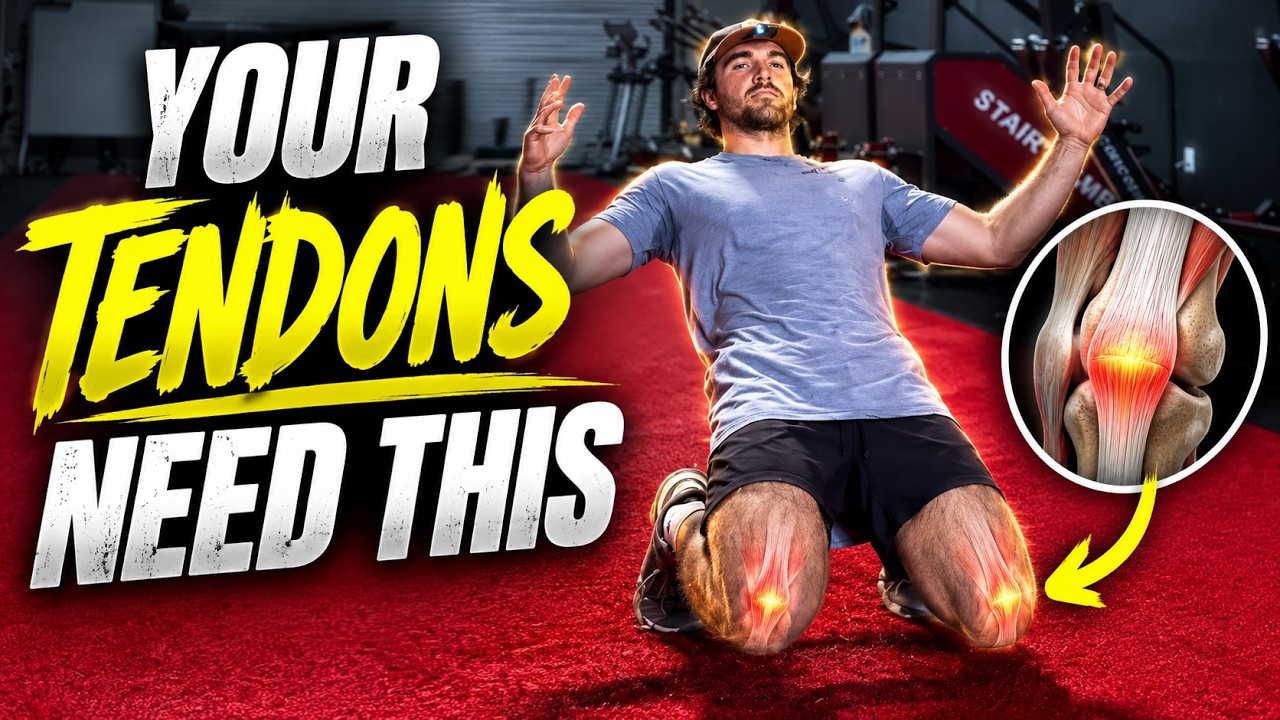
The approach focuses on strategic tension and time under load to strengthen everything from ankle tendons to wrist flexors.
And the method might be exactly what’s missing from your current routine.
Jump to:
The Foundation: Time, Tension, and Volume
Isometric training for tendons operates on three critical variables that determine effectiveness. Each one plays a distinct role in creating adaptation without crossing into injury territory.
Hold duration should land between 20 to 45 seconds per set. Going longer causes fatigue to diminish force output, which means tendons stop experiencing adequate tension for growth. Shorter holds work when performed at very high intensities, but they sacrifice time under tension.

If you want something simple that actually works, this is one of the most effective tools I’ve used to build strength, conditioning, and endurance without needing a full gym setup.
- Full-body training with one weight using swings, squats, and presses
- Solid cast iron build that feels stable and lasts for years
- Comfortable grip that makes high-rep workouts easier to handle
For these exercises, we’re trying to find the sweet spot, high force sustained long enough to give the tendon a strong adaptation stimulus.
Intensity should hover around seven to nine out of ten effort. Tendons respond to tension, so sufficient force is non-negotiable for creating meaningful adaptation. If pain interferes at that intensity, the solution isn’t to push through—it’s to modify position, range of motion, or load until high tension becomes tolerable.
Volume recommendations call for three to five sets performed two to five times weekly. Recovery capacity determines where individuals land within that range.
More isn’t always better, but we want enough repeated exposure to drive adaptation without exceeding the tendon’s capacity to recover.
Lower Body Tendon Work: Feet Through Hips
Plantar Fascia and Achilles
Though technically not a tendon, plantar fascia benefits from a knee-over-toe calf raise hold. Position yourself fully up on toes while digging them into a slant board.
For Achilles tendon strengthening, the Johnson calf raise hold proves effective. Load a bar as heavy as tolerable while maintaining contraction for 30 seconds.
Tibialis posterior work involves pulling toes toward shins with straight legs, holding at peak contraction. Without a tib bar, a kettlebell works for single-leg variations.
Ankle Stability
Peroneal and fibular tendons require eversion work—standing on ankle outsides. Bilateral holds work initially, but single-leg progressions allow better pressure control. Leaning against a wall provides stability without compromising tendon loading.
If you want something simple that actually works, this is one of the most effective tools I’ve used to build strength, conditioning, and endurance without needing a full gym setup.
- Full-body training with one weight using swings, squats, and presses
- Solid cast iron build that feels stable and lasts for years
- Comfortable grip that makes high-rep workouts easier to handle
Knee Complex
Patella and quad tendons resist isolation, so exercises target both simultaneously. Split squat isometrics position knees over ankles while dropping back knees into sustained holds.
Poor glute activation or knee valgus demands band resistance pulling knees inward during holds.
You want to feed the dysfunction, force your knee to be strong enough to hold it out.
Driving knees over toes intensifies patella tendon tension. Spanish squats with bands positioned behind knees at quarter-to-half depth create exceptional knee loading while maintaining upright posture. Wall variations work without bands—just press against walls while driving toes into ground.
Posterior Chain
Long lever bridges isolate hamstring tendons better than standard variations. Bridge up, walk feet out to comfortable distance, then hold. Walking feet further increases hamstring emphasis.
Nordic isometric holds at 45-degree angles provide intense hamstring loading for those ready to progress. Bar setups or dedicated Nordic benches both facilitate proper positioning.
Adductor work relies on Copenhagen planks starting at knee level, progressing to foot-elevated versions. Hip extension matters more than spinal flexion here.
If you want something simple that actually works, this is one of the most effective tools I’ve used to build strength, conditioning, and endurance without needing a full gym setup.
- Full-body training with one weight using swings, squats, and presses
- Solid cast iron build that feels stable and lasts for years
- Comfortable grip that makes high-rep workouts easier to handle
Hip Stabilizers
Starfish side planks target gluteus tendons with progressions from knee to foot support. Hip flexor holds use benches for support while extending hips and driving opposite knees into pads.
You’re holding, pushing your knee onto the bench, squeezing your glute as hard as you can.
Adding plates increases difficulty, though pressing knees harder into benches provides progression without equipment.
Upper Body Tendon Training
Chest and Shoulders
Pectoralis major tendons respond to heavy dumbbell fly holds at end range. Weights shouldn’t drift outward—squeeze chest throughout holds. Pain signals excessive loading; reduce weight immediately when discomfort appears.
Rotator cuff isometrics involve pressing hands into walls with elbows pinned to sides. Adjusting lower leg position increases leverage for harder pressing. Maintaining minimal gap between arm and wall ensures proper engagement.
Arm Tendons
Proximal biceps tendon work uses straight-arm wall presses with fists positioned wrist-forward against walls. Sensation should concentrate at distal biceps attachment points.
Tricep pull-down holds with heavy loading require forearms parallel to ground. Elbows stay tucked throughout 30-second holds while pressing maximally through extensions.
If you want something simple that actually works, this is one of the most effective tools I’ve used to build strength, conditioning, and endurance without needing a full gym setup.
- Full-body training with one weight using swings, squats, and presses
- Solid cast iron build that feels stable and lasts for years
- Comfortable grip that makes high-rep workouts easier to handle
Wrist and Forearm
Common wrist extensor tendons—frequently implicated in tennis elbow—strengthen through braced wrist extensions. Heavy dumbbells provide resistance while movements originate exclusively from wrists, not elbows or shoulders.
Wrist flexion mirrors this approach with supported arms and maximum comfortable flexion. Tight grip matters for both movements.
Supination work uses mobility sticks, golf clubs, or baseball bats with elbows pinned to hips. Controlled external rotation stretches to comfortable endpoints, then holds with adequate tension.
You want to get as much of a stretch as you can, but make sure there’s no pain.
Ten to twenty reps through range work when holds don’t provide sufficient stimulus. Pronation exercises reverse this pattern with internal rotation while maintaining elbow position. Opposite hand assistance adds intensity when needed.
Implementation Strategy
This framework covers major tendons involved in athletic movement and strength development, though it doesn’t exhaust every possibility. Individual exercises matter less than creating adequate tension for sufficient duration with appropriate volume.
Tendons need reasons to adapt, and strategic loading provides those reasons. Starting conservatively, progressing methodically, and building capacity over time creates resilient connective tissue capable of handling demanding activities.
If you want something simple that actually works, this is one of the most effective tools I’ve used to build strength, conditioning, and endurance without needing a full gym setup.
- Full-body training with one weight using swings, squats, and presses
- Solid cast iron build that feels stable and lasts for years
- Comfortable grip that makes high-rep workouts easier to handle
The approach emphasizes pain-free movement and athletic capability rather than arbitrary performance metrics. Tendon training isn’t glamorous, but it’s foundational for long-term physical resilience and injury prevention.
Most training programs neglect this critical component, leaving athletes and fitness enthusiasts vulnerable to common tendon pathologies. Incorporating isometric tendon work addresses this gap systematically.