Professional fighter Paddy “The Baddy” Pimblett just documented one of the most transparent fight camp weight cuts in MMA history, and his journey reveals exactly what elite fighters endure to make championship weight.
Starting at over 200 pounds after vacation and dropping to 156 pounds for weigh-in, Pimblett’s 14-week camp showcases the brutal reality of extreme weight manipulation in combat sports.
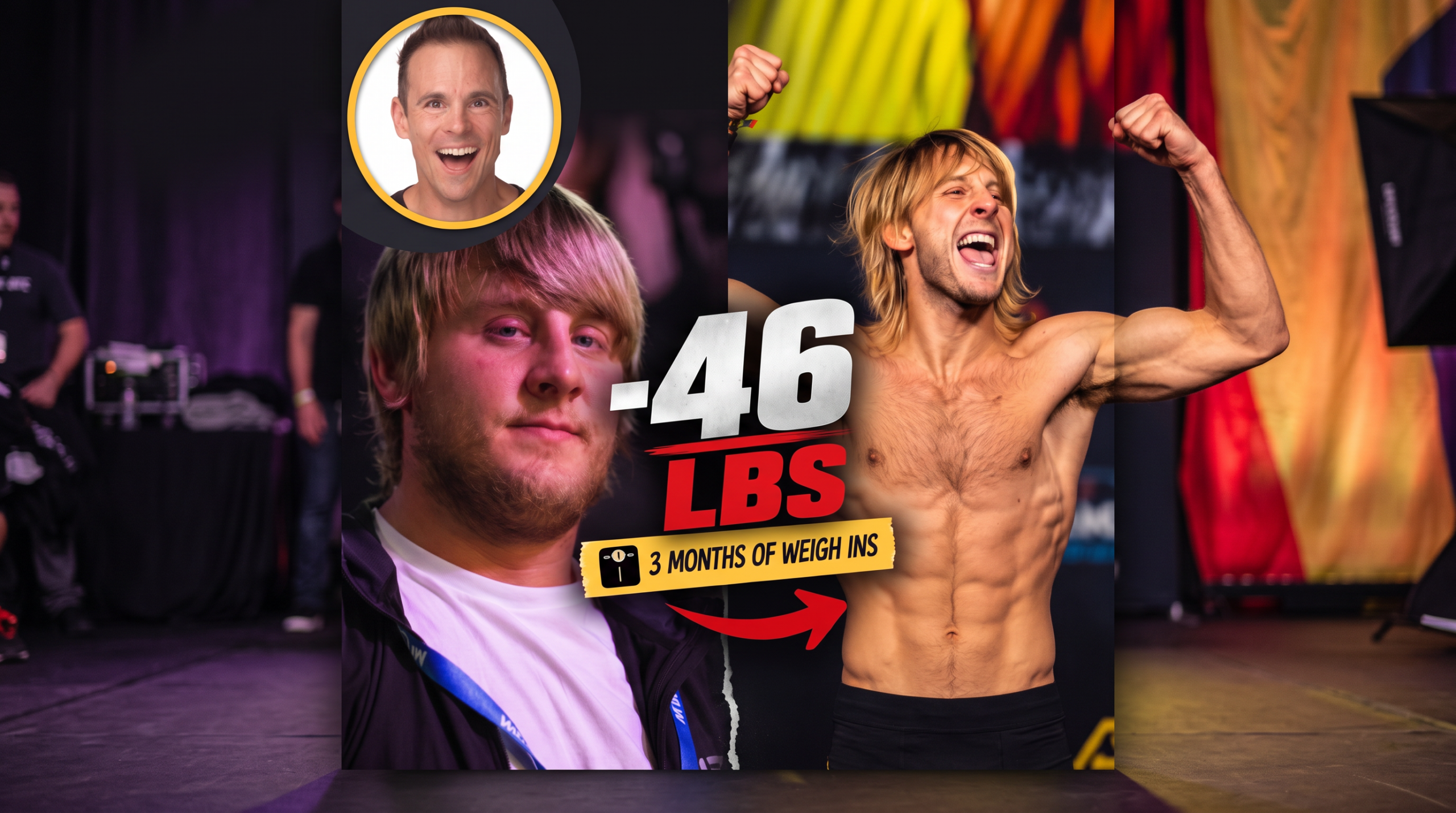
But what stands out isn’t just the dramatic numbers—it’s his strategic approach under nutritionist Paul Reed that made this cut safer and more effective than previous camps.
In his candid vlog documenting preparation for his fight against BSD, Pimblett pulled back curtain on every aspect of professional weight cutting.
Jump to:
- Starting Point: Post-Vacation Reality Check
- Phase One: Initial Weight Drop (Weeks 1-7)
- Phase Two: Critical Transformation (Weeks 7-3)
- Strategic Sparring During Weight Cut
- Final Three Weeks: Accelerated Drop
- Week Before Fight: Hitting Target Zone
- Vegas Arrival: Fine-Tuning Protocol
- Unusual Weight Plateau: Mental Challenge
- Final 48 Hours: Water Manipulation
- Weigh-In Success: Mission Accomplished
- Key Takeaways From Elite Weight Cut
- Critical Health Perspective
Starting Point: Post-Vacation Reality Check
When Pimblett returned from holidays in Tenerife, scale delivered harsh truth: 91.7 kilograms (approximately 202 pounds).
Check the damage from all the holidays. Saying it every day in Tenerife every single day in Tenerife. You only ever train twice. It’s like having two rest days in two weeks. But we were eating well.
Despite maintaining some training overseas, vacation eating pushed him above 90 kilograms for first time in his documented fight camps.
Phase One: Initial Weight Drop (Weeks 1-7)
Seven weeks before weigh-in, Pimblett had already made significant progress through controlled calorie deficit and increased training volume.
That’s a nice weight to see. 7 weeks out, weigh in 7 weeks Friday. Feel good. Feel like I’m getting jab again. Felt a bit sluggish the past few weeks, but now I feel like I’m getting back on point.
His approach during this phase included:
- Multiple training sessions daily: Boxing sparring, pad work, jiu-jitsu
- Cardio work: Running sessions before and after gym training
- Strategic sparring partners: Training with southpaw fighters matching opponent’s build
- Calorie control: Maintaining deficit while preserving performance
Phase Two: Critical Transformation (Weeks 7-3)
At 5.5 weeks out, despite weekend trip to Budapest, Pimblett hit 83.5 kilograms (184 pounds)—demonstrating consistency in his nutritional protocol.
His coach noted crucial turning point around 80-kilogram mark:
He’s been looking really good this week. He’s like hit like a new corner. I always say to Patty like once his weight gets like the 80 kilo mark, he like changes because he’s like super strong, dynamic, fast, technical. He’s everything that we want him to be.
This phenomenon isn’t coincidence. As fighters approach competition weight, body adapts to leaner state, often resulting in improved performance despite calorie restriction.
Strategic Sparring During Weight Cut
Unlike many fighters who reduce contact work late in camp, Pimblett maintained intensive sparring with specific tactical goals.
I’m sparring with Matt. Matt’s a very good wrestler. We know BSD is going to try and take me down. BSD takes most people down. I think he might be a little bit afraid to take me down cuz he knows I’ll submit him on the ground.
Training continued with five-round sessions even as calories dropped and fatigue increased—demonstrating mental toughness required at elite level.
Final Three Weeks: Accelerated Drop
Three weeks before weigh-in, Pimblett weighed 81 kilograms (178.5 pounds)—putting him ahead of schedule compared to previous fights.
Woke up 81.8 lad. It’s 11k exactly from that point. 11k in 3 weeks. Obviously, I want to try and do less than seven overnight. I think last time I done about that cuz I weighed in underweight last time.
His experience from previous cut informed better strategy: last time he started final water cut at 167 pounds and weighed in at 154—meaning he cut 13 pounds overnight.
This camp aimed for less aggressive overnight depletion by arriving lighter before water manipulation began.
Week Before Fight: Hitting Target Zone
One week out, scales showed 77.7 kilograms (171 pounds)—putting Pimblett in ideal position.
And everyone said I was going to miss weight. Flying 7K. 77.7. That’s the jackpot left. At the point now where it’s just dropping off consistently.
Starting water cut at 171 pounds instead of 167 pounds meant less aggressive dehydration protocol—potentially safer physiologically and better for recovery post-weigh-in.
Vegas Arrival: Fine-Tuning Protocol
Upon arriving in Las Vegas several days before fight, Pimblett weighed 174 pounds—slightly behind previous camp but accounting for lower target weight.
His nutritionist Paul Reed confirmed position:
He’s slightly ahead of the game from the last fight. So great. Bearing in mind he’s just finished his water load really and we’re reducing his water by 50% now. So he’s in a great place.
Carbohydrate Depletion Phase
Starting Sunday before Friday weigh-in, carbohydrates were eliminated from diet—standard practice for depleting glycogen stores (which hold water in muscles).
Surprisingly, Pimblett reported feeling stronger than expected:
No carbs from Sunday. And yesterday I felt the best that I’ve felt training. Normally don’t feel great when you’re doing no carbs. I felt boss yesterday.
This counterintuitive response likely resulted from strategic timing of carb depletion combined with previous camp experience.
Unusual Weight Plateau: Mental Challenge
Despite strict protocol, Pimblett experienced frustrating plateau—weighing exactly 174 pounds four consecutive days.
Wednesday, Thursday, Friday, Saturday. I was 174 every day. And my weight doesn’t do that. My weight always fluctuates. And then I was 175 I think on Sunday. Proper pissing me off.
Weight plateaus during cuts are mentally taxing—especially when fighter expects consistent drops. This stall likely represented normal fluid retention before final water manipulation phase.
Final 48 Hours: Water Manipulation
Day before weigh-in, after completing water load protocol (drinking high volumes then cutting to nearly zero), Pimblett weighed 169.4 pounds.
Hopefully tomorrow I can wake up two pound lighter than I’m underweight.
With only 10 pounds remaining, target was clearly achievable—representing successful execution of entire 14-week plan.
Weigh-In Success: Mission Accomplished
Official weigh-in result: 156 pounds exactly—lightweight championship limit.
This represented total drop of approximately 46 pounds from post-vacation peak, accomplished through methodical approach prioritizing performance preservation over rapid weight loss.
Key Takeaways From Elite Weight Cut
Pimblett’s transparent documentation reveals several critical principles:
- Early start matters: Beginning 14 weeks out allowed gradual deficit rather than crash dieting
- Professional guidance essential: Nutritionist Paul Reed’s protocols optimized timing and safety
- Performance-focused approach: Training intensity maintained throughout despite calorie restriction
- Experience improves execution: Learning from previous cuts informed better strategy
- Mental resilience required: Pushing through plateaus and discomfort separates elite from average
- Water manipulation timing: Arriving lighter before final dehydration reduces overnight cut severity
Critical Health Perspective
These extreme weight cuts should never be attempted without medical supervision and professional guidance. Rapid dehydration can cause kidney damage, cardiovascular stress, brain swelling, and death.
Professional fighters have entire teams monitoring health markers, hydration status, and physiological responses throughout process.
For general population seeking weight loss, gradual approach losing 1-2 pounds weekly represents safe, sustainable method—not 46-pound drops over 14 weeks involving severe dehydration.
Pimblett’s camp demonstrates what’s possible with proper planning, professional support, and elite-level discipline—but also highlights extreme demands combat sports place on athlete bodies.