Physical therapists have long obsessed over a tiny muscle on the inner thigh called the vastus medialis obliquus, or VMO.
For decades, rehab protocols centered on “activating” this teardrop-shaped portion of the quadriceps to fix knee pain and improve performance.
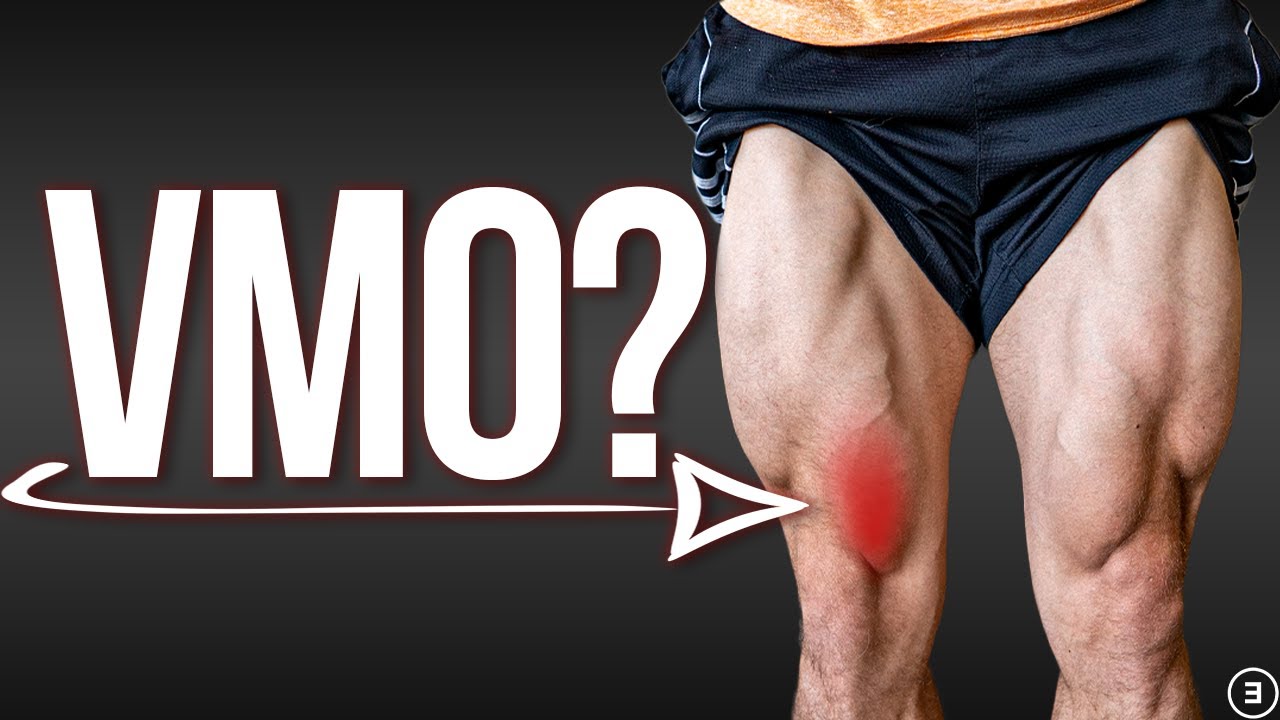
But according to Dr. Mark Certica, a physical therapist at E3 Rehab, that entire approach is fundamentally flawed.
In a recent video breaking down the science, he explains why VMO-specific training is a waste of time—and what actually works for building stronger, pain-free legs.
Jump to:
Understanding Quadriceps Anatomy
The quadriceps consists of four distinct muscles working together to straighten the knee.
These include the vastus medialis on the inner thigh, vastus lateralis on the outer thigh, vastus intermedius in the middle, and rectus femoris on top. All four insert on the tibial tuberosity via the patellar tendon.
The vastus medialis itself gets divided into two portions based on fiber orientation: the vastus medialis longus (VML) and the vastus medialis obliquus (VMO).
However, research suggests this division may be more conceptual than functional. A systematic review by Smith and colleagues found that the vastus medialis is best thought of as a single anatomical structure, despite having different fiber alignments between proximal and distal portions.
The Patellofemoral Pain Theory That Failed
VMO training became popular in rehab circles due to a compelling but ultimately incorrect theory about knee pain.
Clinicians believed that patellar maltracking—the kneecap pulling to one side—caused wear and tear leading to patellofemoral pain. The solution seemed obvious: release tight structures pulling the patella laterally (like the IT band) while strengthening structures pulling it medially (like the VMO).
The science didn’t support this approach.
Multiple studies have dismantled this theory piece by piece. Taping doesn’t actually change patellar alignment. Females with patellofemoral pain improve without any changes in how their kneecap tracks.
Quad atrophy in people with knee pain isn’t unique to the VMO—all quad muscles show similar wasting. Research comparing muscle coordination between symptomatic and pain-free individuals found no significant differences.
Perhaps most tellingly, VMO-specific retraining produces no better results than general quadriceps strengthening in the long run.
The 10 Millisecond Problem
Much of VMO research focuses on finding activation timing differences of approximately 10 milliseconds—that’s 0.01 seconds.
Dr. Certica raises two critical questions about this approach:
One, who cares? And two, is this chicken or egg scenario, right? Did this 10 ms difference lead to their pain, or is their pain contributing a bit to how they move?
Traditional VMO exercises in physical therapy tend to be remarkably low-level: bodyweight squats with ball squeezes, wall sits, glute bridges with inner thigh engagement, or straight leg raises with hip rotation.
These movements fall dramatically short for anyone wanting to return to higher levels of function or athletic performance.
What About Bodybuilding and Aesthetics?
Bodybuilders covet that distinctive teardrop shape on the inner thigh that a developed VMO provides.
Could targeted training make sense for aesthetic purposes even if it doesn’t help pain?
Dr. Certica points out that successful bodybuilders don’t rely on single exercises for any muscle group. They rotate through multiple movements because muscles respond differently to various ranges of motion, rep schemes, and contraction types.
Research does support regional muscle development for some body parts. Studies show that calf muscles can be targeted based on foot positioning during exercises. Hamstrings respond differently to lying leg curls versus stiff-legged deadlifts.
Even within the quadriceps, the rectus femoris doesn’t respond well to compound movements involving simultaneous hip and knee extension.
But for the VMO specifically? Evidence remains lacking.
Chris Beardsley suggests that larger ranges of motion may cause slightly more vastus medialis growth due to longer working sarcomere lengths and stretch-mediated hypertrophy. However, no research definitively shows preferential VMO activation or that it produces meaningful differences.
The Bottom Line on VMO Training
Smith and colleagues summarized the research consensus clearly:
It is therefore recommended that clinicians should not focus on strengthening since it likely cannot be preferentially activated.
This applies equally whether goals involve pain management, performance enhancement, or aesthetic development.
Patellofemoral pain responds to comprehensive hip and knee strengthening—not VMO isolation attempts. Including variety in exercise selection benefits both performance and aesthetics far more than chasing activation of one small muscle portion.
Exercises That Actually Work
Effective quad development comes from a robust training menu including both compound and isolation movements:
- Single-leg step-downs for unilateral strength and stability
- Split squats and box squats for functional loading patterns
- Heel-elevated squats for increased knee flexion and quad emphasis
- Traditional squats for overall leg development
- Reverse Nordics targeting the rectus femoris specifically
- Leg extensions for direct quadriceps isolation
Success comes from consistency, utilizing large ranges of motion, and implementing progressive overload over time.
When these principles guide training, the vastus medialis—including that coveted teardrop portion—develops plenty without special attention or isolation attempts.
Stop obsessing over milliseconds of muscle activation. Focus instead on challenging exercises performed with proper technique through full ranges of motion.
That approach builds stronger, more resilient knees whether recovering from pain or chasing performance gains.