Losing 100 pounds should feel like crossing a finish line, but for many people who achieve dramatic weight loss, the journey doesn’t end when the scale hits their goal number.
The mental shifts, physical changes, and social dynamics that follow can be just as challenging as the weight loss itself.
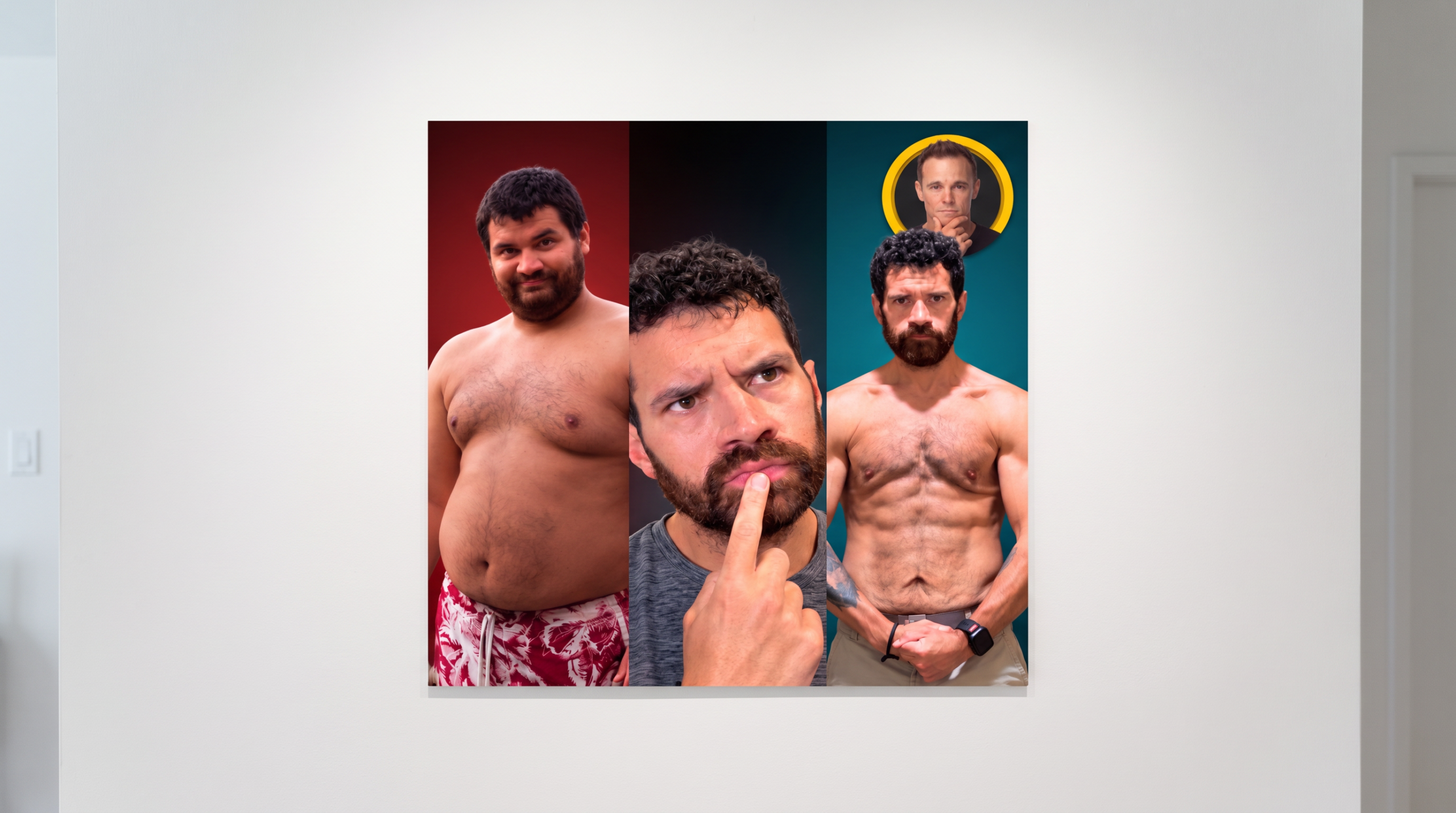
One man’s transparent account of dropping from over 265 pounds to 155 pounds reveals eight unexpected realities that rarely make it into transformation photos.
His experience highlights why reaching a goal weight is often just the beginning of a much longer story.
Jump to:
- Goal Weight Doesn’t Always Match Reality
- Comments Shift From Praise To Concern
- Two Physical Changes Nobody Mentions
- Shopping Transforms From Anxiety To Joy
- Compliments Become Complicated
- GLP-1 Medications: Tool, Not Magic
- Loose Skin Distorts Body Perception
- Maintenance Requires Different Skills
- The Real Finish Line
Goal Weight Doesn’t Always Match Reality
At 5’10”, he set his initial target at 175 pounds—a number that simply “sounded good” with no medical or scientific basis behind it.
He imagined a finished physique waiting beneath the fat, like fitness archaeology. The reality proved far different.
When I was well over 200 lb, I thought I would be ripped at 175 lb. Why 175 lbs, you ask? Excellent question. At some point, I had apparently decided that 175 lbs was a lean guy number. There was no body fat measurement, medical reason, and no actual evidence behind it. It just sounded good.
He reached 175 pounds and looked smaller, but nothing like he’d pictured. To see anything resembling his imagined physique required dropping to nearly 155 pounds.
That’s when the realization hit: making the scale number smaller was no longer solving the right problem.
What The Scale Can’t Tell You
Scale weight reveals nothing about muscle mass, fat distribution patterns, loose skin, or whether your mental image was ever realistic to begin with.
- Visible abs require less body fat than most people estimate
- Muscle mass matters more than weight alone
- Sometimes the answer isn’t losing another 10 pounds—it’s eating enough and building strength
Comments Shift From Praise To Concern
Early feedback follows a predictable pattern: “You look great!” and “What have you been doing?” Pure positivity dominates initial reactions.
Then comments gradually morph into something different. “You’re getting too skinny.” “You need to stop now.” “Don’t lose any more weight.”
Some concern comes from genuine care, but much of it stems from comparison bias. People aren’t comparing you to medical standards—they’re comparing you to the version they’ve known for years.
If someone is used to seeing you well over 200 lb, a healthy weight can look incredibly thin by comparison. The change to them is dramatic. Even if your current weight is not medically underweight.
He learned not to choose goal weight “by committee at a family gathering.” Instead, health markers, physical performance, energy levels, and medical guidance proved far more reliable.
Just because a new body looks unfamiliar to someone else doesn’t automatically signal a problem.
Two Physical Changes Nobody Mentions
Beyond the visible transformation, two unexpected discomforts emerged that caught him completely off guard.
First: constant cold. He became the person carrying a sweatshirt everywhere in July, finally understanding that group he used to find baffling.
Second: every hard surface became torture. Bleachers, wooden benches, floors—all suddenly uncomfortable. Excess body fat had quietly provided both insulation and upholstery, benefits only appreciated after they disappeared.
I would like to formally apologize to every chair that I complained about being uncomfortable.
Would he trade it back? Absolutely not. But the adjustment period for these changes proved surprisingly significant.
Shopping Transforms From Anxiety To Joy
Dressing room experiences shifted dramatically. Previously, he walked in already self-conscious, selecting clothes not because he liked them but because they fit and hid what he wanted hidden.
Handing back too-small clothes to attendants felt like admitting failure to strangers, even though they likely forgot the interaction seconds later.
Now shopping ranks among his favorite activities. The first time a medium shirt fit—something that hadn’t happened since middle school—he stared at the tag in disbelief.
For the first time, he could choose clothes based on aesthetics rather than camouflage. That shift proves difficult to explain to anyone who’s never dreaded the dressing room.
The only downside? Losing 100 pounds comes with an automatic subscription to replacing an entire wardrobe.
Compliments Become Complicated
When reconnecting with people after months apart, he could predict the opening line before conversation started: “Oh my god, you’ve lost so much weight.”
Sometimes recognition felt fantastic—validation for tremendous effort and countless decisions. Hard work made visible.
Other times, it felt like his entire existence had been reduced to body fat percentage. Ten-minute conversations focused exclusively on weight, diet methods, future plans, and maintenance concerns.
Meanwhile, I’m still the same person. I have a family, a job, hobbies, things I’m excited about, things I struggle with. My body is the most visible change, but there are other things going on in my life.
Both reactions can coexist. Pride in achievement and appreciation for recognition don’t cancel out occasionally wishing people would discuss literally anything else.
GLP-1 Medications: Tool, Not Magic
He chose transparency about using Zepbound (a GLP-1 medication) for approximately nine months, acknowledging it as tremendously helpful after years of yo-yo progress.
Before starting medication, he’d dropped from 265 to 220 pounds over years—a pattern of spring weight loss, summer plateaus, and winter regain.
During those nine months on GLP-1, he still tracked food daily, targeted 1,700 calories, aimed for 200 grams of protein, strength trained, ran at least three miles regularly, prioritized walking, and protected eight hours of sleep.
The medication did not log my meals for me. It didn’t put on my running shoes. It didn’t lift the weights. And it didn’t make decisions about what food I was eating. It did help make those decisions dramatically easier.
Easier and effortless aren’t the same thing. Some people immediately dismiss his story as “cheating” upon hearing about medication use.
He acknowledges their right to opinions about medication but rejects writing off his work. He used an effective tool and put in substantial effort—both statements are true simultaneously.
Loose Skin Distorts Body Perception
Losing weight solved genuine problems: eliminated blood pressure medication needs, normalized cholesterol markers, improved movement quality, enhanced running and lifting capacity, and enabled completing his first triathlon.
But nothing prepared him for how weight loss would change his body without changing how he saw it.
Significant loose skin followed his transformation. He refuses to call it a “perfect badge of honor” or pretend to love it—understanding what it represents and feeling proud of the work required doesn’t mean liking its appearance.
Athletic clothing hides most loose skin. Depending on stance, lighting, and posing, his body looks completely different. Seeing someone’s after photo online reveals nothing about what their body actually looks like underneath.
The DEXA Scan Revelation
Loose skin also obscures muscle definition and completely warped his perception of leanness.
When getting a DEXA scan around the time he stopped Zepbound, he hoped for results under 15% body fat. The estimate returned 9.7%—extremely lean territory.
I genuinely thought that it might be above 15. That is how far off my perception of my own body was.
Despite objective data showing extreme leanness, part of him still believed he needed to lose weight. Making the scale number smaller wouldn’t solve loose skin. He needed to stop shrinking, start building muscle, and accept results wouldn’t match someone who’d never weighed 265 pounds.
For those worried about loose skin: it’s not a reason to avoid weight loss and continue a lifestyle causing harm. He’d choose loose skin over his old body and lifestyle ten times out of ten.
Maintenance Requires Different Skills
For months, success had one simple definition: make the scale number smaller. Track food, maintain calorie deficit, watch the trend decline. Every new low proved the plan worked.
Then he reached the point where that number shouldn’t keep dropping. Mentally, that shift proved harder than expected.
Eating more felt like breaking rules. Normal scale increases felt like moving backwards. After chasing new lows for so long, maintaining the same number can feel like nothing is happening—except nothing happening is precisely the goal.
Maintenance isn’t returning to old eating patterns, nor is it staying on a weight loss diet forever. It involves learning new calorie ranges, understanding normal weight fluctuations, and distinguishing trends requiring attention from meaningless daily variations.
Tools From Weight Loss Still Apply
The good news: losing weight properly provided maintenance tools. He knows how to track when information is needed, which meals work, and understands protein requirements, appropriate portions, sustainable habits, and trend analysis over single weigh-ins.
Instead of pushing weight down as fast as safely possible, he’s now eating enough to build strength, improve body composition, and live without feeling permanently restricted.
He admits he’s still early in this phase without perfectly wrapped answers—perhaps the most honest assessment possible.
Losing weight is a skill, but keeping it off while building a normal life is a completely different one.
The Real Finish Line
Before-and-after photos aren’t endings—they’re handoffs from one challenge to the next.
Losing over 100 pounds completely changed his life, something he’d repeat without hesitation. But the current job involves learning to live at this weight while getting stronger, protecting health gains, and doing it all without spending life feeling perpetually restricted.
The transformation continues long after hitting goal weight. Physical changes represent only one dimension of a much larger adjustment.
Mental shifts, social navigation, identity reconstruction, and building sustainable maintenance habits constitute the second act of the weight loss story—one that often proves just as demanding as the first.