Ever wrapped up a workout, only to realize later that you had more in the tank? That you could have pushed harder, rested less, or clocked a better time? If so, you’re not alone—and according to one controversial idea in sports science, your brain may be the one calling the shots, not your body.
The Central Governor Theory, proposed by exercise physiologist Dr. Tim Noakes, challenges the way we think about physical performance. Instead of muscles being the limiting factor, Noakes suggests it’s the brain—your internal “central governor”—that modulates effort to protect the body from harm. If true, this theory could transform the way athletes train, compete, and understand their own limitations.
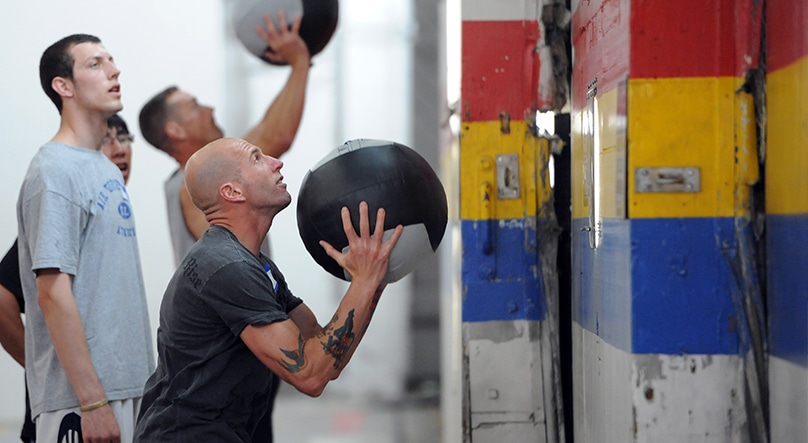
Let’s explore how the central governor may be affecting your workouts, how elite athletes seem to override it, and—most importantly—what you can do to train your brain alongside your body.
Jump to:
What Is the Central Governor Theory?
Traditionally, athletic performance has been explained using physiological markers like VO2 max and lactate threshold. These measures gauge the body’s ability to use oxygen and clear metabolic byproducts. But Noakes’ Central Governor Theory flips this on its head.
He argues that the brain, not the body, determines performance by continuously calculating risk based on:
- Your current fitness level
- Environmental conditions (heat, wind, altitude)
- Past physical and psychological experiences
- The perceived difficulty of the workout or race
- Your pace and fatigue signals
The brain adjusts your performance in real-time to prevent you from pushing to the point of injury or death. In Noakes’ words, “the sensations of discomfort are the way the brain regulates the performance.” According to him, fatigue is more perception than physical reality—a warning signal, not an actual limit.
Why Does This Matter for Athletes?
If discomfort and fatigue are mostly brain-generated illusions, then it stands to reason that elite athletes might simply interpret or ignore those signals differently. This would explain why some individuals can grind through excruciating workouts while others stop short.
Take the legendary example of Roger Bannister, the first man to run a mile in under four minutes. His record-breaking run in 1954 was soon followed by dozens of others—despite no major improvements in training or technology. The shift happened in the mindset of runners who now believed it was possible.
Noakes points to this as a perfect demonstration of the central governor at work: once the brain accepts a new benchmark as achievable, it stops holding you back.
Why You Can’t Just “Turn Off” the Governor
One of the biggest misunderstandings of the theory is the assumption that you can simply override the central governor through sheer willpower. While mindset matters, physical limitations still exist.
For example, an Olympic runner and a recreational marathoner have vastly different muscle fiber compositions, oxygen capacities, and lactate thresholds. Even if both pushed to their absolute mental limit, the elite athlete’s biology would still win.
That’s why Noakes describes performance as a balance between:
- Physical preparedness
- Mental resilience and motivation
- Self-preservation instincts
Together, these form the “performance ceiling” you hit during a workout—whether it’s a 5K, a clean and jerk, or a CrossFit WOD.
Can You Train Your Brain to Push Harder?
Absolutely—but it takes more than motivational quotes and pre-workout supplements.
1. Build Real Motivation
Elite athletes often have deep, emotional motivation that keeps them going when things get painful. Whether it’s proving something to themselves, representing their community, or chasing a dream, their “why” helps override the central governor.
Find your personal why. Make it meaningful, emotional, and concrete. Motivation tied to purpose helps dull the brain’s protective warnings.
2. Create Competition-Like Experiences
Noakes emphasizes the importance of mental memories of pushing through fatigue. You can’t fake competition in a regular class workout. To build this mental library:
- Enter local competitions
- Join benchmark days with your training group
- Simulate pressure by timing your WODs or doing them in front of others
These experiences recalibrate what your brain believes is “safe,” and allow you to push further next time.
3. Practice Pacing
The brain calculates effort based on expected duration and intensity. Start too fast, and it may pull the handbrake early.
Instead, train yourself to pace accurately. Know what different paces feel like across workouts. Learn how to stay just below your redline, so you can finish strong instead of crawling.
When your brain sees you maintaining control, it delays the onset of those perceived limits.
The Role of Pause Squats: A Real-World Application
One way to engage the brain and challenge its self-imposed limits is through pause squats.
This simple variation—holding at the bottom of the squat before driving up—requires enormous concentration, control, and tolerance for discomfort. It teaches your mind and muscles to stay engaged under fatigue, and reduces reliance on momentum or reflex.
Benefits of Pause Squats:
- Build strength out of the “hole” with increased time under tension.
- Improve Olympic lifts by training deep, stable positions under load.
- Increase mental toughness by holding through burning legs and shaking cores.
- Translate to sport and life, where explosive movement from bent-knee positions is critical.
Try This 3-Week Pause Squat Progression:
- Week 1: 3×5 reps at 50% 1RM, 7-second pause
- Week 2: 3×4 reps at 60% 1RM, 5-second pause
- Week 3: 3×3 reps at 70% 1RM, 3-second pause
These sessions aren’t just strength work—they’re brain training.
Final Thoughts: Train Your Brain Like a Muscle
The Central Governor Theory may not yet be fully proven, but its implications are powerful. It reframes fatigue as a perception to be managed, not just a wall to be feared. Your mind and body work in tandem, and unlocking performance potential means training both.
Focus on:
- Deep motivation
- Experience under pressure
- Smart pacing
- Mental-resilience-building tools like pause squats
It won’t happen overnight—but with consistency, your brain will start to see discomfort as data, not danger. And when that happens, you’ll stop wondering if you could have gone harder—and start knowing that you did.