A baby born today can expect to live 100 years.
But according to the World Health Organization, the average healthspan in the United States is just 64 years—meaning most people will spend 15 years of their life in declining health.
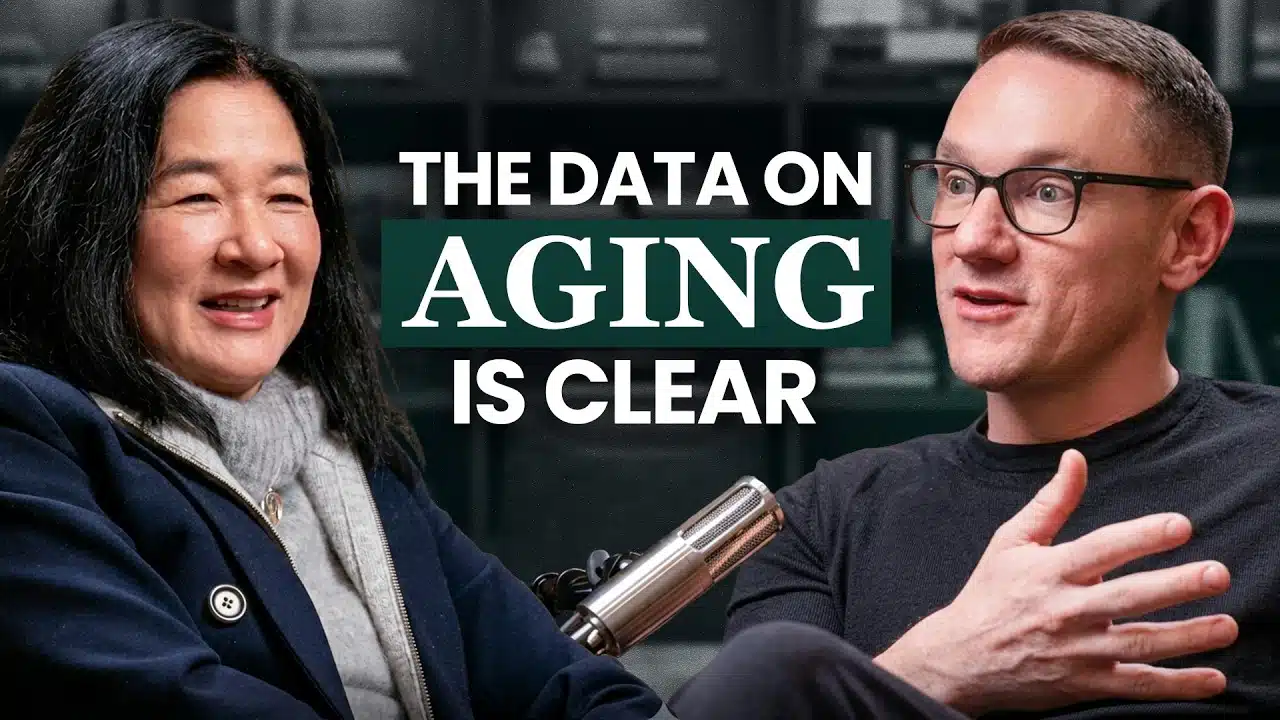
Dr. Deborah Kado, professor of medicine and co-director of the Stanford Longevity Center, believes we can do much better.
In a recent podcast conversation, she shared groundbreaking insights about bone health, posture, power, and what it really takes to live not just longer, but better.
Jump to:
- It’s Never Too Late to Build Strength
- Falls Are the Silent Epidemic
- Posture Isn’t Just Aesthetic—It’s Predictive
- Power Matters More Than You Think
- Bone Density Can Be Improved
- Exercise Is Non-Negotiable
- Healthspan vs. Lifespan: Reframing the Goal
- What About NAD?
- Purpose Is Underrated
- Practical Takeaways for Every Age
- The Real Goal: Compression of Morbidity
It’s Never Too Late to Build Strength
One of the most powerful examples Dr. Kado references comes from a 1990 study published in the Journal of the American Medical Association.
Researchers took nursing home residents with an average age around 90 and enrolled them in what they called “high-intensity interval training.” These frail individuals worked with a trainer three times per week for 12 weeks.
The results? CT scans showed their muscle mass increased by 174%.
It proved the concept that even if you’re late to the party, you can still have a good time.
More importantly, these participants walked faster, climbed stairs they couldn’t before, and regained functional independence. The takeaway is clear: muscle can be rebuilt at any age.
Falls Are the Silent Epidemic
The number one cause of injury-related death in adults over 60 is trips and falls.
Since 2000, the CDC has documented a consistent rise in fall-related deaths among older adults. When someone over 65 falls and breaks a hip, roughly 20–30% will die within the following year.
Dr. Kado explains that the issue isn’t just the fracture itself—it’s what happens afterward. Immobility leads to rapid muscle loss, or sarcopenia, which triggers a downward spiral in physical and mental health.
When you fall and you have an injury such as a fracture, then you’re often laid up. And it can have an impact on your mood and your agency.
Posture Isn’t Just Aesthetic—It’s Predictive
Dr. Kado’s early research focused on something many dismiss: posture.
She studied thousands of older women and found that those with hyperkyphosis—the rounded, hunched-over posture often associated with aging—were significantly more likely to die earlier, particularly from pulmonary causes like pneumonia or chronic obstructive pulmonary disease.
What stunned researchers was that two-thirds of women with vertebral fractures didn’t even know they had them. Yet these silent fractures were still associated with increased mortality risk.
The more curved they were, the more likely they were to die sooner.
But here’s the twist: only about one-third of the most hunched-over women actually had vertebral fractures. This suggested posture itself—independent of osteoporosis—was a critical marker of health decline.
Power Matters More Than You Think
Grip strength has long been championed as a marker of longevity. But Dr. Kado’s recent research points to something even more telling: power.
In a study of approximately 2,000 older men with a mean age of 84, participants were asked to jump on a force plate. Researchers then followed them for 10 years.
The metric most predictive of who would avoid fractures and maintain independence? Power output.
Power is key, and that’s what we tend to lose more—two to three times as quick as strength.
This finding underscores the importance of training not just for strength, but for explosive, dynamic movement—especially as we age.
Bone Density Can Be Improved
One of the most common concerns among older adults is declining bone mineral density. The good news? It’s not a one-way street.
Dr. Kado highlights FDA-approved medications like alendronate (Fosamax) and the newer romosozumab, an anti-sclerostin antibody that showed a 12% increase in spine bone density and significant reductions in fracture risk.
But medication isn’t the only answer. Resistance training, particularly exercises involving axial load, can stimulate bone growth. Combined with adequate calcium, vitamin D, and protein intake, bone health can be meaningfully preserved—or even improved.
If you could put more in the bank earlier and get a higher peak bone mass, then you’re starting from a higher point.
Exercise Is Non-Negotiable
If there’s one intervention that appears in nearly every discussion about aging, it’s exercise.
Exercise is the thing that comes up time and time again for every single thing we talk about associated with aging. The evidence is absolutely clear.
Whether the goal is reducing fall risk, improving cardiovascular health, maintaining cognitive function, or managing chronic disease, physical activity is the common denominator.
Dr. Kado emphasizes that while the type of exercise may vary, the principle remains: do something. Consistency and variety matter more than perfection.
Healthspan vs. Lifespan: Reframing the Goal
Dr. Kado challenges the concept of “healthspan” as it’s commonly defined. Instead, she advocates for the idea of healthy longevity—the ability to experience health and vitality across the entire lifespan, even after setbacks.
She points to cancer survivors in their 70s and 80s who, after diagnosis, overhauled their lifestyles and went on to thrive for decades.
They changed their lifestyle, became incredibly thoughtful about what they put in their mouth every day and how they could be more physically active. And 15, 20 years later, you would never know they had cancer.
This reframing is powerful. It shifts the focus from avoiding disease to living fully, regardless of what challenges arise.
What About NAD?
When asked about the most overrated longevity advice, Dr. Kado didn’t hesitate: NAD supplementation.
While NAD levels do decline with age, and animal studies show promise, human trials tell a different story. Studies lasting from 24 hours to 3 months show that blood NAD levels increase—but outcomes like blood pressure, blood sugar, and muscle function show no difference.
Your blood levels go up. So it must work, right? But everything people care about—blood pressure, blood sugar, muscle function—no difference between the groups.
Purpose Is Underrated
Beyond the physical interventions, Dr. Kado identifies purpose as one of the most underrated factors in healthy aging.
Having a reason to get up in the morning, maintaining social connections, and experiencing psychological richness—like awe and novelty—are all associated with reduced inflammation and better health outcomes.
Research from Stanford’s Alia Crum and Yale’s Becca Levy supports this: mindset and attitude toward aging directly influence physical and mental health trajectories.
Practical Takeaways for Every Age
For those in their 20s and 30s, Dr. Kado advises finding passion and purpose early. Stress is highest during these decades, but establishing healthy habits now—regular movement, nutrient-dense eating, quality sleep—pays dividends later.
For those in their 70s and 80s, it’s about flexibility and agency. Even with health challenges, maintaining strength, power, balance, and social engagement can preserve independence and joy.
- Prioritize resistance training with a focus on power and explosive movement
- Monitor and improve posture to reduce pulmonary and mobility risks
- Protect bone density through diet, exercise, and medical intervention when needed
- Stay socially connected and seek intergenerational relationships
- Cultivate purpose and expose yourself to novelty and awe
The Real Goal: Compression of Morbidity
Dr. Kado references the work of James Fries, a Stanford rheumatologist who coined the term “compression of morbidity” in 1980. The idea is simple but profound: reduce the time spent in poor health, even if total lifespan doesn’t dramatically increase.
This is the true north. Not immortality. Not biohacking our way to 150. But living with vitality, independence, and dignity into our 80s, 90s, and beyond.
If we could just compress that period of poor health even without extending lifespan, I think that’s a real win.
The science is clear. The interventions are accessible. The time to act is now.