For four-time Mr. Olympia Classic Physique champion Chris Bumstead, sticking to pure bodybuilding routines can get stale — even at the top of the game.
In a recent training session, Bumstead stepped outside his usual wheelhouse and dived into strongman-style circuit training. The goal? Build functional strength, challenge his core, and stay athletic — without sacrificing physique aesthetics.
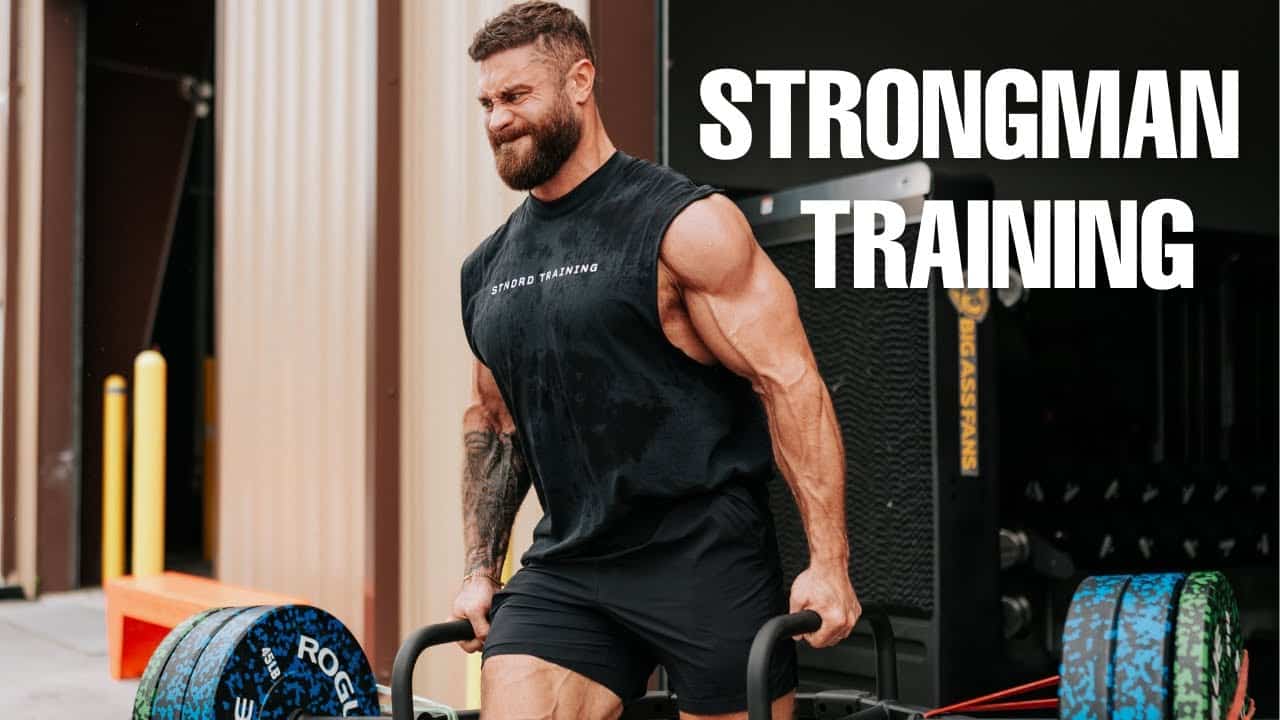
The result? A workout that pushed him to the edge in an entirely different way — and one that might just change how he trains going forward.
Jump to:
Why Strongman? Bumstead Breaks the Mold
“I just wanted to switch things up,” Bumstead said during the session. “Bodybuilding every single day gets a little bit boring.”
Instead of turning to traditional cardio, he looked to his coach Jack Lee — known for mixing performance-based training into aesthetic-driven routines. Lee’s idea? Fuse strongman movements into a circuit that targets performance, core stability, and cardiovascular output, all while respecting the needs of a professional bodybuilder.
“We’re using movements and time under tension that improve more than just your resting heart rate,” Jack explained. “It’s going to benefit what you do in the gym and if you decide to go do something athletic.”
What the Workout Looked Like
The session followed a circuit-style structure, combining explosive full-body movements with core-demanding tasks. The flow included:
- Truck Push (20 seconds)
- Figure-8 Sled Drags
- Zercher Carries
- Battle Rope Pulls
Each movement challenged different strength systems, especially anaerobic alactic capacity — short bursts of maximal effort without relying on lactic acid buildup. That means high output, short duration, followed by controlled rest.
“You’re able to do a lot of work without crashing. So we can go heavier,” said Jack.
The workout taxed Bumstead differently than his usual split: it wasn’t just about how much weight he could move, but how efficiently his body could stabilize and recover between intense efforts.
Core Strength and Postural Gains
One of the main objectives? Targeting Bumstead’s core — an area he admits has been undertrained throughout his career.
“We already knew your core’s not up to par with other things,” Jack told him during the session. “This type of training helps fix that.”
But it’s not just about six-pack aesthetics or preventing a thicker waist — it’s about functional support. Strongman exercises naturally force athletes to brace and stabilize their entire torso, especially during awkward carries, resisted sled work, and directional changes.
“This will help stabilize everything I do,” Bumstead noted, acknowledging how improving his core could also prevent injuries like groin tweaks or hip tightness.
Busting the “Big Waist” Myth
A concern often raised by physique athletes is whether strongman or CrossFit-style training can lead to an undesired increase in waist size.
But Jack was quick to shut that down.
“Doing a single strongman workout once a week is not going to blow your waist out,” he clarified. “If you want your legs to shrink, don’t train them. Same logic applies here.”
The key? Controlled volume and proper programming. Incorporating strongman elements can enhance performance and balance out muscular imbalances without compromising a streamlined physique — especially if tailored to an individual’s body type and goals.
Building Athleticism and Resilience
Beyond hypertrophy and aesthetics, Bumstead is starting to crave movement that builds resilience.
“I like doing these because it’s like a circuit that includes strength and cardio,” he said. “It’s not quite aerobic, but it’s still building my body’s ability to work at a high heart rate and bring it back down.”
Strongman-style circuits can improve heart rate variability (HRV), enhance work capacity, and reinforce stability — all while keeping the stimulus fun and engaging. Unlike static bodybuilding movements, these exercises mimic real-world demands on the body.
“Each end of the extreme has a sacrifice,” Jack added. “A bodybuilder might look jacked but can’t hold something heavy for more than a few seconds.”
The “Miyagi” Effect: Can Strongman Fix Posture?
One major takeaway from the session was how this style of training could reshape Bumstead’s posture — a common challenge for bodybuilders with tight pecs and underactive backs.
“The pig iron view on fixing posture is to just get a really strong back,” said Jack. “It’s not that simple, but it’s part of the equation.”
He cited Josh Bryant, a renowned strength coach, who uses heavy carries and rows to open up the chest and reinforce scapular control. Combined with proprioceptive work and postural retraining, this can help prevent injuries, improve lifting mechanics, and enhance visual symmetry.
Final Thoughts: Strongman for Physique Athletes?
For Bumstead, this wasn’t just a novelty. The session revealed gaps in his athletic base, especially around core control and movement efficiency.
“It’s fun doing stuff like this,” he said. “It’s different. It’s a different type of tired.”
And while the fear of “thickening the waist” still lingers in the minds of many classic physique competitors, Bumstead seems to understand the broader benefits. A properly programmed dose of strongman training — even once a week — can enhance performance, resilience, and aesthetics in ways traditional routines might miss.
Bottom line? Don’t underestimate the value of training outside your comfort zone. Whether you’re a pro bodybuilder or a casual lifter, functional strength, stability, and real-world movement patterns have a place in your program.
And as Bumstead proved, you can be shredded and strong — without sacrificing either.